TSLA392.500392.5%
GM80.540-0.78%
F12.870-0.005%
RIVN16.92016.92%
CYD44.1700.91%
HMC25.3600.36%
TM215.250-1.95%
CVNA401.89014.36%
PAG162.8201.5%
LAD288.7605.72%
AN209.5301.54%
GPI351.2101.27%
ABG212.7101.27%
SAH71.7801.08%
TSLA392.500392.5%
GM80.540-0.78%
F12.870-0.005%
RIVN16.92016.92%
CYD44.1700.91%
HMC25.3600.36%
TM215.250-1.95%
CVNA401.89014.36%
PAG162.8201.5%
LAD288.7605.72%
AN209.5301.54%
GPI351.2101.27%
ABG212.7101.27%
SAH71.7801.08%
TSLA392.500392.5%
GM80.540-0.78%
F12.870-0.005%
RIVN16.92016.92%
CYD44.1700.91%
HMC25.3600.36%
TM215.250-1.95%
CVNA401.89014.36%
PAG162.8201.5%
LAD288.7605.72%
AN209.5301.54%
GPI351.2101.27%
ABG212.7101.27%
SAH71.7801.08%

Honda to end fuel cell system manufacturing in Michigan

Honda will transition to its independently developed next-generation fuel cell system as it reshapes its hydrogen strategy.

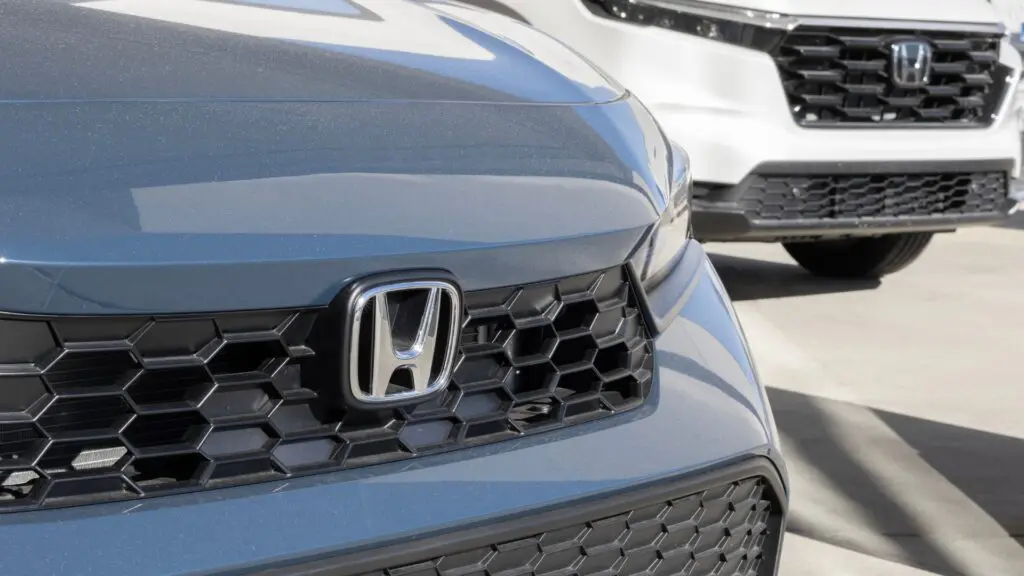
Honda will end fuel cell production at its GM joint venture in Michigan by 2026 and shift to an in-house hydrogen system.

On the Dash:

  • Honda will discontinue fuel cell system production at its Michigan joint venture with GM before the end of 2026.
  • The automaker will move to a next-generation system developed independently.
  • The company remains committed to hydrogen as a core energy pillar alongside its carbon neutrality goals.

Honda Motor Co. has decided to end production of its current fuel cell system at Fuel Cell System Manufacturing (FCSM) in the United States before the end of 2026, marking a shift in the automaker’s hydrogen strategy.

The facility, located in Brownstown, Michigan, is a joint venture between Honda and General Motors, established in 2017. It was the first joint venture in the automotive industry dedicated to producing fuel cell systems. The company said it will transition away from the jointly produced system and instead adopt a next-generation system developed independently by the company.

Sign up for CBT News’ daily newsletter and get the latest industry stories delivered straight to your inbox.

The automakers created FCSM to combine their expertise in development, production, and procurement. The collaboration resulted in improvements in durability, cold-weather performance, manufacturing efficiency, and cost reductions through shared suppliers and advanced production technologies.

Despite those achievements, the companies conducted extensive discussions and ultimately agreed to discontinue production at the joint venture. Honda did not announce any immediate replacement production plans for the Brownstown facility.

Going forward, the automaker will rely on its in-house fuel cell technologies as it seeks to expand hydrogen-related business opportunities. The company views hydrogen as a core pillar of its future energy strategy, alongside battery-electric solutions. The carmaker plans to apply its next-generation system across multiple use cases as part of its long-term growth strategy.

The decision aligns with Honda’s broader environmental goals. The automaker has committed to achieving carbon neutrality across all products and corporate activities by 2050. It is also pursuing a broader goal of zero environmental impact throughout the entire product lifecycle, including manufacturing and operations.

The automaker’s environmental strategy focuses on three primary areas: carbon neutrality, clean energy, and resource circulation. Hydrogen plays a central role in that plan, with the company positioning fuel cells as a key energy carrier for the future.

The automaker has been investing in hydrogen and fuel cell research and development for more than three decades. The automaker said it remains committed to advancing fuel cell technology and expanding hydrogen-powered applications as part of its long-term business strategy, even as it moves away from the GM joint venture model.


Read More
 
More from Industry News
GM offers up to $40 million pay package to recruit product chief Sterling Anderson

GM offers up to $40 million pay package to recruit product chief Sterling Anderson

- April 21, 2026
On the Dash: GM’s investment signals increased focus on EV, software, and next-generation vehicle development. The leadership move points to long-term succession planning and strategic continuity. Product strategy shifts may...
Hyundai CEO says Middle East crisis will impact sales as production limits restrict reallocation

Hyundai CEO says Middle East crisis will impact sales as production limits restrict reallocation

- April 21, 2026
On the Dash: Regional conflicts can disrupt high-margin markets and impact OEM profitability even without major volume losses. Limited production flexibility highlights the importance of localized inventory strategies. North America...
Samsung SDI inks multi-year EV battery supply deal with Mercedes-Benz

Samsung SDI inks multi-year EV battery supply deal with Mercedes-Benz

- April 20, 2026
On the Dash: Expanding battery partnerships signal continued acceleration of EV product pipelines from legacy automakers. High-nickel battery chemistry points to ongoing focus on range and performance improvements in upcoming...
Energy secretary says gas prices have peaked, but relief may take time

Energy secretary says gas prices have peaked, but relief may take time

- April 20, 2026
On the Dash: Gas prices at $4.05, up from $3.16 a year ago, continue to pressure consumer affordability. Uncertainty around sub-$3 pricing timelines complicates demand forecasting. Elevated fuel costs may...
CBT News
Privacy Overview

This website uses cookies so that we can provide you with the best user experience possible. Cookie information is stored in your browser and performs functions such as recognising you when you return to our website and helping our team to understand which sections of the website you find most interesting and useful.