On the Dash:
- Trump said Chinese automakers could build cars in the U.S. if they hire American workers.
- A 2025 Commerce rule bars Chinese-owned manufacturers from selling connected vehicles, even ones built here.
- Automakers asked Congress on Sept. 3 for a permanent ban before the session ends.
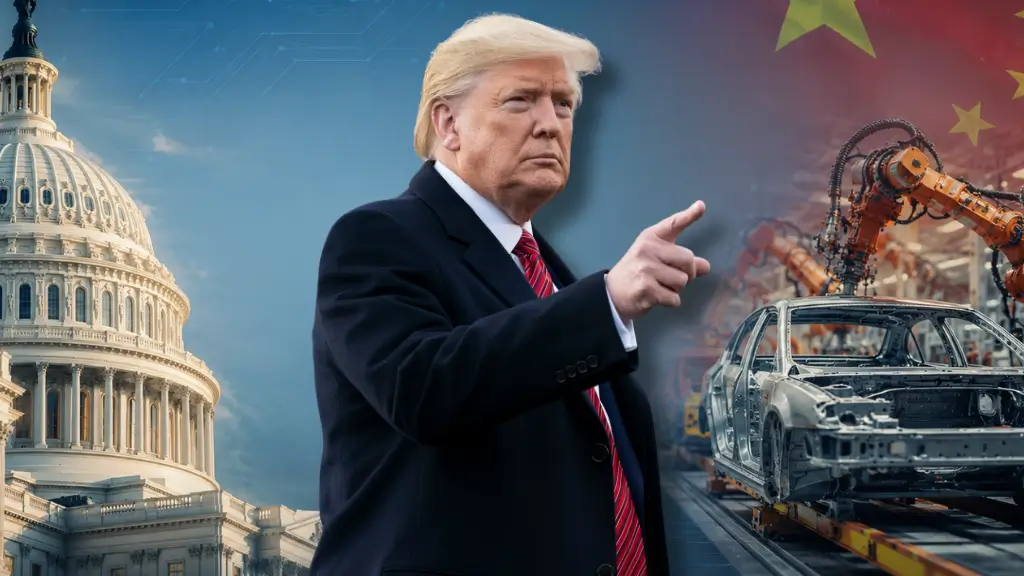
President Donald Trump said Friday on Fox News that Chinese automakers could build cars in the U.S. if they hire American workers. He made the remarks during an interview on The Ingraham Angle, where he compared the idea to Japanese automakers that already run assembly plants across the country.
“If China wanted to come in and open a plant to build their cars here, I’d be okay with that,” Trump said.
Existing federal rules block the path
Federal restrictions would still keep a Chinese-owned plant on American soil from selling what it builds. The Commerce Department’s Bureau of Industry and Security (BIS) issued a rule in January 2025 blocking that path, barring manufacturers owned or controlled by China or Russia from selling connected vehicles in the U.S.
The prohibition takes effect with model year 2027, and applies no matter where the vehicle is assembled. The rule also blocks connected vehicle software tied to either country in model year 2027. Hardware prohibitions follow in model year 2030.
Trump at odds with U.S. automakers and industry groups
Automakers and lawmakers in both parties are working to lock Chinese vehicles out of the U.S. market for good. The Alliance for Automotive Innovation has asked Congress for a permanent ban on Chinese connected vehicles, hardware and software. The trade group represents most manufacturers selling vehicles in the country.
Two bipartisan measures are already moving through Congress:
- The Connected Vehicle Security Act of 2026 cleared the Senate Commerce, Science and Transportation Committee by voice vote on July 22. Sen. Bernie Moreno, R-Ohio, and Sen. Elissa Slotkin, D-Mich., introduced the bill in April.
The measure would prohibit the import, manufacture, sale and resale of connected vehicles tied to China, Russia, Iran or North Korea. Related software and hardware fall under the same ban. Restrictions on vehicles and covered software would begin Jan. 1, 2027, and hardware prohibitions would start Jan. 1, 2030.
- Reps. John Moolenaar, R-Mich., and Debbie Dingell, D-Mich., introduced a House companion. The House Energy and Commerce Committee advanced the Motor Vehicle Modernization Act in May.
It’s important to note that one section would bar foreign adversaries from manufacturing or importing motor vehicles in the country.
Trump to meet with Chinese President later this month
Trump’s remarks arrive during a stretch of conflicting signals out of Washington. Slotkin posted on Sept. 9 that she had heard rumors of a plan to allow Chinese cars into the U.S. market. She called that a strategic mistake. However, Trump dismissed the claim as a phony rumor in the same interview. He said his administration has kept Chinese vehicles out of the country. Trump is scheduled to meet Chinese President Xi Jinping in Washington later this month.