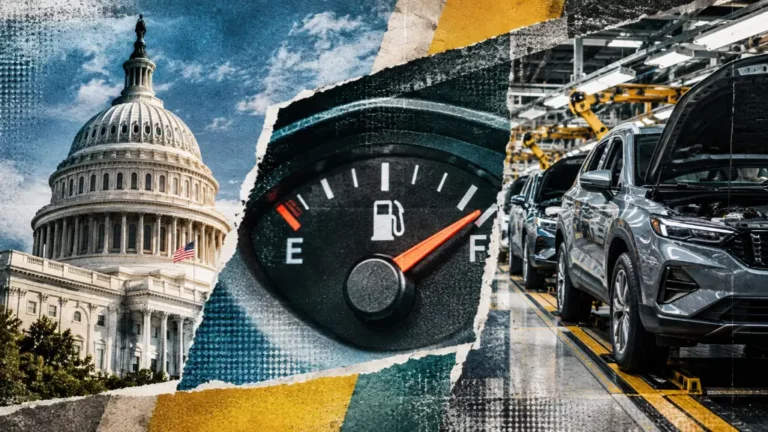
China’s economic influence continues to expand in the U.S. auto industry, and dealers are watching closely as the debate over Chinese-made vehicles entering the American market heats up. Lower prices and sharper technology make the pitch attractive on the surface, but the tradeoffs raise bigger questions about jobs, security and long-term market control.
Joining us on this episode of Inside Automotive is Peter Cooper, President and CEO of Lexus of Lehigh Valley in Allentown, Pennsylvania. Cooper said the industry has little to gain and too much to risk to allow Chinese-made vehicles into the American market.
China’s subsidies change the math
The U.S. auto market sells about 15 million vehicles a year. That number won’t grow just because new brands enter it, Cooper said. Chinese automakers wouldn’t create new jobs, he said. They would displace workers across manufacturing, dealerships and finance.
Pricing is another issue. Heavy government subsidies keep prices low, even after steep tariffs, Cooper said. He pointed to Mexico, where a 100% tariff on Chinese vehicles didn’t move prices at all.
"We're not asking the auto manufacturers or the dealers to compete with other manufacturers; we're asking them to compete with the Chinese government."
The American automotive industry already faces stiff competition from China abroad. General Motors sold more than 50 million vehicles in China over the past 20 years. But its sales have dropped sharply as domestic brands like BYD have improved, Cooper said.
The larger economic threat
Cooper’s concerns go beyond pricing and jobs. He pointed to how deeply Chinese-owned companies already reach into the U.S. economy, including General Electric’s appliance division, which is fully Chinese-owned.
The more industries China controls in the U.S., the less leverage American negotiators have, he said. Giving China more economic ground only weakens that position further.
China plays a long game and is willing to absorb short-term losses for long-term market control, he said. Allowing Chinese automakers into the U.S. would add the auto industry to a growing list of sectors where China already holds sway.
Proposed guardrails
Cooper isn’t calling for an outright ban forever, but outlined specific guardrails he’d want in place before any Chinese vehicles enter the U.S. market.
Cooper proposed capping annual imports between 250,000 and 300,000 vehicles. Chinese automakers should also sell through franchised dealer networks, not direct to consumers, he said. He also would want to see a required U.S. manufacturing commitment, either through a partnership or a domestic plant.
"Tariff the hell out of the car to make it more of a level playing field here in the U.S."
Tariffs should also stay in place to offset China’s subsidies. Cooper said steep tariffs wouldn’t hurt American consumers, since the Chinese government would absorb the cost rather than raise prices.
Cooper: Executive orders aren’t enough
Current restrictions on Chinese vehicles exist only through executive orders, not law, Cooper said. Both the Biden and Trump administrations have kept those limits in place, but nothing prevents a future administration from reversing course.
A bipartisan push in Congress aims to change that, as Sen. Bernie Moreno (R-Ohio) and Sen. Elissa Slotkin (D-Mich.) are backing legislation to codify the restrictions. Both Ohio and Michigan have major auto manufacturing bases. However, no major market has successfully opened to Chinese automakers without economic disruption, Cooper said. Canada’s early, capped approach allows just 49,000 vehicles a year, but Cooper said it’s still too soon to judge the results.
Not everyone shares Cooper’s caution. Some policymakers and consumer advocates argue that Chinese vehicles could lower prices and expand choice for American buyers. With the Chinese president set to visit the U.S. in September and legislation still pending in Congress, dealers should expect the conversation to keep building through the rest of the year.