

On the Dash:
- Carvana’s San Diego acquisition marks its entry into the new-car market, expanding beyond used-vehicle sales.
- The dealership provides a physical presence to reinforce brand recognition and offer test drives and vehicle service.
- Carvana is financing new-car inventory with a $99 million credit line from Stellantis, exposing the company to additional financial risk.
Carvana, the nation’s second-largest used car retailer, has acquired the San Diego Chrysler Dodge Jeep Ram dealership in Mission Valley. The acquisition gives Carvana local franchise rights to sell new Stellantis vehicles, which consumers can browse, finance, and purchase online for home delivery or dealership pick-up.
Notably, this is Carvana’s third franchise dealership purchase since February and its first in San Diego. The company previously acquired similar Chrysler, Dodge, Jeep, and Ram dealerships in Casa Grande, Arizona, and Dallas, spending a combined $51 million on both transactions.
The dealership at 777 Camino del Rio South, built in 1979 and spanning 3.27 acres, was previously owned by Sunroad Enterprises, which purchased it in 2013 for $8.2 million.
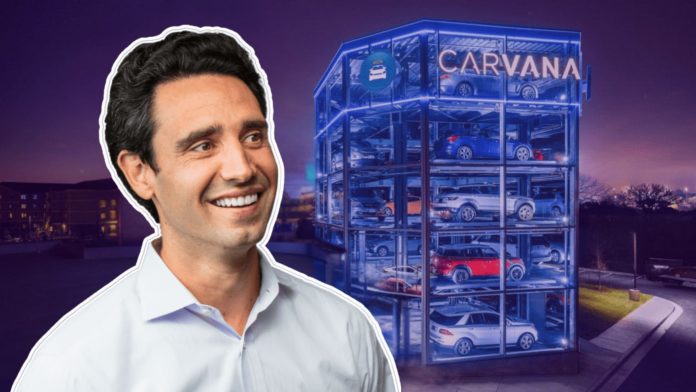
Carvana operates physical locations primarily as a complement to its online sales platform, enabling local customers to test-drive vehicles and access service while completing the bulk of the purchase process online. The company also maintains two vending machines and an ADESA wholesale auto auction in the San Diego area and recently launched same-day delivery services.
Founded in 2012, Carvana has built its business on a technology-driven approach designed to reduce friction in the car-buying experience. About 30% of customers now complete the entire purchase process without interacting with staff until delivery or pick-up. The company currently sells roughly 600,000 vehicles annually and has set a goal of reaching 3 million annual sales within five to 10 years. In its most recent quarter, Carvana reported $263 million in profit on $5.6 billion in revenue and projects $20 billion in sales for the full year.
Carvana CEO Ernest Garcia alluded to the addition of physical dealerships as a key part of fostering customer trust and brand recognition. Physical locations allow potential buyers to experience the Carvana model while retaining the familiarity of traditional car-buying methods.
However, the company’s new-car expansion carries financial risk, with regulatory filings showing Carvana entered into a $99 million credit line with Stellantis Financial Services to fund the new inventory. Under the agreement, the manufacturer fronts the cost of vehicles until they are sold, and Carvana must repay the debt for any cars held more than 11 months.