
TSLA446.45013%
GM75.580-0.86%
F13.6751.685%
RIVN14.4650.515%
CYD50.8352.315%
HMC24.3750.265%
TM186.9105.24%
CVNA70.070-3.6499%
PAG166.310-2.72%
LAD271.590-3.71%
AN190.500-4.86%
GPI329.520-6.62%
ABG193.280-0.4%
SAH76.700-1.88%
TSLA446.45013%
GM75.580-0.86%
F13.6751.685%
RIVN14.4650.515%
CYD50.8352.315%
HMC24.3750.265%
TM186.9105.24%
CVNA70.070-3.6499%
PAG166.310-2.72%
LAD271.590-3.71%
AN190.500-4.86%
GPI329.520-6.62%
ABG193.280-0.4%
SAH76.700-1.88%
TSLA446.45013%
GM75.580-0.86%
F13.6751.685%
RIVN14.4650.515%
CYD50.8352.315%
HMC24.3750.265%
TM186.9105.24%
CVNA70.070-3.6499%
PAG166.310-2.72%
LAD271.590-3.71%
AN190.500-4.86%
GPI329.520-6.62%
ABG193.280-0.4%
SAH76.700-1.88%

Supreme Court tariff case could cost auto industry $1.8 billion, affect vehicle sales

A Supreme Court ruling on Trump’s IEEPA tariffs could raise automakers’ costs, affect vehicle sales, and impact production and employment.
Supreme Court, tariffs

On the Dash:

  • A Supreme Court ruling on IEEPA tariffs could cost automakers $1.8 billion annually, including $902 million for the Detroit Three.
  • Higher costs and economic uncertainty may reduce U.S. light-duty vehicle sales and raise average prices.
  • Section 232 vehicle tariffs will continue regardless of the court’s ruling, sustaining pressure on the auto industry.

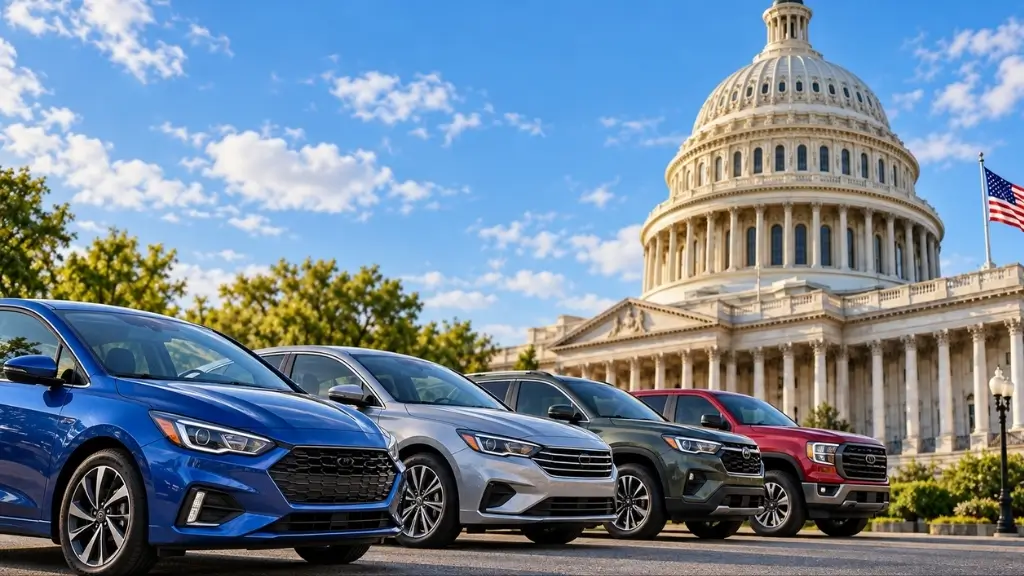
A pending U.S. Supreme Court case challenging President Donald Trump’s global tariffs could impose up to $1.8 billion in annual manufacturing costs on automakers, even though the case does not directly target vehicle-specific levies.

The case, Learning Resources, Inc. v. Trump, questions whether the president had legal authority under the 1977 International Emergency Economic Powers Act (IEEPA) to impose broad tariffs on products from more than 90 countries. The IEEPA tariffs currently cover machinery and lower-value raw materials, a narrow portion of automakers’ production costs, but one that is significant enough to show up on company balance sheets.

Sign up for CBT News’ daily newsletter and get the latest industry stories delivered straight to your inbox. 

The Center for Automotive Research estimates that the Detroit Three automakers could face around $902 million in costs under the IEEPA tariffs, roughly $250 per vehicle. While this is smaller than the impact of vehicle-specific Section 232 tariffs, which have cost automakers nearly $108 billion or $4,240 per vehicle, the economic effects remain notable. Broader household and economic impacts could include $1,200 in costs per household in 2025 and a 0.6% reduction in national gross domestic product.

The tariffs come amid other pressures on the auto industry, including high interest rates, the end of federal EV tax credits, and the removal of the $800 de minimis exemption on imports. Analysts note that higher tariffs and economic uncertainty could reduce consumer purchases, leading to lower vehicle sales and production.

Projections for the U.S. auto industry suggest that light-duty vehicle sales in 2025 may total 16.2 million units, about 150,000 units fewer than expected under previous policy frameworks, with average prices rising 2.3%. For 2026, analysts estimate sales could decline by 800,000 units, average vehicle prices could rise 4.6%, production could drop by 365,000 units, and employment in vehicle manufacturing could fall by 18,000.

Even if the Supreme Court rules against the IEEPA tariffs, Section 232 vehicle tariffs will remain in place, maintaining pressure on automakers and consumers and continuing to affect production, pricing, and retail sales.


Read More
More from Articles
The simple 'paperwork' mistake that could cost dealers $10,000

The simple ‘paperwork’ mistake that could cost dealers $10,000

- May 13, 2026
On the Dash: CDK Global says a paperwork problem cost a dealer $10,000 during a manufacturer audit. NADA calls federal record-keeping requirements among the most burdensome rules dealers face today. ...
GM-LG battery venture recalls small group of Ohio workers as EV demand slows

GM-LG battery venture recalls small group of Ohio workers as EV demand slows

- May 13, 2026
On the Dash: EV production volatility is directly affecting supply chain employment and factory output decisions. Incentive-driven demand shifts are forcing automakers to adjust production more quickly than long-term EV...
Nissan projects return to profit after seventh straight quarterly loss

Nissan projects return to profit after seventh straight quarterly loss

- May 13, 2026
On the Dash: Nissan’s projected return to profit could improve dealer confidence after multiple quarters of financial instability. Ongoing model cuts and production restructuring may impact future inventory mix and...
New-vehicle prices rose in April, but the gains fell short of the historical average, with wide variation across brands and segments, according to Kelley Blue Book.

New-vehicle prices rise in April, but the pace is cooling

- May 13, 2026
On the Dash: New-vehicle ATP rose 1.8% year over year in April, below the 3.6% long-term average. Ford and GM posted strong gains while several luxury brands saw transaction prices...
CBT News
Privacy Overview

This website uses cookies so that we can provide you with the best user experience possible. Cookie information is stored in your browser and performs functions such as recognising you when you return to our website and helping our team to understand which sections of the website you find most interesting and useful.