On the Dash:
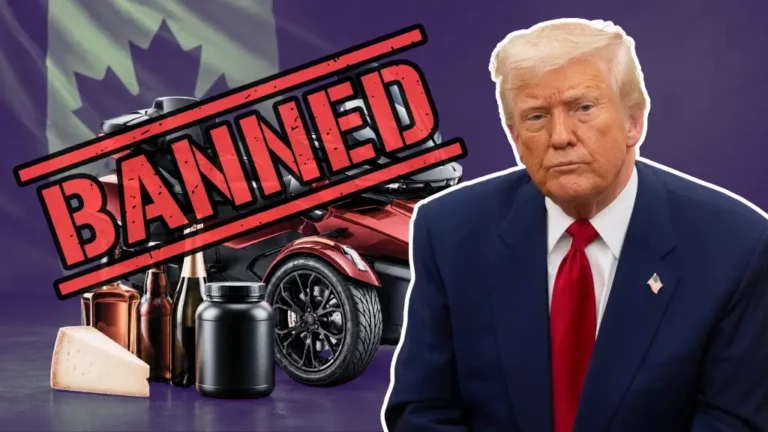
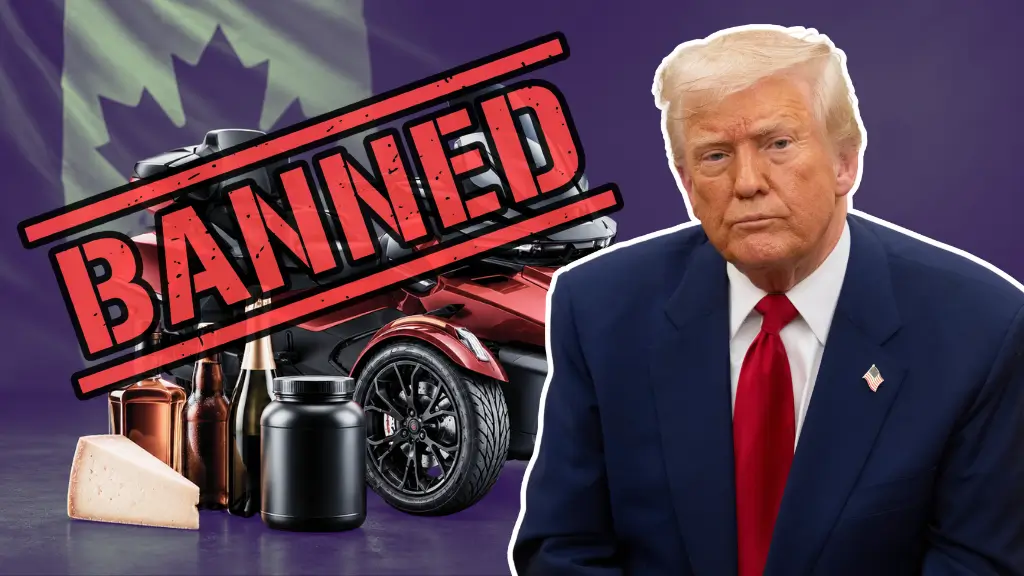
- The U.S. now bans about $967 million in Canadian imports, 87% of which is alcohol.
- The U.S. also banned Can-Am Spyder and Canyon motorcycles, though BRP expects no impact until next year.
- Most banned goods already faced 50% tariffs, and the standoff could last for months.
Over the past few years, the U.S. and Canada have been actively discussing and escalating tariff disputes. With already tense relations, the U.S. is now banning nearly $1 billion in Canadian imports, including alcohol, dairy and motorcycles.
The ban took effect at 12:01 a.m. Eastern Time Tuesday and covers roughly $967 million in goods, based on 2025 trade data from the American Action Forum. While that represents a fraction fo the $880 billion in annual cross-border trade between the two nations.
What the ban covers
While alcohol makes up 87% of all banned goods, some dairy products, including whey, are also covered. The U.S. targeted alcohol after some Canadian provinces removed American products from store shelves. Saskatchewan also imposed a 50% levy on U.S. alcoholic beverages, effective Sept. 8.
Motorcycles are affected too. Bombardier Recreational Products (BRP) confirmed that its Can-Am Spyder and Canyon three-wheelers will be excluded from the U.S. market. BRP expects no impact until next year, as most shipments for this season have already been completed.
President Donald Trump issued three proclamations, published in the Federal Register on Sept. 14, citing Section 338 of the Tariff Act of 1930 and Section 604 of the Trade Act of 1974. The administration says Canada discriminates against U.S. commerce in alcohol, dairy and motor vehicles. The motorcycle proclamation applies to models with engines larger than 800 cc.
The dairy proclamation targets Canada’s tariff-rate quota for U.S. cheeses. It says Canada agreed on Aug. 18 to end the discrimination, but reversed course on Aug. 21. Goods imported but not entered for consumption before Sept. 29 remain subject to the earlier 50% duty.
Most banned goods already faced 50% tariffs
The ban comes after Trump imposed 50% tariffs on Canadian goods this summer. Canada responded with tariffs of 15%, 25% or 50%, and the ban is intended to punish that response. Toyota and Honda are expected to be hit hardest by Trump’s tariffs on Canadian autos.
Meanwhile, according to Jacob Jensen, Director of Trade Policy at the American Action Forum, Canada could retaliate further. But Trump told reporters Monday he expects Canada to make a deal, which adds pressure on talks to renew the U.S.-Mexico-Canada Agreement (USMCA). Auto trade groups have urged an extension of the pact. Notably, the U.S. and Mexico have also resumed their own talks.
Canada is working to cut its reliance on the U.S., which took more than 70% of its exports last year. Prime Minister Mark Carney wants to double Canada’s non-U.S. trade over the next decade.