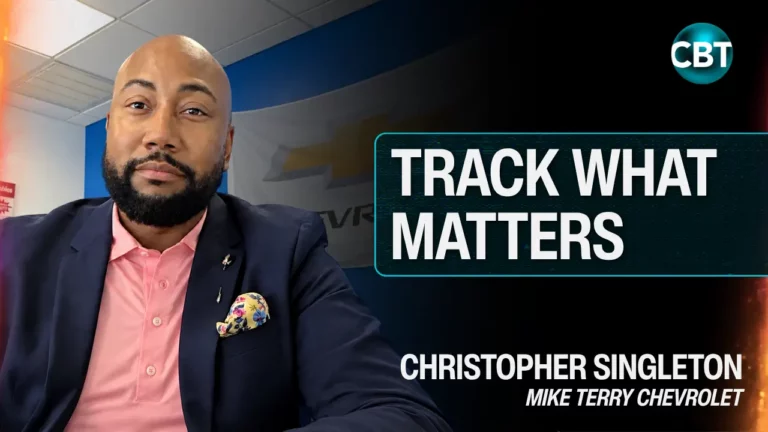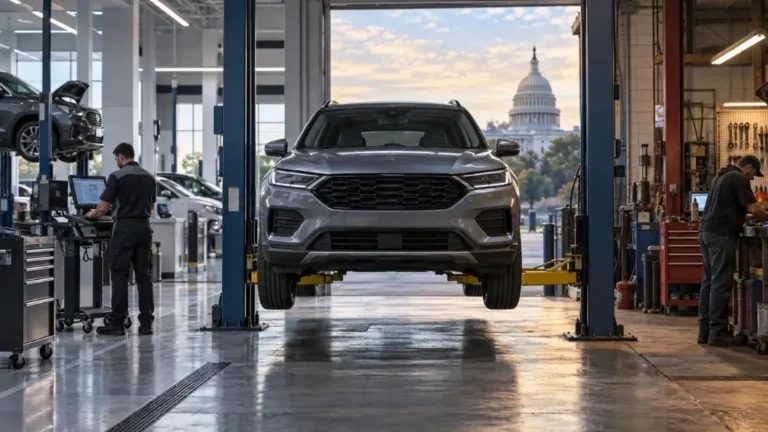
The numbers behind a dealership’s service department can tell a much different story than the number of cars moving through the lane. Jumping right into today’s CBT Live segment, we’re joined by Christopher Singleton, Managing Partner of Mike Terry Chevrolet, to discuss the fixed ops metrics he closely watches and the processes dealers can use to improve technician productivity, profitability and customer retention.
Though a high volume of vehicles in the service lane doesn’t automatically mean a profitable one, Singleton emphasized that dealership performance relies heavily on tracking hours per repair order, technician proficiency and additional service recommendations. Describing these extra recommendations as a “hidden gem,” he notes that unrecommended work represents lost sales potential. Additionally, monitoring technician proficiency lets management verify whether technicians are billing hours effectively while on duty.
Singleton added that successful service departments turn key metrics into part of the dealership’s culture. At Mike Terry Chevrolet, the team tracks the percentage of repair orders that include pictures or videos from multi-point inspections, giving managers a way to recognize employees who consistently follow the process. He said that visibility helps reinforce expectations with technicians and advisors rather than treating digital inspections as another box to check. The same approach extends to customer retention, with Singleton advocating for scheduling the customer’s next visit before they leave, particularly when recommended work is declined or future maintenance is approaching.
Additionally, Singleton advises dealers against dismissing seemingly lower-margin offerings, highlighting that these services often build customer loyalty and unlock further business. He cites tire service as a key example, explaining how it often creates secondary demand for wheel alignments, tire rotations, and related maintenance, making alignments an especially lucrative labor category.
Nevertheless, he notes that tracking technician proficiency can signal when expanding headcount becomes necessary, particularly once a shop operates beyond 90% proficiency and is forced to turn away business. Although mobile servicing has not yet been introduced at Mike Terry Chevrolet, Singleton considers it a promising avenue for future expansion, especially for servicing commercial fleets or operating in high-density customer zones.