On the Dash:
- NADA is formally urging Congress to vote down the REPAIR Act, H.R. 1566.
- The group argues a 2014 industry agreement already gives shops the data access they need.
- A narrower, codified version of the right-to-repair language has already advanced separately.
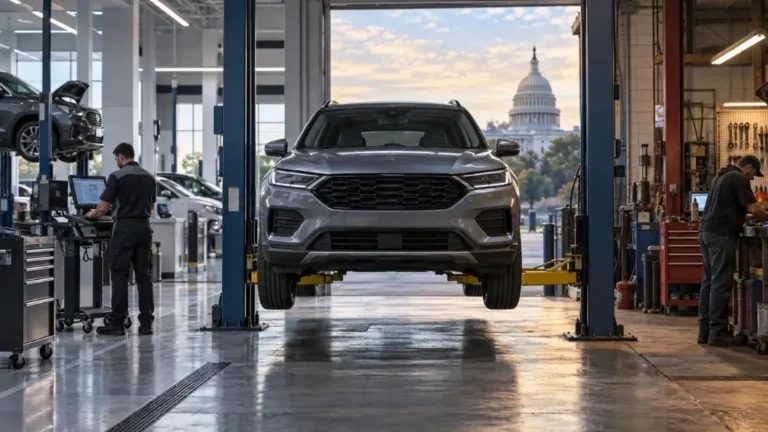
The National Automobile Dealers Association (NADA) is urging Congress to reject a bill that would require automakers to give independent repair shops and vehicle owners the same access to diagnostic data, repair tools and technical information that dealerships already have, according to a letter NADA sent to the House Energy and Commerce Committee.
The Right to Equitable and Professional Auto Industry Repair Act, known as the REPAIR Act, is bipartisan legislation introduced as H.R. 1566 in the House and S. 1379 in the Senate, with more than 42 cosponsors between the two chambers.
What the bill would require
The REPAIR Act would bar automakers from impairing an owner’s access to vehicle-generated data related to diagnostics, repair, service and calibration. It would also require manufacturers to build a standardized access platform for that data and would prevent manufacturers from steering owners toward specific parts or tool brands outside of a recall. The National Highway Traffic Safety Administration (NHTSA) would set the technical standards, and the Federal Trade Commission would enforce compliance.
Rep. Neal Dunn, R-Florida, introduced the bill alongside Rep. Marie Gluesenkamp Perez, D-Washington. In a statement announcing the legislation, Dunn said manufacturers had “championed anti-competitive practices by withholding crucial maintenance information, squeezing their customers and independent repair shops.”
Why dealers oppose it
NADA’s letter to the committee argues the bill addresses a problem that doesn’t exist. The group points to a 2014 memorandum of understanding between automaker and independent repairer trade associations that already governs data sharing and says roughly 75% of post-warranty repairs currently happen outside the dealer network, evidence the group cites that consumers already have choices.
The letter also raises data privacy and security concerns. NADA argues the bill would allow personal vehicle and driver data to be sold to third parties, with some of it remaining accessible even after an owner requests deletion. NADA further contends the legislation would let aftermarket parts manufacturers reverse-engineer OEM components, which the group says raises the risk of intellectual property theft.
NADA also objects to the bill’s compliance structure, which includes a new rulemaking process, an advisory panel and reports to Congress every two years. The group estimates that framework would cost millions of dollars annually and expose dealers to new federal penalties.
Where the bill stands
The REPAIR Act’s momentum has already split into two tracks. The House Energy and Commerce Committee voted 48-1 in May to advance a narrower version of the right-to-repair language, codifying the existing 2014 and 2015 industry agreements with FTC enforcement, as part of the separate Motor Vehicle Modernization Act. That version strips out the broader telematics and wireless-data provisions in Dunn’s original bill.
Dunn has said the scaled-back language doesn’t go far enough and has pledged to push for changes when the broader package reaches the House floor. NADA supports keeping the narrower version intact and has urged lawmakers to reject any effort to expand it back toward the original REPAIR Act’s scope.