
On the Dash:
- Hyundai will send 58 of more than 100 new or updated models to North America by 2030
- The automaker is raising its operating margin target above 9%, up from 8% to 9%
- Hybrids are expected to make up half of Hyundai’s North American sales by 2030
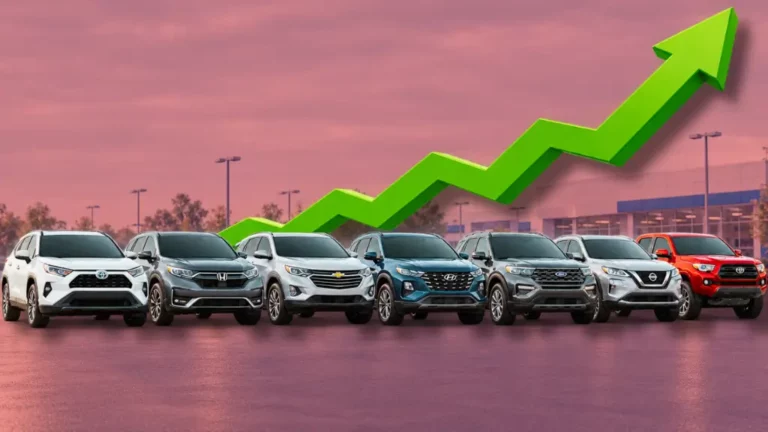
Hyundai Motor is planning its largest product rollout in company history, with more than 100 new or refreshed models set to launch worldwide by 2030 as it works to challenge Toyota in the U.S. hybrid market and defend market share against low-cost Chinese competitors, CEO José Muñoz announced at the automaker’s CEO Investor Day in Seoul.
Of the more than 100 models planned, 58 will go to North America, Hyundai’s largest market, with the automaker also entering 18 new segments including a midsize pickup, light commercial vehicles and body-on-frame vehicles. The automaker is calling these underrepresented categories “white spaces,” which it says account for nearly 30% of all US auto sales. Europe will get 41 new or updated models, followed by 26 in India and 22 in China, with some overlap across regions.
Hyundai’s new lineup leans on hybrids
The plan leans heavily on hybrids to protect share in a US market where gas-electric vehicles have gained ground amid softer demand for pure EVs. Hyundai expects to offer more than 10 hybrid models in North America by 2030, with hybrids accounting for close to half of regional sales. Hybrid sales across the broader US market rose 19% in the first half of 2026, and its own hybrid sales climbed 71% in the second quarter.
CBT News reported in June that Hyundai and Kia were building a case for second place in the US hybrid market behind Toyota, with both brands posting record sales and expanding local hybrid production to reduce tariff costs.
The automaker also plans to boost local parts sourcing in North America to 80%, up from 60%, as it works to reduce exposure to the 15% US tariff currently applied to its vehicles under the trade agreement between Washington and Seoul.
When new, refreshed models will arrive
Seven new vehicles are set to arrive within the next eight months, including an all-new Tucson and Tucson Hybrid, the Ioniq 3 compact EV, and the Santa Fe Extended Range EV, Hyundai’s first EREV model. The Santa Fe EREV targets more than 600 miles of total range on a battery that charges 40% faster than the automaker’s previous cells, and it will be built at Hyundai’s plant in Alabama.
The push follows a record first half for Hyundai in North America, with 595,457 units sold, the best in the region’s history. US sales rose 3% to 489,656 units, led by the Tucson and Palisade.
Hyundai’s luxury brand, Genesis, will also add its first hybrid and first Extended Range EV as part of a goal to hit 350,000 annual sales across more than 40 markets by 2030. Separately, the company said Ioniq 5 units built for Waymo’s robotaxi fleet will begin arriving in the fourth quarter of 2026, with US-based robotaxi production starting in 2028 at an annual capacity of 30,000 units.
Hyundai also raised its long-term profitability target, telling investors it now expects an operating margin above 9%, up from its prior range of 8% to 9%.