According to Marco Schnabl, Founder of RockED, “This is something that deserves solving.”
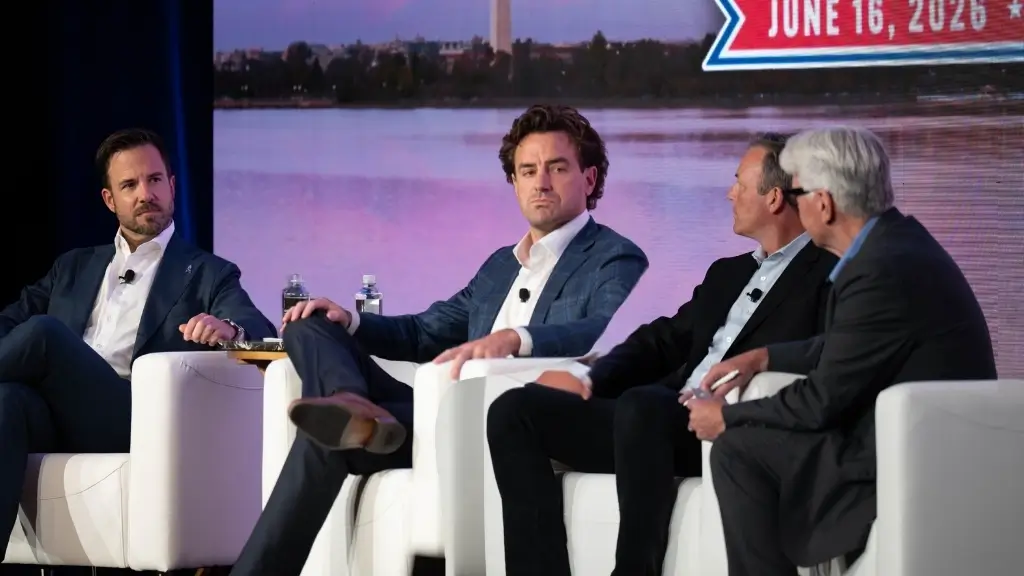
During a panel discussion at the CBT News Auto Leadership Summit, Schnabl was joined by Cuyler Owens, CEO of Widewail, and Mike Gilson, CEO of Conversica. David Kain, CEO of Kain Automotive, moderated the conversations to address culture, compliance, and accountability.
As the panel progressed, one thing remained clear: “It’s important as partners to invest in education,” said Schnabl. That investment spans training, store reviews, and overall dealership culture, and the panel worked through each piece in turn.
"We have historically under-invested in our largest asset, which is all people." – Marco Schnabl
Mining a billion conversations
Gilson opened with a real-time example from a meeting in Philadelphia with one of the largest dealer groups in the country, where compliance came up as the central concern.
Conversica has built a data repository of more than a billion customer conversations from real car shoppers and service customers. Gilson described an exercise his team ran specifically for the summit, which centers on mining that conversation data, layered against DMS and CRM records, to surface compliance gaps that were not visible even a year ago. The results, in his words, were eye-opening.
Gilson reported that thousands of conversations showed customers expressing frustration with hidden prices and fees, many saying outright they would not visit a dealership unless quoted an all-in price. Layered against actual transaction data, the patterns became even more revealing, the kind that would raise serious red flags under FTC scrutiny.
The compliance gap hiding in reviews
Owens brought hard numbers from Widewail’s own research. His team reviewed every review written for every franchise dealer in the U.S. over the past year and a half. The result, he said, was that 72% of those reviews triggered some form of FTC-related language.
Then, Owens narrowed the lens further onto the 97 dealers who received FTC warning letters. Within that group, his tracking showed roughly two and a half times the number of complaints around bait and switch, pricing, and deal terms compared to the broader dealer population. Just last year, his team mapped 3,000 instances of language in reviews that aligned directly with FTC enforcement criteria.
"38% were F&I instances where folks were commenting about their experience with hidden fees in the F&I office." - Cuyler Owens
The takeaway, according to Owens, is not that dealers are acting in bad faith. He attributes the gap to a lack of clarity rather than malice, pointing to the sheer volume of data dealers are expected to parse without the tools to make sense of it.
Moreover, Owens argues that reviews have traditionally been treated as a marketing department concern and nothing more. But he believes that needs to change. He contends that reviews function as an early warning signal for what is actually happening across a dealership’s operations, not just its reputation.
His data showed that 38% of flagged instances were tied specifically to F&I, with customers commenting on hidden fees encountered in the finance office. The FTC is reading these reviews directly, Owens notes, and more than half of consumers now use AI to search for vehicles, often drawing on that same review content in the process. Discoverability and compliance, in other words, have become the same conversation.
The training problem
Schnabl turned the discussion toward an industry habit he sees as fundamentally outdated, referencing quarterly or monthly training cycles. The dealership industry spends heavily on facilities and marketing but has chronically underfunded its roughly 2-million-person workforce, he said, a gap exacerbated by persistently high turnover.
Training someone once a quarter assumes that a person will still be at the store the next day and that they will retain what they learned. Neither assumption holds up well in a high-turnover environment.
Schnabl recommends daily micro-learning of two to three minutes, using social media-like delivery. This approach can be applied to compliance, performance, and cultural training, making them feel more like habits than traditional courses.
Moreover, Gilson walked through the extent to which AI customer communication has matured. A decade ago, these systems were scripted and limited, performing simple tasks adequately but predictably. Today, AI systems can be indistinguishable from a human representative, often carrying more context and responding faster. But he does note that maturity comes with new risks.
AI systems can hallucinate, producing confident but inaccurate or problematic responses, which means any AI deployment needs strict guardrails defining exactly what the system can and cannot say.
Gilson broke the risk into two categories:
- The first is direct customer interaction, where an AI system engages a buyer or service customer in real time.
- The second is internal, where AI systems aggregate DMS and CRM data and then push that context to a sales or service team.
A bad output on either side, he explains, can trigger a compliance violation just as easily as a human misstep would.
Scale and the compliance math
The panelist determined that the numbers underscore why this matters. A large dealer group can generate more than a million customer conversations in a single year, and every one of those conversations represents a potential compliance touch point. Every email campaign, every text campaign, every web chat interaction, and every ad carries that same exposure.
The same scale that creates risk also creates opportunity, according to Gilson. AI can mine years of transaction records and conversation data and identify a compliance weakness within minutes, work that would have taken a team weeks to surface manually.
Listening to the customer
Owens closed his portion of the discussion by returning to fundamentals. Given the sheer volume of reviews coming in across a dealer group, simply collecting that feedback is not enough. Dealers need a system to actually analyze what is being said, at scale, on an ongoing basis. In his framing, compliance and customer experience are not two separate efforts, but rather the same effort viewed from two different angles.
Across training, reviews, and AI, the panel’s message converged on a single point. That education is the connective tissue. Whether it’s daily micro-learning for staff, systematic review analysis, or guardrails built into AI conversation tools, the responsibility for closing the compliance gap falls to both the industry and the partners serving it.