On the Dash:
- Rivian CEO RJ Scaringe expects humanoid robots to work alongside factory employees within the next few years.
- Rivian-backed startup Mind Robotics has raised more than $1 billion and plans to unveil its first product within a year.
- Scaringe believes AI and robotics will improve productivity and address labor shortages rather than fully replace workers.
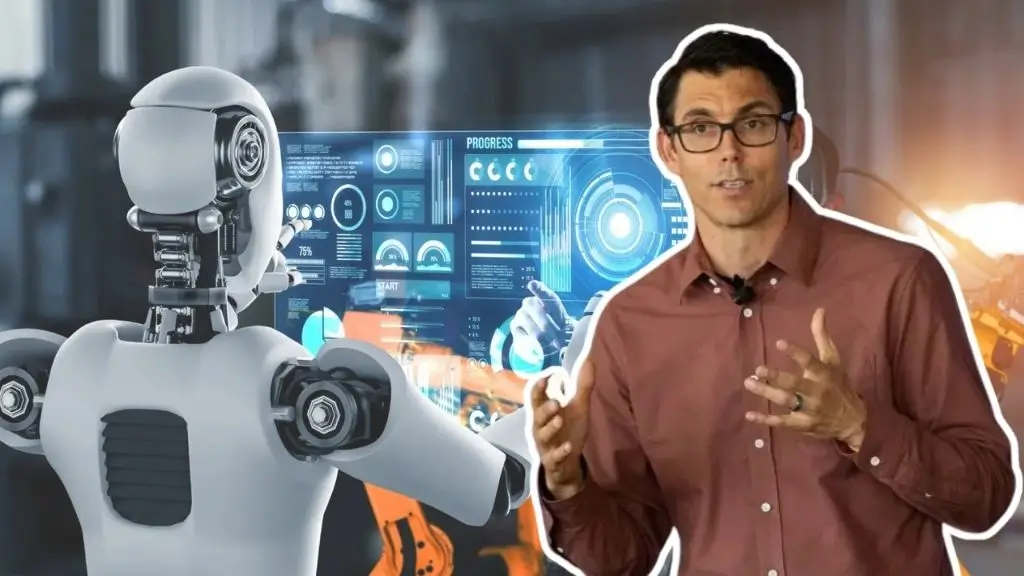
Rivian CEO RJ Scaringe is betting that humanoid robots will soon become standard fixtures on manufacturing floors, helping automakers close labor gaps and boost efficiency. His new startup, Mind Robotics, is building AI-powered humanoids he expects will reshape industrial labor within years, not decades.
Mind Robotics
Scaringe founded Mind Robotics in 2025, and the company has since raised more than $1 billion. Rivian holds a large minority stake and will serve as Mind Robotics’ first customer. Scaringe expects the company to unveil its first humanoid robot within the next year.
During the launch of the R2 EV, he said he envisions thousands of manufacturing workers collaborating with humanoid robots, with the machines handling repetitive, lower-complexity tasks while human employees focus on tasks that require judgment and dexterity. Scaringe also sees a multitrillion-dollar market opportunity in industrial labor and plans to use Rivian vehicle data to train AI models powering the robots.
Mind Robotics will operate independently of Rivian, a structure that distinguishes it from Tesla’s integrated approach with Optimus. Scaringe serves as executive chairman and acting CEO of Mind Robotics while continuing to lead Rivian. The two companies plan to collaborate through data sharing and future robot deployments, with Rivian expecting to capture productivity gains as the technology matures.
Labor shortages drive robotics push
Scaringe points to persistent labor shortages as the primary driver behind robotics adoption. Rivian currently carries open positions across manufacturing and engineering, and he argues that robots can help fill those gaps rather than eliminate the jobs tied to them.
He does not foresee fully automated vehicle factories in the near future. Complex manufacturing tasks still demand human decision-making and physical dexterity, and Scaringe expects humans and robots to work side by side for the foreseeable future. Humanoid robots, in his view, supplement existing workforces as demand scales rather than replace them outright.
Why it matters
Automakers are pouring investment into AI and automation, and humanoid robotics could become the next technology to fundamentally reshape vehicle production. If Mind Robotics delivers, Scaringe’s experiment may offer the clearest early picture yet of how future factories can integrate human labor, AI, and automation at scale.