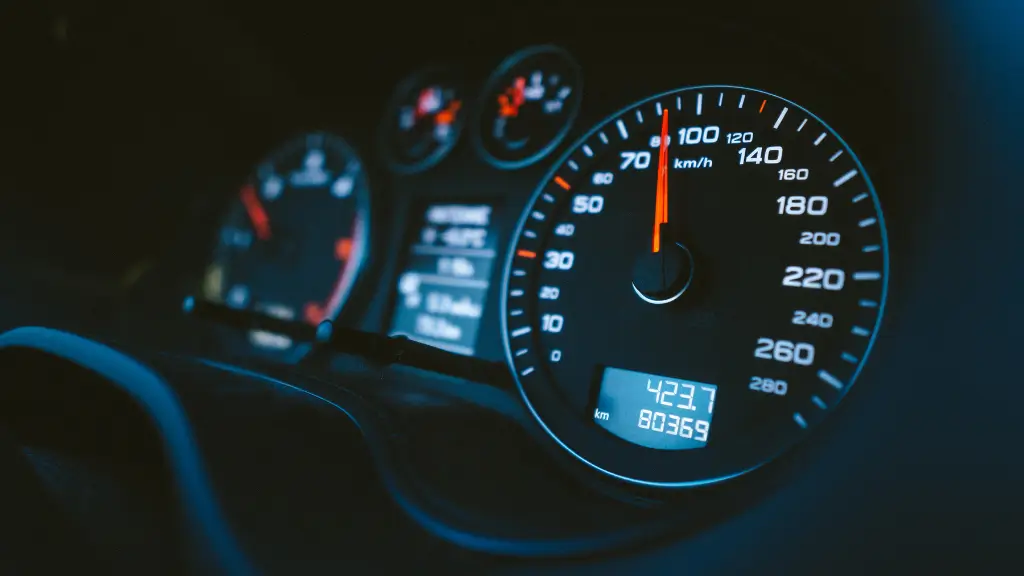
There’s a quiet shift happening in the automotive world, and it should make every car buyer stop and think twice before trusting what’s on the dashboard. The number you see on an odometer used to mean something. It used to tell a story about wear, usage, and value. Today, that number can be fiction, and you’d never know it.
Modern mileage blockers have changed the game entirely. This isn’t the crude odometer rollback scam from decades ago. This is something far more sophisticated, far more difficult to trace, and far more dangerous for consumers who assume the system still protects them.
At its core, this technology doesn’t “roll back” mileage at all. It prevents mileage from ever being recorded in the first place. That distinction matters, because it’s exactly why traditional detection methods fall flat.
These devices plug directly into a vehicle’s Controller Area Network, the digital nervous system that connects every major electronic component in the car. Once installed, the blocker intercepts mileage data before it gets stored across the vehicle’s control modules. The car is still driven, still accumulating wear, still aging in real time, but the digital record stays frozen.
No discrepancies. No mismatched data. No red flags for diagnostic tools to find.
That’s the uncomfortable truth. When done properly, these systems don’t leave evidence because they don’t alter data. They prevent it from existing.
And that’s where the industry’s long-standing safeguards begin to unravel.
Traditional odometer fraud leaves a trail. Technicians can spot inconsistencies between modules, timestamps that don’t line up, or physical wear that contradicts recorded mileage. But when mileage is never logged, those clues disappear. Every system in the vehicle agrees with itself. The data looks clean, even if it’s incomplete.
The result is a kind of digital invisibility that wasn’t possible before.
Plug-and-play installation only adds to the problem. These devices don’t require cutting wires or making permanent modifications. They connect using factory-style connectors and can be removed just as easily. Once they’re gone, there’s no physical evidence they were ever there.
For consumers, that’s a nightmare scenario.
Because now, the assumption that “a scan will catch it” is no longer reliable.
The market reality is even more complicated. Not all mileage blockers are created equal. High-end versions are engineered for specific vehicles, capable of blocking mileage data across multiple electronic control units simultaneously without triggering warnings or errors. Cheap versions, on the other hand, often fail to cover all systems or create glitches that can be detected.
But here’s the problem. Buyers don’t know which vehicle has been exposed to which level of technology. By the time a car hits the used market, the distinction is meaningless. The risk is already baked into the transaction.
And that risk is growing.
The legal line, at least, is clear. Using these devices to misrepresent a vehicle’s mileage during a sale is fraud. Full stop. It doesn’t matter how advanced the technology is or how undetectable it may be. If the intent is to deceive, it’s illegal.
But legality doesn’t eliminate opportunity. It just raises the stakes.
There are legitimate uses for this technology. Automakers and testing facilities may use mileage blockers during development, performance evaluation, or controlled transport scenarios. In those environments, preventing mileage accumulation can make sense. It preserves test conditions, protects asset value, and isolates variables.
That’s the official justification, and in controlled settings, it holds up. The problem is what happens outside those settings.
When this same technology becomes widely available, the line between legitimate use and abuse gets blurry fast. The tools don’t enforce intent. They just execute instructions. And in the wrong hands, they create a powerful way to manipulate perceived vehicle value without leaving fingerprints.
That puts the burden back on the buyer.
Service records, maintenance history, and physical inspection are no longer optional. They’re essential. The wear on the seats, the condition of the pedals, the state of the steering wheel, these details matter more than ever because they tell a story the odometer might not.
Professional pre-purchase inspections are no longer a luxury. They’re a safeguard. Even then, nothing is guaranteed.
Dealers are also feeling the pressure. Liability around mileage accuracy is increasing, and the expectation that a dealership can verify every vehicle’s true history is becoming harder to meet. Insurance companies are adjusting their models as well, particularly when policies are tied to usage or mileage-based risk.
Meanwhile, manufacturers are playing catch-up, exploring new ways to secure vehicle data and detect anomalies that current systems miss. But like every technological arms race, the defense is always reacting to the offense. And right now, the offense has an edge.
The uncomfortable takeaway is this. The number on the odometer is no longer a definitive measure of a vehicle’s life. It’s just one data point, and in some cases, it’s the least reliable one.
That doesn’t mean the system is broken beyond repair. But it does mean consumers need to adjust their expectations. Trust needs to be earned through documentation, inspection, and transparency, not assumed based on a digital readout. Because the reality is simple, even if it’s unsettling. The technology exists. It works. And in many cases, you won’t see it coming.
Check out my full commentary on this story: https://youtu.be/ryHfe943EiQ
Looking for more automotive news? https://www.CarCoachReports.