TSLA342.2702.31%
GM86.7700.38%
F14.3650.475%
RIVN15.360-0.46%
CYD45.240-0.32%
HMC31.5800.38%
TM191.1102.4%
CVNA75.6201.92%
PAG219.8501.18%
LAD377.550-1.10999%
AN209.4101%
GPI263.9500.94001%
ABG210.6600.08%
SAH80.8301.59%
TSLA342.2702.31%
GM86.7700.38%
F14.3650.475%
RIVN15.360-0.46%
CYD45.240-0.32%
HMC31.5800.38%
TM191.1102.4%
CVNA75.6201.92%
PAG219.8501.18%
LAD377.550-1.10999%
AN209.4101%
GPI263.9500.94001%
ABG210.6600.08%
SAH80.8301.59%
TSLA342.2702.31%
GM86.7700.38%
F14.3650.475%
RIVN15.360-0.46%
CYD45.240-0.32%
HMC31.5800.38%
TM191.1102.4%
CVNA75.6201.92%
PAG219.8501.18%
LAD377.550-1.10999%
AN209.4101%
GPI263.9500.94001%
ABG210.6600.08%
SAH80.8301.59%

Tesla reduces Supercharger prices amid record usage

While these reductions are a step in the right direction, some EV owners still find that charging at public stations can be more expensive than driving a gas-powered car.
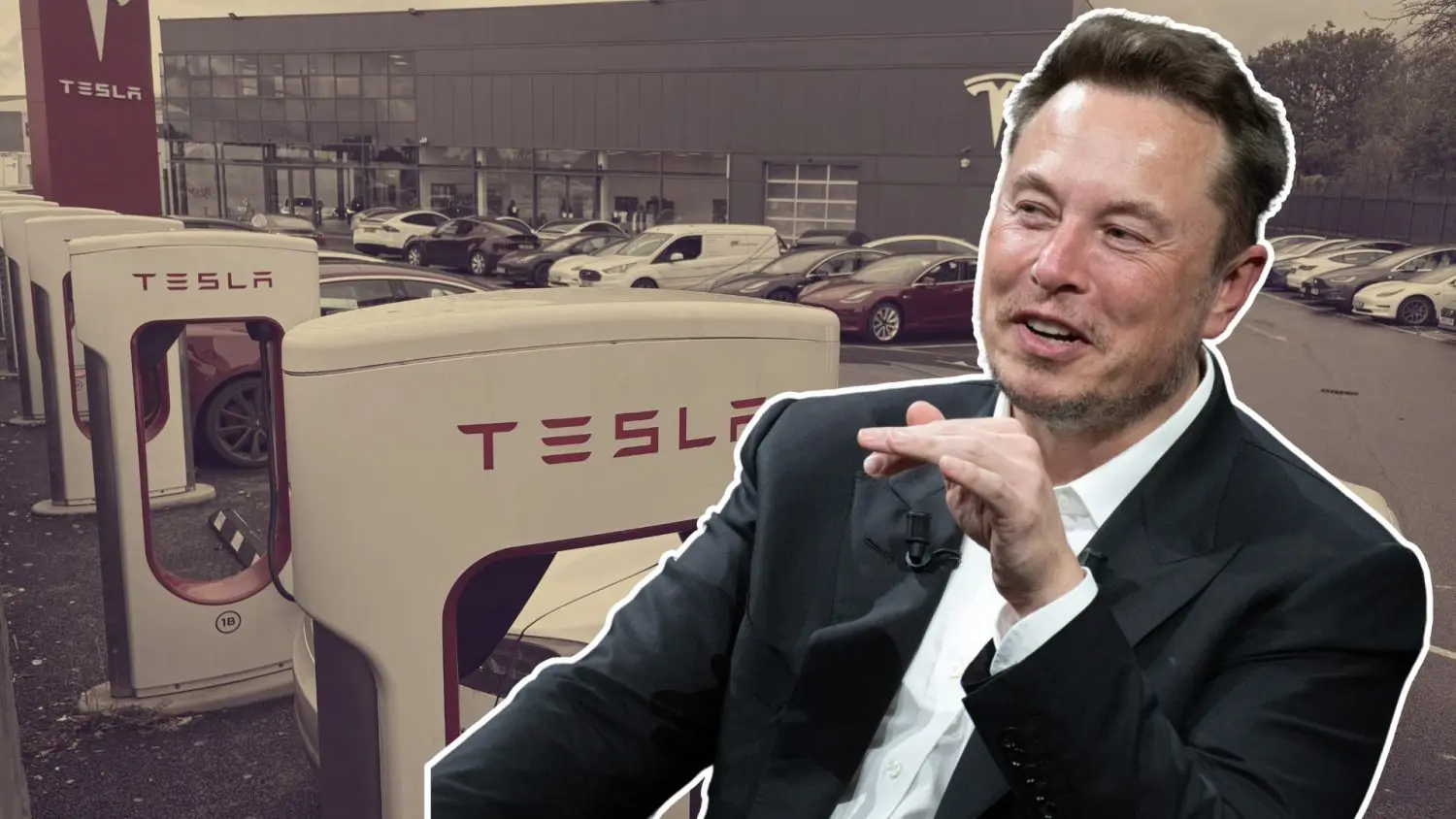
Tesla has announced a price reduction across its Supercharger network, responding to one of the key advantages of owning/driving EVs

Tesla has announced a price reduction across its Supercharger network, responding to rising charging costs that had started to erode one of the key advantages of electric vehicles (EVs)—lower operational costs.

As Tesla hits an all-time high in Supercharger usage, the price adjustments aim to make the EV charging experience more affordable and ensure that electric cars remain a cost-effective alternative to gasoline-powered vehicles.

Despite the convenience of home charging—where many EV owners wake up to a fully charged vehicle—long-distance travel often requires visiting a public fast-charging station. Tesla’s Supercharger network, known for its reliability and widespread availability, provides a fast and efficient way to charge electric vehicles, often delivering an 80% charge in just 25 minutes. However, as the price of electricity at these stations climbed, some Tesla drivers found that the cost of a full charge was approaching the price of a gas tank, undermining the operational savings that come with EV ownership.

In response, Tesla has implemented price reductions at Supercharger stations in both Europe and North America. For instance, some stations in Europe saw price cuts of up to 10 cents per kWh, and Tesla owners in North America have reported similar reductions, with some local Superchargers dropping from $0.50 per kWh to $0.42 per kWh in Quebec.

Tesla’s new head of charging, Max de Zegher, confirmed these reductions and emphasized that the company’s goals for Supercharger pricing are twofold: to keep prices low to accelerate EV adoption and to ensure the financial sustainability of the network to support its continued expansion. De Zegher highlighted that as Tesla passes on cost efficiencies to customers, it aims to build a network that offers dependable freedom to travel while remaining financially viable.

While these reductions are a step in the right direction, some EV owners still find that charging at public stations can be more expensive than driving a gas-powered car, depending on their location and the pricing at their chosen fast-charging stations. As Tesla continues to refine its pricing strategy, the company is also encouraging EV owners to take advantage of home charging, especially when paired with solar energy systems, which can offer significant savings over time.

Overall, Tesla’s price reduction at Superchargers reflects the company’s commitment to making EVs more accessible while addressing concerns about rising charging costs. 

Read More
More from Articles
Charlie Obaugh acquires Campus Ford in Virginia

Charlie Obaugh acquires Campus Ford in Virginia

- August 14, 2026
Charlie Obaugh Auto Group has acquired Campus Ford in Waynesboro, Virginia, from Matt McMurray. The transaction was announced in August 2026, with Performance Brokerage Services serving as the exclusive buy-side...
Revised USMCA proposals could cost billions annually, Detroit automakers warn

Revised USMCA proposals could cost billions annually, Detroit automakers warn

- August 14, 2026
On the Dash: USMCA revisions raising U.S. content thresholds to 50% could add at least $2 billion in annual costs per company. GM projects $2.5 billion to $3.5 billion in...
New-vehicle inventory tightens to 75 days' supply as July sales climb 8.5%

New-vehicle inventory tightens to 75 days’ supply as July sales climb 8.5%

- August 14, 2026
On the Dash: New-vehicle inventory drops to 75 days' supply as July sales climb 8.5%. Toyota, Lexus and Honda keep the tightest inventories while Stellantis works through excess stock. ...
Cox Automotive report finds dealers use AI widely, results still lag expectations

Cox Automotive report finds dealers use AI widely, results still lag expectations

- August 14, 2026
On the Dash: Focus AI investments on measurable dealership needs, not adoption for its own sake. Prepare teams for shoppers who are using AI before they reach the showroom. Build...
CBT News
Privacy Overview

This website uses cookies so that we can provide you with the best user experience possible. Cookie information is stored in your browser and performs functions such as recognising you when you return to our website and helping our team to understand which sections of the website you find most interesting and useful.