TSLA405.38016.48%
GM82.0554.005%
F12.9850.5451%
RIVN17.6850.7945%
CYD43.1250.8031%
HMC25.3500.99%
TM218.9406.08%
CVNA392.95530.71499%
PAG162.9906.97%
LAD288.75013.88%
AN209.34011.05%
GPI352.88017.4%
ABG215.55011.46%
SAH71.0803.71%
TSLA405.38016.48%
GM82.0554.005%
F12.9850.5451%
RIVN17.6850.7945%
CYD43.1250.8031%
HMC25.3500.99%
TM218.9406.08%
CVNA392.95530.71499%
PAG162.9906.97%
LAD288.75013.88%
AN209.34011.05%
GPI352.88017.4%
ABG215.55011.46%
SAH71.0803.71%
TSLA405.38016.48%
GM82.0554.005%
F12.9850.5451%
RIVN17.6850.7945%
CYD43.1250.8031%
HMC25.3500.99%
TM218.9406.08%
CVNA392.95530.71499%
PAG162.9906.97%
LAD288.75013.88%
AN209.34011.05%
GPI352.88017.4%
ABG215.55011.46%
SAH71.0803.71%

Honda’s most recent quarter saw record profits and robust sales

Honda reported its financial results on August 9, citing that in the company's fiscal first quarter, operating profit increased to $2.7 billion.
In the most recent quarter, Honda's operating profit increased by 78% as improved semiconductor supply and sales jumped for the automaker.

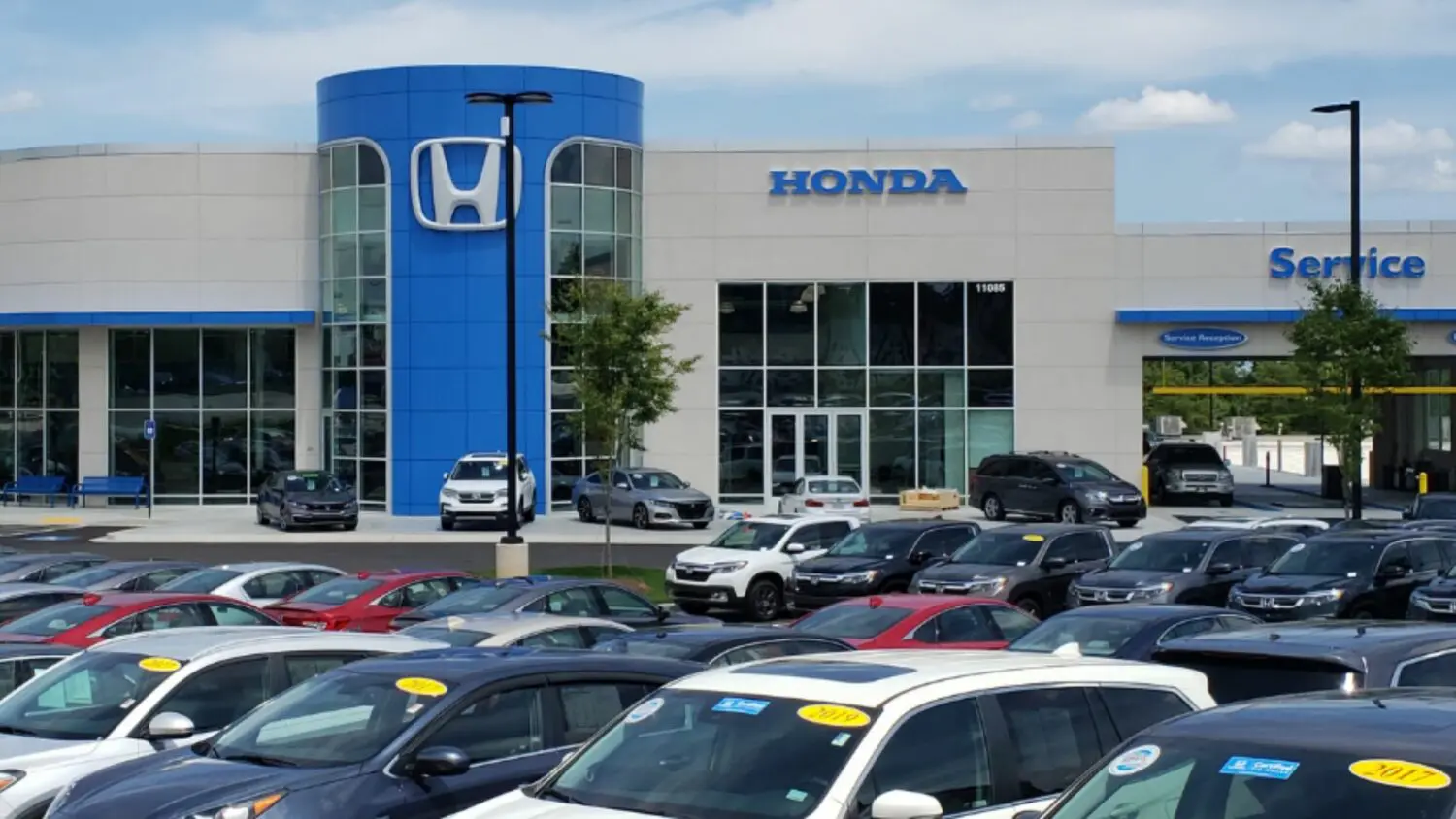
Image Source: Honda Carland

In the most recent quarter, Honda’s operating profit increased by 78% as improved semiconductor supply fueled North American production and increased sales for the Japanese manufacturer.

Honda reported its financial results on August 9, citing that in the company’s fiscal first quarter, operating profit increased to $2.7 billion, up from $1.5 billion a year earlier. Additionally, global sales jumped 11% to 901,000 vehicles in the third quarter, while revenue increased 21% to $32 billion during the three-month period.

Deliveries in the U.S., Honda’s largest market, increased by 45 percent to 347,000 vehicles. However, sales in China decreased by 5% to 309,000 cars, and European sales decreased by 13% to 20,000 vehicles.

In response to the auto industry’s recovery from the global semiconductor shortage, Honda attributed the U.S. recovery to an increase in plant output. Masaharu Hirose, general manager of Honda’s finance division, stated, “In the U.S., the semiconductor supply has improved, and our production has recovered accordingly.” 

Hirose claimed that the American economy is still in “good shape” and that overall demand outpaces supply. Nevertheless, he further predicted signs of weakness, such as a drop in household savings rates in the U.S. and a gradual rise in late loan payments.

Conversely, Honda’s operations in China suffered from increased price competition in that nation’s quickly growing E.V. market. The automaker produced 767,121 vehicles in North America through June, a 27% increase. At the same time, manufacturing fell by 12% to 617,638 cars in China.


Further Reading
More from Articles
GM leans on global production to supply U.S. market amid cost pressures

GM leans on global production to supply U.S. market amid cost pressures

- April 17, 2026
On the Dash: Imported inventory may create variability in delivery timing and supply consistency. Trade policy shifts could impact the pricing and availability of certain models. Global production strategies may...
Volkswagen ends U.S. EV output, triggering $600 million financial hit 

Volkswagen ends U.S. EV output, triggering $600 million financial hit 

- April 17, 2026
On the Dash: Slower EV demand may impact inventory planning and turn rates for electric models. Production pullbacks could tighten EV supply or shift sourcing toward imports. Ongoing cost pressures...
March sales surge tightens inventory, affordability gaps persist

March sales surge tightens inventory, affordability gaps persist

- April 17, 2026
On the Dash: Faster March sales improved inventory flow, but demand remains uneven heading into Q2. Limited sub-$40K inventory continues to constrain volume opportunities. Rising incentives indicate growing pressure to...
Independent shops are gaining ground, but dealerships retain advantages in expertise, loyalty, and digital tools: New CDK Service Shopper 5.0 survey shows

Independent shops gain ground as dealerships face mounting pressure

- April 17, 2026
On the dash: Independent shops are gaining share, but dealerships still lead at 42% overall service volume. Dealerships win on expertise, OEM parts access, EV repairs, and stronger customer loyalty...
CBT News
Privacy Overview

This website uses cookies so that we can provide you with the best user experience possible. Cookie information is stored in your browser and performs functions such as recognising you when you return to our website and helping our team to understand which sections of the website you find most interesting and useful.