
TSLA360.590-20.67001%
GM72.540-2.5%
F11.590-0.09%
RIVN15.4000.46%
CYD39.410-0.08%
HMC24.150-0.16%
TM207.010-2.66%
CVNA313.5481.45799%
PAG149.3400.18%
LAD251.8201%
AN197.680-0.29%
GPI329.450-1.34%
ABG194.7600.73%
SAH64.870-0.38%
TSLA360.590-20.67001%
GM72.540-2.5%
F11.590-0.09%
RIVN15.4000.46%
CYD39.410-0.08%
HMC24.150-0.16%
TM207.010-2.66%
CVNA313.5481.45799%
PAG149.3400.18%
LAD251.8201%
AN197.680-0.29%
GPI329.450-1.34%
ABG194.7600.73%
SAH64.870-0.38%
TSLA360.590-20.67001%
GM72.540-2.5%
F11.590-0.09%
RIVN15.4000.46%
CYD39.410-0.08%
HMC24.150-0.16%
TM207.010-2.66%
CVNA313.5481.45799%
PAG149.3400.18%
LAD251.8201%
AN197.680-0.29%
GPI329.450-1.34%
ABG194.7600.73%
SAH64.870-0.38%

Which electric vehicles are driven the most by their owners? — Study

brand loyalty

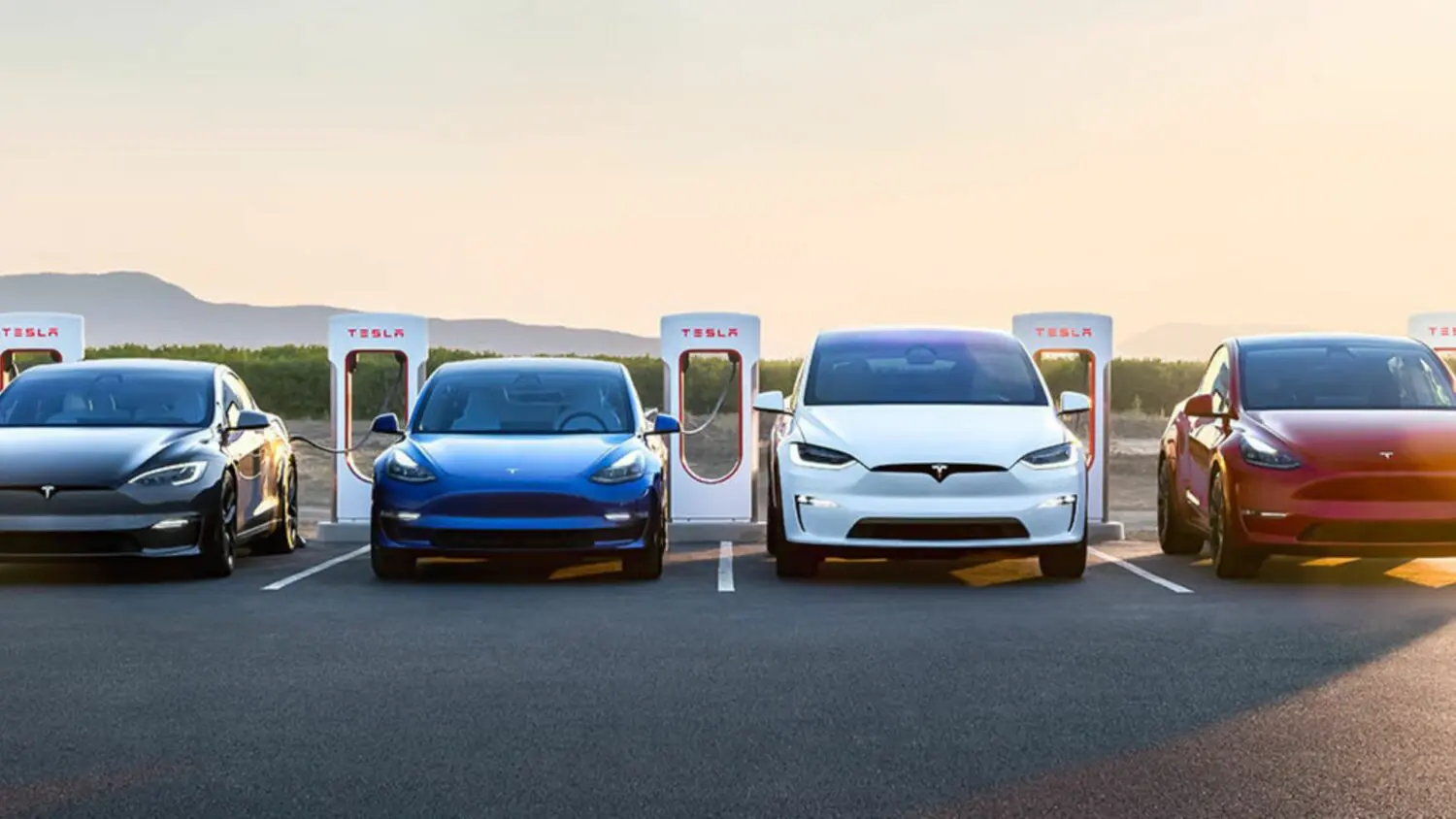
Image Source: Tesla supercharger pilot gallery

A recent study from iSeeCars sheds light on the driving habits of electric vehicle owners compared to their internal combustion engine counterparts. The study analyzed data from over 860,000 vehicles sold in 2020 to determine the average mileage of EVs and compare it to that of traditional three-year-old cars.

According to the study, the average three-year-old EV covers approximately 9,059 miles annually. The Tesla Model X, which averages 10,378 miles annually, tops the list. Following closely behind are the Model Y (10,199 miles), Model 3 (9,960 miles), and Model S (9,340 miles). Tesla’s dominance is likely the result of its solid range capabilities and an extensive public charging network.
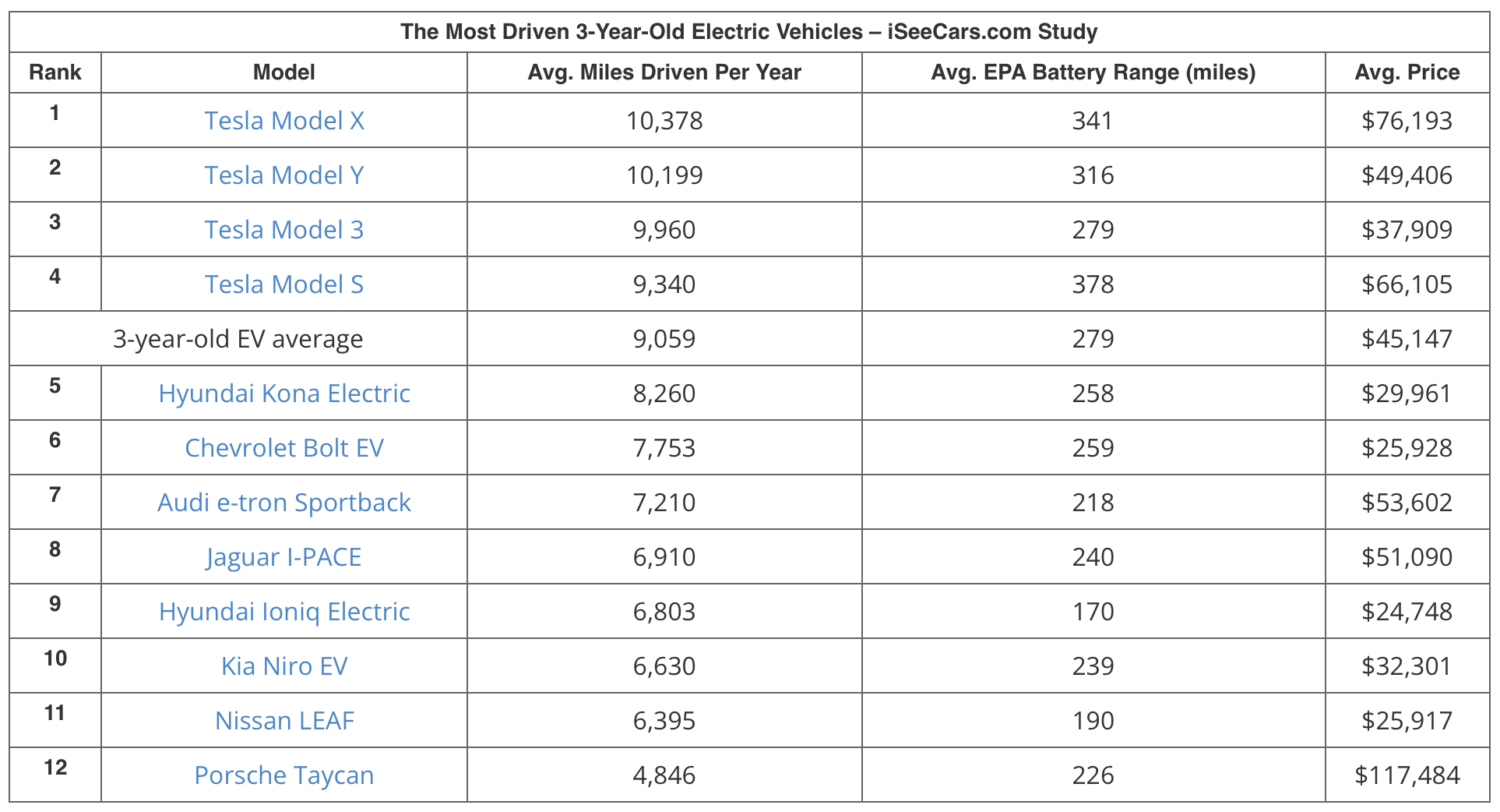
Data chart by iSeeCars

However, it is important to note that electric vehicles still fall short in terms of mileage when compared to ICE vehicles. iSeeCars suggests that EVs would need to achieve a driving range of 440 miles to match the mileage of gasoline vehicles. To put it into perspective, this would require an additional 161 miles more than the current average of 279 miles.

Furthermore, three-year-old EVs cost $45,147 on average, 47% higher than the price of ICE cars, which comes in at $30,760. However, EVs are driven approximately 29% less, covering an average distance of 9,059 miles, compared to the 12,758 miles their traditional counterparts traverse yearly.

“Several factors contribute to EVs being driven less, including their common role as a second or third vehicle in a household, and being used less often for road trips,” says iSeeCars Executive Analyst Karl Brauer. “But the most powerful factor may be an EV’s battery range and the associated range anxiety.”

Range anxiety is still a persistent issue for owners of electric vehicles. Even though EVs typically have more than enough range for daily trips to work or the grocery store, drivers still mitigate their usage because of psychological barriers.

“Range anxiety is less about being stranded in the middle of nowhere and more about the ‘refueling’ process for electric vehicles,” Brauer adds. “In a gasoline car, regardless of how far you’re going, there are always plenty of refueling options and the process takes 5 to 10 minutes. Until EVs can offer that level of convenience at a comparable cost, they will be at a distinct disadvantage in terms of use and market demand.”

Editor’s note: This data only pertains to cars sold in 2020, so newer EV models like the Ford F-150 Lightning, Cadillac Lyriq, and Toyota bZ4X are omitted.

More from Articles
Ed Morse Automotive Group acquires Porsche Des Moines in Iowa

Ed Morse Automotive Group acquires Porsche Des Moines in Iowa

- April 3, 2026
Ed Morse Automotive Group acquired Porsche Des Moines in Iowa from Jason Pittack of the Woodhouse Auto Family in a transaction that closed April 1, 2026. The dealership will continue...
GM to invest more than $150 million in Saginaw Metal Casting Plant

GM to invest more than $150 million in Saginaw Metal Casting Plant

- April 3, 2026
General Motors announced plans to invest more than $150 million in its Saginaw Metal Casting Operations to support the production of the sixth generation of GM’s V-8 engine blocks and...
White House revises metals tariffs, shifts calculation method

White House revises metals tariffs, shifts calculation method

- April 3, 2026
On the Dash: The revised tariff structure simplifies how metals duties are calculated by applying them to consumer purchase prices and eliminating complex component-level assessments. The changes are expected to...
Stellantis explores EV production in Canada with China’s Leapmotor

Stellantis explores EV production in Canada with China’s Leapmotor

- April 3, 2026
On the Dash: Stellantis’ early-stage talks with Leapmotor highlight how global partnerships are accelerating as automakers adapt to shifting tariffs and EV demand. Uncertainty around U.S. trade policy and potential...
CBT News
Privacy Overview

This website uses cookies so that we can provide you with the best user experience possible. Cookie information is stored in your browser and performs functions such as recognising you when you return to our website and helping our team to understand which sections of the website you find most interesting and useful.