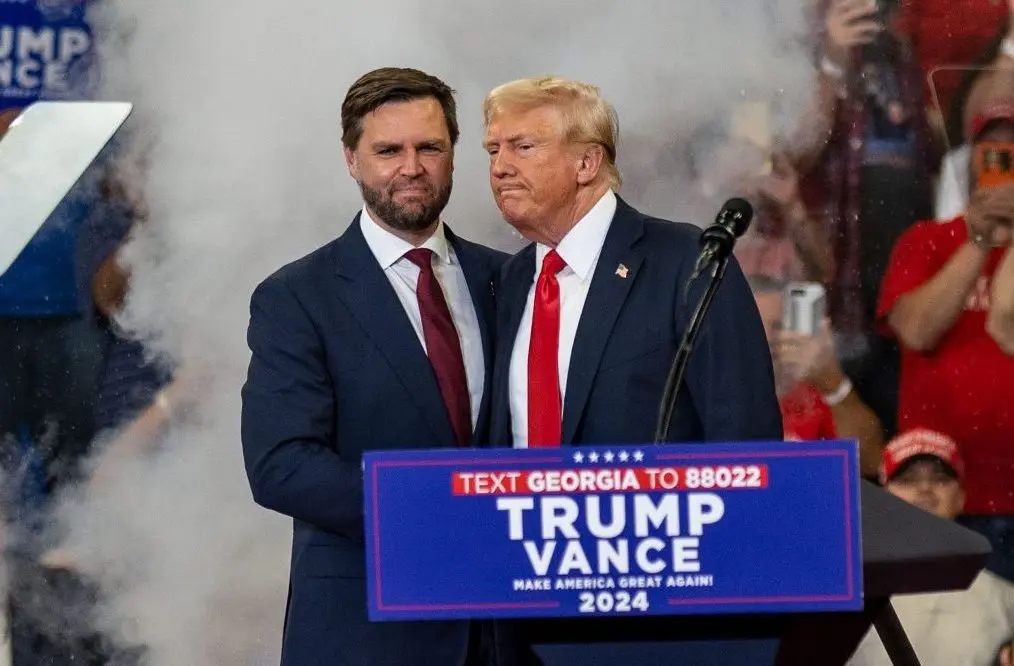
As the automotive industry braces for a new Republican administration under President-elect Donald Trump, stakeholders reflect on how this leadership shift may shape their operations, regulatory landscapes, and electric vehicle (EV) strategies. Automakers, suppliers, labor leaders, and analysts are weighing the possible impact of anticipated policy shifts, especially in trade, emissions, and energy costs.
Automaker Reactions and Industry Leaders’ Insights
Toyota’s U.S. Division Head, Dave Christ, indicated that while Toyota plans to adhere to regulatory changes, it does not foresee an overhaul of its current strategy. “We will work with any regulations put in front of us,” said Christ, acknowledging that Toyota, with ten U.S. plants, is ready to adapt to policy changes but does not anticipate drastic operational shifts. Additionally, Tesla CEO Elon Musk took to social media, calling Trump’s victory a “crystal clear mandate for change,” while Amazon CEO Jeff Bezos extended congratulations and expressed optimism about the future opportunities under Trump’s leadership.
Meanwhile, the United Auto Workers (UAW) union, represented by President Shawn Fain, expressed its commitment to fighting for fair labor practices regardless of the White House occupant. Fain emphasized ongoing battles for union jobs, fair trade policies, and the protection of U.S. manufacturing in critical sectors like EV batteries. Fain challenged Washington, calling on lawmakers to support the working class and resist corporate pressures.
Further, groups like the Zero Emission Transportation Association (ZETA) and Electric Drive Transportation Association (EDTA) congratulated Trump but underscored the need for bipartisan support to advance the U.S. in the global EV market. They pointed to the billions in private investments already fueling the EV sector, which they see as essential for the future of American automotive leadership. While the industry’s momentum toward electrification has grown significantly, there is concern that deregulation could reduce incentives, slowing EV adoption.
Analysts Weigh Tariffs, Trade, and Market Dynamics
The potential for increased tariffs under Trump’s administration is a divisive issue. Cox Automotive analysts predict that a settled political landscape may encourage new vehicle sales, projected to close in 2024 at 15.7 million units, a 2% increase over 2023. Meanwhile, GlobalData analysts expect intensified protectionism targeting Chinese imports, which could raise consumer prices and reduce choice.
Morningstar DBRS pointed out that tariffs might particularly affect European automakers, potentially shifting production to the U.S. over the long term. This adjustment would be costly and require years to fully materialize, but it would align with the administration’s push to foster domestic manufacturing.
Long-Term Implications for the Auto Sector
Analysts caution that while tariffs may protect certain jobs, they also risk passing higher costs onto consumers, which could temper demand for new vehicles. As Erik Gordon from the University of Michigan explains, extended car ownership may benefit the replacement parts industry but reduce new car sales volumes.
AutoForecast Solutions’ Joe McCabe suggested that while tariffs offer short-term domestic gains, they ultimately raise consumer prices. Reflecting on the long-standing “Chicken Tax” on imported trucks, McCabe highlighted that tariffs can create market imbalances and limit competition, making domestic trucks disproportionately expensive.
From labor rights to environmental standards and EV adoption, the industry stands on the edge of new policies that could redefine its future for years to come.