

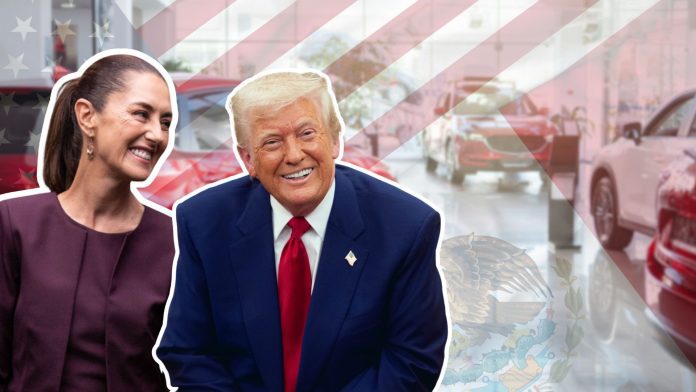
President Donald Trump has extended Mexico’s current tariff rates for 90 days, temporarily holding off on a threatened 30% hike as both countries seek to hammer out a broader trade agreement. The move follows a call between Trump and Mexican President Claudia Sheinbaum on July 31 and reflects rising tension over border security and trade imbalances.
Mexico will continue to face steep duties, including a 25% tariff on cars, fentanyl, and a 50% rate on steel, aluminum, and copper. However, the delay gives negotiators more time to address unresolved issues such as labor standards, non-tariff trade barriers, and U.S. investment incentives. Sheinbaum called the conversation “really good” and said both sides have 90 days to reach a long-term deal.
Since the beginning of 2025, Mexico has faced escalating pressure under Trump’s aggressive tariff campaign, although many goods remain shielded by the USMCA. About 83% of U.S. imports from Mexico were tariff-free in May, based on data analyzed by Bloomberg Economics.
Automakers and parts suppliers in the U.S. will be watching negotiations closely, especially as new tariffs continue to affect the North American supply chain. Notably, Mexico is the United States’ top trading partner and a critical hub for auto production.
Here’s why it matters:
For U.S. car dealers and manufacturers, the 90-day delay gives temporary relief but underscores long-term uncertainty. Many Mexican-built vehicles and components are still exempt under the USMCA, but continued trade friction could raise prices, squeeze margins, and impact supply chain reliability. A 25% tariff on cars from Mexico, if left unchanged or increased, would directly affect vehicle availability and pricing in the U.S. market.
Key takeaways:
- Trump delays 30% tariff hike
The administration extended Mexico’s current tariff structure for 90 days following talks with President Sheinbaum. - Auto sector remains exposed
A 25% tariff on Mexican-built vehicles remains in place, with potential cost implications for U.S. dealers and buyers. - USMCA exemptions still hold
Roughly 83% of U.S. imports from Mexico were exempt from tariffs as of May, but this could change if talks stall. - Talks broaden beyond trade
Future negotiations may include security, intellectual property, and labor, which could impact production agreements. - Other nations impacted
Trump also announced new tariffs on South Korea and backed away from harsher rates on Brazil, showing a global pattern of selective pressure.