
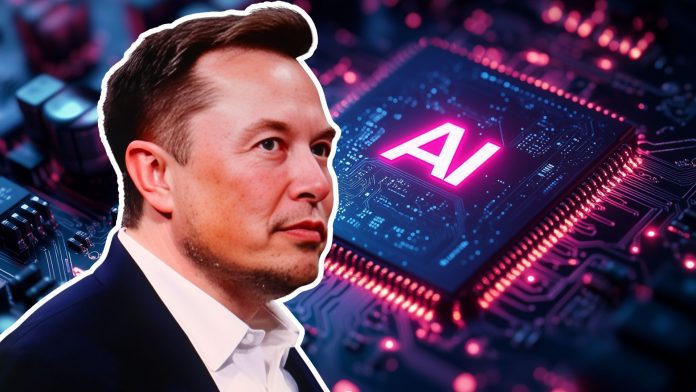
Tesla is ending its in-house Dojo supercomputer program, shifting its AI chip development exclusively toward inference chips that run real-time AI models in vehicles and robotics. CEO Elon Musk confirmed the move on X, saying it “doesn’t make sense” to split resources between two chip designs.
Dojo was designed to train Tesla’s autonomous driving software using video and sensor data collected from its EV fleet. While it was once viewed as a key differentiator in Tesla’s full self-driving ambitions, the company will now concentrate its AI efforts on its AI5 and AI6 inference chips, which Musk says will handle both real-time operation and some training functions.
The strategic pivot comes amid broader restructuring efforts at Tesla, which has laid off thousands, seen a wave of executive departures, and faced softening EV demand, particularly in Europe. The company is now realigning itself around artificial intelligence and robotics, and has inked a $16.5 billion deal with Samsung to help produce its next-generation chips.
Here’s why it matters
For those selling or competing with Tesla, this signals the company’s increasing commitment to deploying self-driving features more rapidly. Inference chips are what enable real-time autonomy, which means Tesla may accelerate updates to its FSD system, creating stronger selling points and differentiation in the EV and premium segments. It also reflects cost and operational consolidation during a time when Tesla’s price cuts and margin pressure are being felt across the auto industry.
Key takeaways:
- Dojo program ends after internal review
Musk disbanded the Dojo supercomputer team, with key personnel, like Peter Bannon, departing. - Shift to inference chip development for autonomy
Tesla will now focus exclusively on chips like AI5 and AI6 to power real-time autonomous driving and robotics, consolidating its AI roadmap. - Operational consolidation amid market pressure
The move is part of a broader Tesla restructuring that includes layoffs, executive turnover, and intensified AI investment to offset lagging EV demand. - Samsung tapped for $16.5 billion AI chip deal
Tesla has partnered with Samsung to produce its next-gen AI chips, aiming for AI5 by 2026, though production timelines for AI6 remain unclear. - Faster FSD deployment could reshape EV competition
A more focused AI chip strategy may allow Tesla to roll out advanced self-driving capabilities sooner, raising the stakes for other automakers.