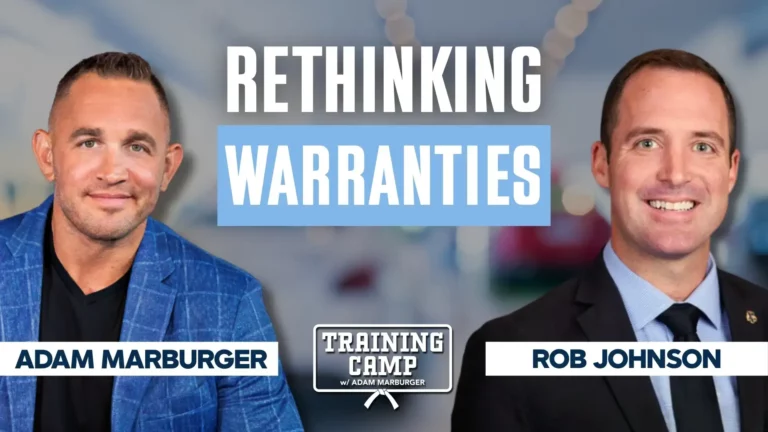
Dealerships across the country are reassessing lifetime limited warranty programs as rising repair costs and shifting profit participation dynamics begin to impact long-term performance. During today’s Training Camp episode, Rob Johnson, VP of Sales at Ascent Dealer Services, outlines how inflation, loss ratios, and maturing customer expectations are driving a broader shift in strategy.
Lifetime warranties have long served as a key differentiator for dealers, helping answer the question of “why buy here” and drawing customers into the showroom. Over the past decade, however, the economics behind those programs have changed. Johnson alluded to average repair costs rising by approximately 80% from 2018 to 2025, while many dealers have not adjusted warranty pricing to keep pace.
That imbalance, he notes, has created mounting pressure on profit participation models. As costs increase without corresponding pricing adjustments, loss ratios have climbed, in some cases exceeding 100%. The result is reduced underwriting profitability for both dealers and administrators, prompting many stores to evaluate whether continuing lifetime offerings is sustainable.
"We know that the cost of your average repair from 2018 to 2025 has gone up about 80 percent. Unfortunately, what we're finding is a lot of dealers didn't keep up the cost of that life repair going into their profit participation, which has caused a ripple effect of loss ratios that have skyrocketed on that product specifically."
According to Johnson, lifetime warranties traditionally serve two primary purposes within a dealership.
- First, they help drive traffic and increase vehicle sales by offering customers long-term peace of mind.
- Second, they contribute to profit participation structures such as reinsurance and retrospective programs by generating premiums without relying on F&I product penetration.
However, Johnson emphasized that lifetime products present structural challenges. Their long earning curves, often extending 10 years or more, delay cash flow and expose dealers to ongoing increases in repair costs. In contrast, shorter-term products can generate faster returns and provide more predictable financial performance.
Operationally, these programs can also create internal tension. Dealers must balance front-end competitiveness with back-end profitability, managing pricing to support both vehicle sales and long-term risk performance. When warranty costs rise, but pricing remains static, that balance becomes increasingly difficult to maintain.
Despite these challenges, exiting a lifetime program is not a simple decision. Many dealers have built their brand identity around these offerings, making them a central part of their marketing strategy. Stepping away from lifetime coverage can create concerns about losing a competitive edge, particularly in markets where such programs are widely promoted.
To address these concerns, dealers are beginning to explore alternative approaches that deliver both customer value and improved financial outcomes. One emerging strategy involves replacing lifetime coverage with shorter-term, high-impact benefits that provide immediate value.
These alternatives often include 12-month prepaid maintenance programs, which encourage customers to return to the dealership for service and strengthen long-term retention. Dealers are also introducing short-term ancillary coverage, such as tire protection, that offers immediate, tangible benefits not typically covered by OEM warranties.
This approach allows dealers to shift from long-term exposure to shorter-term products that earn more quickly and carry lower loss ratios. The result is improved cash flow within profit participation models and stronger overall profitability.
At the same time, these strategies can enhance the customer experience. Providing value upfront helps establish trust and increases engagement during the F&I process. Customers who receive immediate benefits are often more receptive to additional protection products, contributing to higher penetration rates and improved performance in the finance office.
Nevertheless, Johnson notes that success with these models depends on full dealership alignment. Sales, service, and F&I teams must consistently communicate the value of the offering, ensuring that customers understand the benefits from the start of the buying process through ownership. When executed effectively, this approach not only drives profitability but also strengthens customer retention and loyalty.