

On the Dash:
- California will not replace the expiring $7,500 federal EV tax credit, with Gov. Gavin Newsom citing budget constraints and prioritizing infrastructure over direct subsidies.
- Automakers lose hoped-for state relief, as companies like Rivian, Hyundai, and Volkswagen had urged California to offer a $5,000 incentive to offset the federal rollback.
- Newsom escalates tensions with automakers, accusing GM and CEO Mary Barra of leading efforts against California’s 2035 gas car ban, while leaving open the possibility of a future state credit funded through carbon-trading revenue.
California Gov. Gavin Newsom said Friday the state will not replace the $7,500 federal electric vehicle tax credit set to expire Sept. 30, reversing an earlier pledge to restart California’s own subsidies. The decision removes what automakers had hoped would be the nation’s largest state-level incentive in the country’s top EV market.
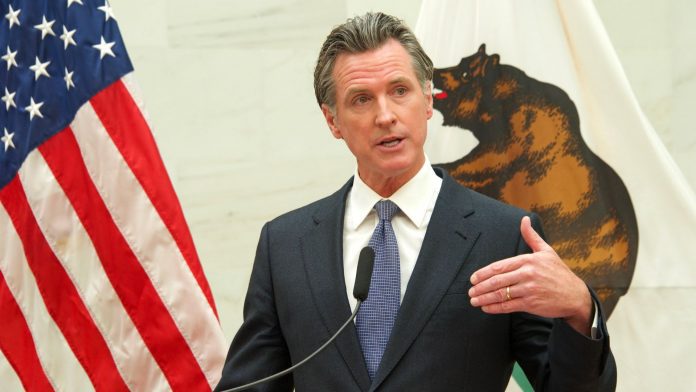
Newsom, speaking in San Francisco, said the state cannot offset the loss of federal support, calling the phaseout “federal vandalism.” Instead, he told California that it will direct resources toward expanding charging infrastructure rather than direct purchase subsidies.
The announcement delivers a blow to EV makers such as Rivian, Hyundai, and Volkswagen, which had urged state leaders to create a $5,000 incentive to soften the impact of the federal rollback. California accounted for about 27% of all EV sales in the United States last year, positioning it as the most critical market for continued consumer adoption.
Newsom’s reversal follows a pledge made in 2024 to backfill the federal program if it were eliminated. However, California’s growing budget deficit derailed those plans. The state ended its previous EV tax credit program in 2023 and now falls outside the group of 17 states still offering some form of incentive, according to the Tax Foundation.
The governor also aimed at Detroit automakers, singling out General Motors and CEO Mary Barra. Newsom accused GM of “selling out” California by leading efforts in Congress to block the state’s 2035 ban on new gasoline-powered vehicle sales. California regulators had estimated the ban would reduce greenhouse gas emissions by more than 35%.
Despite the setback, the governor’s office said California could revive its EV subsidy program next year. State officials are considering allocating funds from the state’s carbon-trading initiative, which generates hundreds of millions annually for environmental programs.