On the Dash:
- Ford’s Home Power Management system allows F-150 Lightning owners to power homes and return energy to the grid.
- Pilot programs with utilities like DTE Energy and BG&E pay customers for using stored vehicle energy during peak demand.
- Ford projects annual savings of around $500, with potential for higher returns depending on local utility programs.
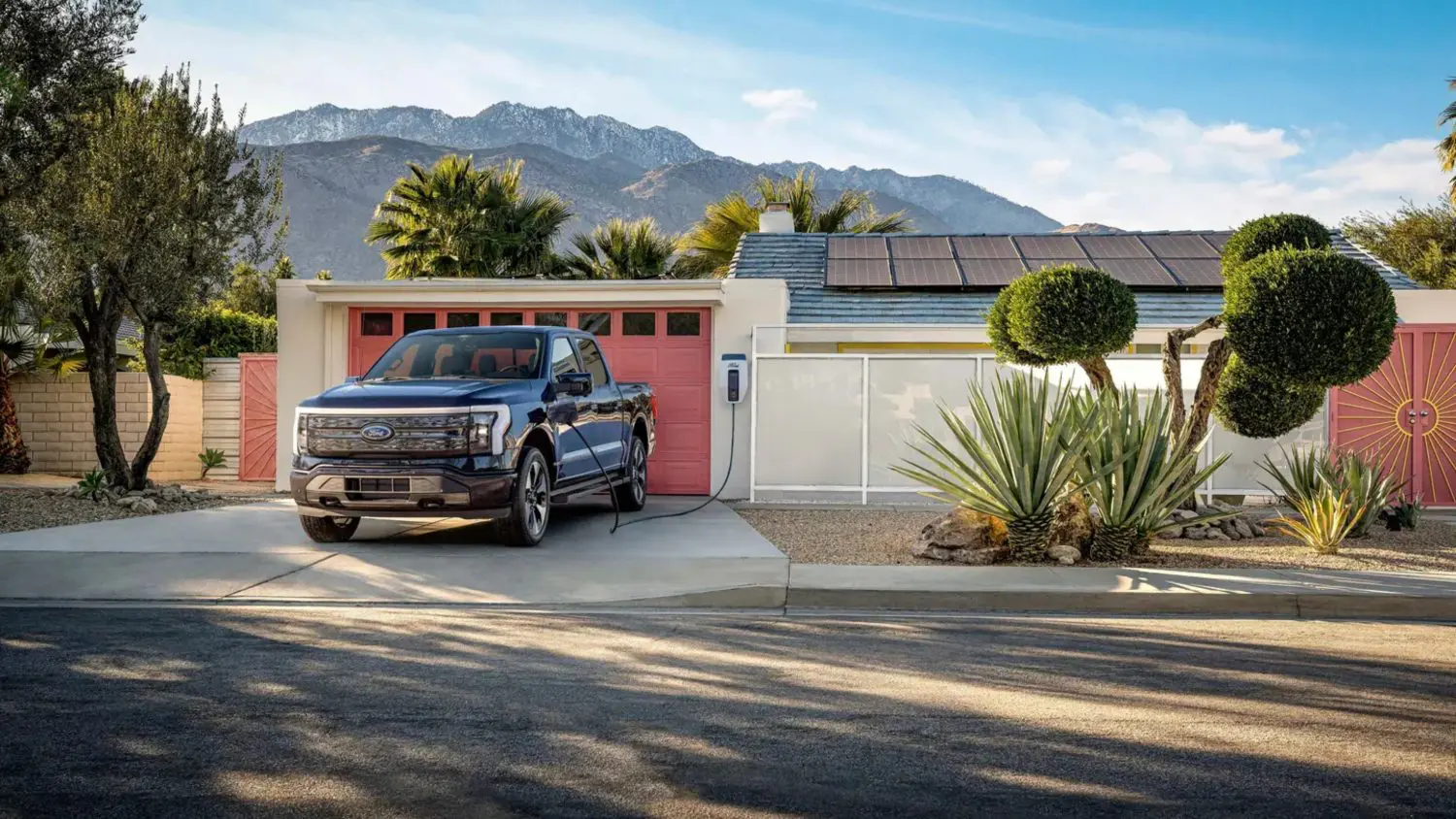
Ford is transforming how electric vehicles interact with the power grid through new programs that allow F-150 Lightning owners to use their trucks as home energy sources. The company’s Home Power Management system enables customers to charge their trucks during off-peak hours, power their homes during high-demand periods, and even return energy to the grid in select markets.
The program is designed to help customers reduce electricity costs while supporting utilities in managing grid demand. Owners who install the Ford Charging Station Pro, Home Integration System, and Home Power Management software can automate charging and power transfers based on real-time electricity pricing. In select cases, utilities compensate customers for sharing stored energy, turning the F-150 Lightning into both a backup power source and a potential income generator.
Ford recently launched a pilot program with DTE Energy in Michigan, offering payments to participants who use their vehicle batteries to power their homes during peak demand. The automaker’s partnership with Baltimore Gas and Electric and Sunrun in Maryland marked the first residential vehicle-to-grid distributed power plant, where some customers earned up to $1,000 for returning stored electricity to the grid.
Customer trials have demonstrated the system’s reliability and cost savings. Participants in early tests reported transferring an average of 8 to 23.5 kWh daily from their trucks to their homes, reducing strain on the grid during high-usage periods. Ford estimates that customers could save around $500 annually, with potential for higher savings depending on regional utility programs.
Ford’s energy initiatives also include Ford Energy Rewards, a program that provides financial incentives for off-peak vehicle charging, and Home Backup Power, which enables the F-150 Lightning to serve as an emergency generator during outages. The automaker continues to refine its systems with insights from pilot programs and collaborations with utility providers to make vehicle-to-grid technology more accessible.