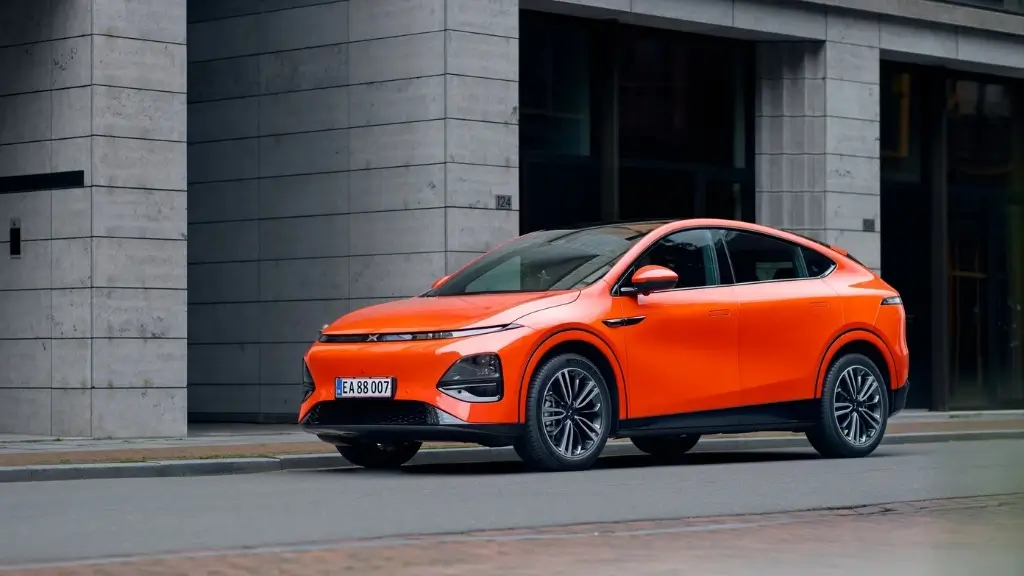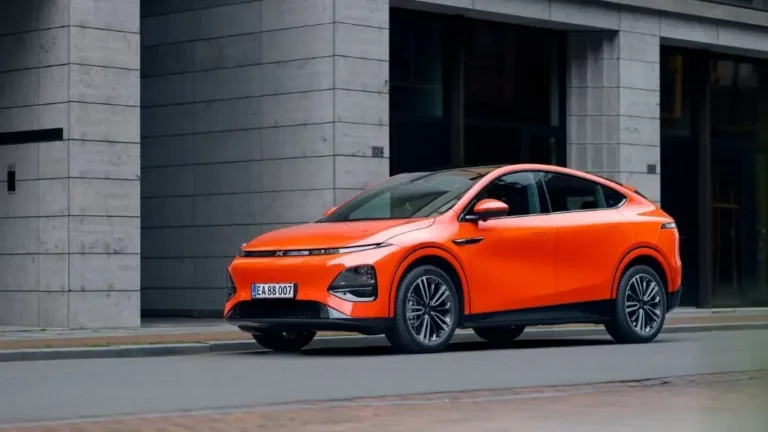
In a move set to redefine the automotive landscape and EU-China relations, the European Commission has announced steep tariffs on China-made battery electric vehicles (BEVs) starting 5 July. This decision follows a nine-month investigation revealing extensive subsidies across the entire BEV supply chain in China, enabling producers to offer their vehicles at significantly lower prices than their European counterparts.
Investigation Findings
The investigation, which began in early June, found that Chinese BEV manufacturers, including domestic giants and foreign companies operating within China, received public funds at every stage of production. Subsidies were detected from the mining of raw materials needed for batteries to the shipping services used to transport finished products to Europe. This financial support allows Chinese producers to maintain lower prices, leading to a surge in BEV imports into Europe—from a market share of 3.9% in 2020 to 25% by the end of 2023.
Tariff Details
In response to this market disruption, the European Commission has imposed differentiated tariffs ranging from 17.4% to 37.6%, calculated based on the parent company, annual turnover, and the suspected amount of subsidies received. BYD will face a 17.4% tariff, Geely 19.9%, and SAIC 37.6%. Other BEV producers in China that cooperated with the investigation, including Tesla and BMW, will see a 20.8% tariff, while non-cooperating producers will be subject to the highest rate of 37.6%.
Economic Impact
This tariff imposition is intended to counteract the unfair competitive advantage granted by these subsidies and protect the European automotive industry, which the commission warns faces a “threat of economic injury” that could endanger over 12 million direct and indirect jobs.
“The sheer scale of subsidies allows Chinese producers to offer their BEVs at noticeably lower prices than those assembled in the bloc, where energy and labor costs are much higher,” a Commission spokesperson explained. “These tariffs are necessary to offset the unfair advantage granted by subsidies.”
Provisional Measures
The tariffs will initially be provisional, with customs authorities requesting bank guarantees from Chinese exporters rather than cash. This means end customers might not immediately see a price change. A final decision on the tariffs will be made in four months, with a preliminary vote by member states set to take place in two weeks. While this vote will be non-binding, it will gauge political sentiment ahead of the final decision.
EU-China Relations
The introduction of these tariffs is anticipated to strain EU-China relations further. Beijing has already expressed strong opposition to the investigation and its conclusions, labeling it a “naked protectionist act” and accusing the EU of artificially constructing and exaggerating the so-called subsidies. In a retaliatory move, China’s Ministry of Commerce launched an anti-dumping investigation into pork imports from the EU, signaling the beginning of potential countermeasures. “There is still a four-month window before arbitration, and we hope that the European and Chinese sides will move in the same direction, show sincerity, and push forward with the consultation process as soon as possible,” a Chinese Ministry of Commerce spokesperson said.
Industry Reactions
The China Chamber of Commerce to the EU voiced its disappointment, describing the Commission’s decision as politically driven and detrimental to consumer interests. They warned that these measures would likely harm joint ventures such as those between Volkswagen, General Motors, and SAIC.
Historical Context
The tariffs come at a low point in EU-China relations, already strained over issues such as Russia’s invasion of Ukraine, tensions in the Taiwan Strait, and the repression of the Uyghur minority. The subsidies injected by the Chinese government have been a long-standing point of contention, previously decimating the European solar industry. European Commission President Ursula von der Leyen emphasized the importance of fairness in global trade, citing past experiences with China’s trade practices. “We have not forgotten how China’s unfair trade practices affected our solar industry. Many young businesses were pushed out by heavily subsidized Chinese competitors,” von der Leyen said in September. “This is why fairness in the global economy is so important – because it affects lives and livelihoods. Entire industries and communities depend on it.” As the situation unfolds, the world watches closely, anticipating the next steps in this high-stakes economic and political chess game.