On the Dash:
- The Nebraska Supreme Court affirmed the denial of GM’s request to terminate Meyer Automotive’s Chevrolet and GMC franchises.
- The court found that GM failed to establish good cause, citing evidence that the dealership improved its sales performance after receiving a termination notice.
- The ruling reinforces that manufacturers must meet statutory requirements for franchise termination, including demonstrating good cause based on circumstances at the time the decision is made.
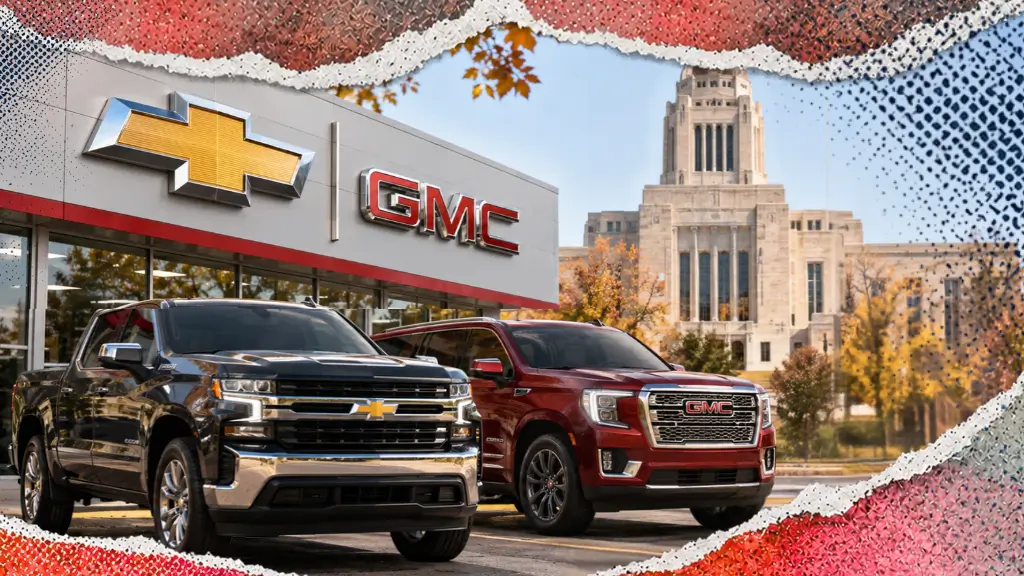
The Nebraska Supreme Court ruled Oct. 16 that General Motors failed to prove good cause to terminate Meyer Automotive’s Chevrolet and GMC franchise agreements in Seward, Nebraska, affirming a Lancaster County District Court decision that upheld the Nebraska Motor Vehicle Industry Licensing Board’s denial of the automaker’s termination application.
According to the court’s opinion, GM sought to end the franchises because of years of poor performance, including low rankings on its Retail Sales Index and service satisfaction scores that trailed regional averages. Meyer Automotive voluntarily terminated its Buick franchise and sold it back to GM, but it contested the proposed termination of its Chevrolet and GMC franchises.
Under Nebraska law, a manufacturer that wants to terminate a franchise must prove good cause and show that another franchise in the same line-make will become effective in the same community, unless the community won’t support a franchise. The court held that good cause depends on the existing circumstances rather than a balancing or weighing of the statutory considerations, and it said those circumstances can include developments that occur after a manufacturer files its application. As a result, the key question is whether good cause exists at the time the termination decision is made.
Inventory issues influenced the decision
GM argued that Meyer Automotive consistently underperformed and failed to meet its franchise requirements, and the automaker pointed out that the dealership entered its DP2 program for failing dealerships in 2012 and ranked among the worst-performing Chevrolet and Buick/GMC dealers in Nebraska year after year. However, the court found competent evidence supporting the lower courts’ finding that General Motors failed to allocate enough inventory to the dealership, and it found that the dealership’s inventory and sales improved after a new GM district manager began working with it in 2019.
Meanwhile, owner Robert Meyer testified that he increased GM vehicle sales by 263% from 2017 to 2022. The court said Meyer Automotive’s performance improved each year leading up to the hearing and that it found no error in the district court’s conclusion that those gains were sufficient to rectify the dealership’s past performance by the time of the termination hearing.
General Motors also contended that the Board’s composition violated its due process rights because only six members heard the case and none of them represented manufacturers. However, the court rejected that argument, ruling that the six members present constituted a quorum of the 10-member Board and that four members formed a majority of that quorum. The court also determined that the Board acted solely as a neutral factfinder in franchise termination proceedings, so it was not a proper party to the judicial review, and it dismissed the Board and its executive director and vice chairperson from the case.
It is important to note that the court didn’t decide whether GM presented sufficient evidence that another franchise would be viable in the Seward market, because the automaker’s failure to establish good cause was dispositive.