On the Dash:
- Lawmakers aim to send legislation to the President to restrict Chinese automakers from the U.S. market by the end of 2026.
- Proposed revisions could exempt companies with passive Chinese ownership stakes that lack voting power, potentially protecting Mercedes-Benz.
- The effort builds on earlier legislation targeting connected-vehicle technology and national security concerns.
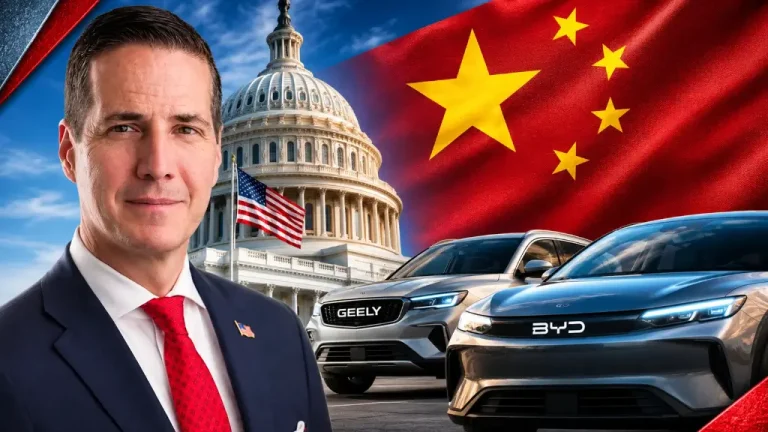
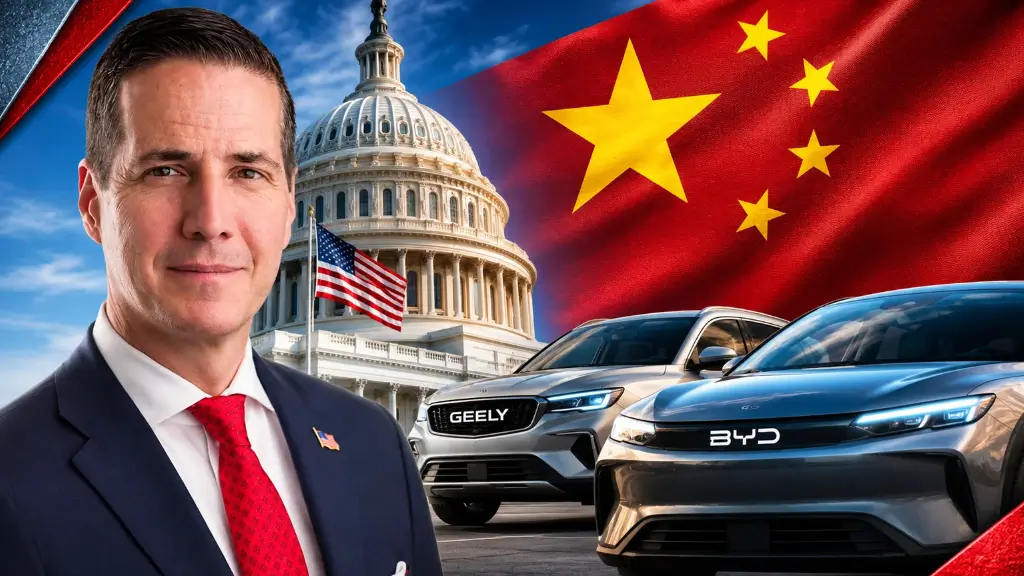
Republicans and Democrats from auto-producing states are negotiating legislation to ban Chinese cars from the U.S. market, with supporters aiming to pass the measure before the new Congress begins in January. According to Bloomberg sources, Republican Senator Bernie Moreno briefed automaker representatives on Nov. 18 on potential changes to earlier legislation. While automakers generally supported Moreno’s proposal, a Mercedes representative raised some reservations.
Earlier legislation would have prohibited manufacturers that are more than 15% owned by Chinese entities from selling vehicles equipped with technology capable of transmitting data. Mercedes is nearly 20% owned by Chinese entities, BAIC Motor, a state-owned Chinese automaker, holds almost 10%, and Geely Founder Li Shufu also holds nearly 10%. Lawmakers are considering looser rules for companies with passive ownership stakes that don’t confer voting power, as well as ways to structure and verify those arrangements. Senator Katie Britt of Alabama said both Mercedes and the state would be protected, noting that Mercedes operates a major SUV production hub in Alabama.
National Security Concerns Drive the Effort
Chinese vehicles are effectively excluded from the U.S. market because of steep tariffs and Commerce Department restrictions on Chinese vehicle technology. A permanent legislative ban would go further by addressing national and economic security concerns about China’s ambitions in the global auto industry. The proposed restrictions would impact automakers such as BYD and Geely, whose lower-cost, technology-focused EVs have gained market share in Europe and South America.
Meanwhile, a broad U.S. ban would contrast with the more permissive approaches taken by Europe and Canada. Chinese automakers have expanded rapidly in Europe, increasing competition with established manufacturers. However, the European Union has begun to pull back, reaching an agreement with China to limit hybrid-vehicle imports into the bloc.