On the Dash:
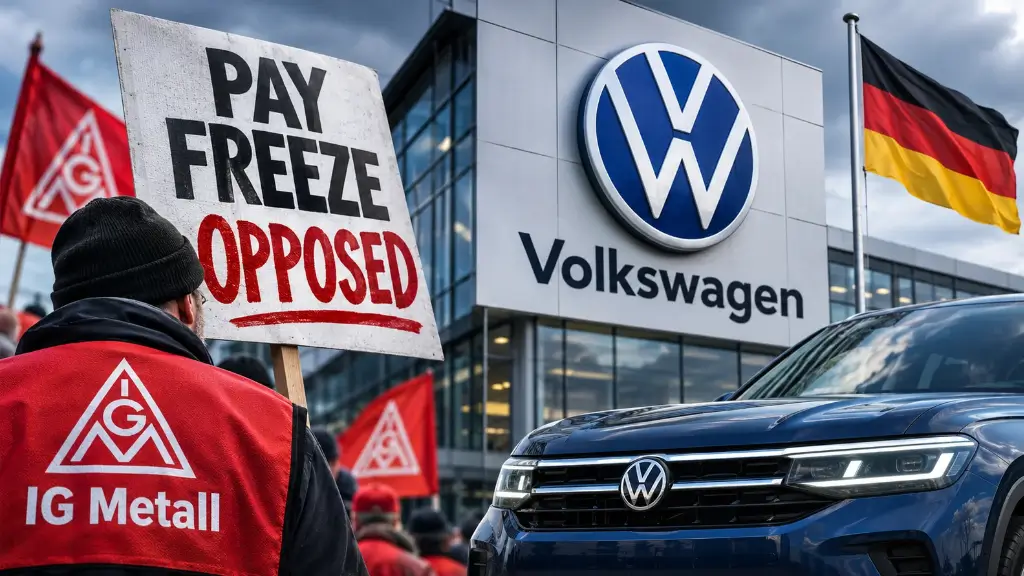
- Volkswagen is seeking a two-year wage freeze for about 120,000 workers as part of its broader cost-cutting effort.
- The automaker also wants to eliminate a bonus and reopen negotiations over the 35-hour workweek, drawing opposition from IG Metall.
- Workers have threatened strikes beginning in January as Volkswagen advances a restructuring plan that includes up to 100,000 job cuts.
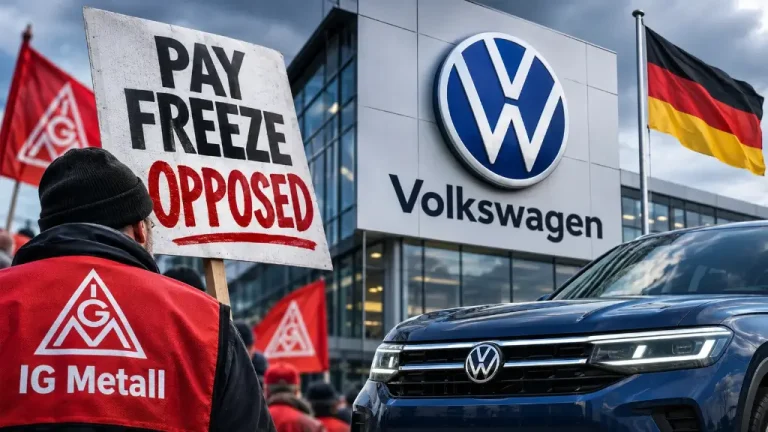
On Nov. 19, Volkswagen proposed a two-year pay freeze as part of its broader cost-reduction effort. The company’s proposal also includes:
- Eliminating an additional payment that employees can receive as cash or take as additional paid leave.
- Revisiting the collectively negotiated 35-hour workweek.
- Allowing greater flexibility to require longer working hours without additional pay.
Wage negotiations covering approximately 120,000 workers are scheduled to begin Tuesday, Nov. 24, in Emden, Germany.
While IG Metall has vowed to oppose the proposals, Chief Negotiator Thorsten Groeger criticized Volkswagen’s executive board and warned that the negotiations could lead to a prolonged labor conflict. It’s important to note that workers have threatened to strike beginning in January after Volkswagen terminated most of its wage agreements with the union. The 35-hour workweek has emerged as a key point of contention.
Increases pressure on labor relations
Meanwhile, CEO Oliver Blume has expanded Volkswagen’s restructuring efforts, including plans to cut about 100,000 jobs. Emden, where negotiations will take place, is one of four German plants identified as potentially facing closure or alternative uses under the company’s longer-term restructuring plans. The strained relationship between Volkswagen and IG Metall reflects growing tensions as management pursues additional cost reductions.
Labor unrest is also spreading across Germany’s automotive industry. IG Metall is planning 24-hour walkouts at Mercedes-Benz, Audi and other companies involved in parallel wage negotiations across the automotive and steel sectors. Mercedes-Benz has separately asked German workers to accept longer hours for the same pay, citing high domestic production costs, and is considering factory closures.
These labor disputes come as German automakers face growing competition from lower-cost Chinese manufacturers, including BYD, which have rapidly expanded their presence in Europe. Tariffs and diverging regional markets are also challenging the export model that has supported German automakers for decades.
What does this mean for dealers
For U.S. dealers, the labor disputes could create potential supply concerns if strikes disrupt production at German manufacturing facilities. Volkswagen and Audi models built in Germany could face delivery delays or tighter availability if the negotiations lead to prolonged work stoppages. However, Volkswagen’s U.S. production operations in Chattanooga, Tennessee, which build the Atlas and Atlas Cross Sport, provide some insulation from disruptions at its German plants.