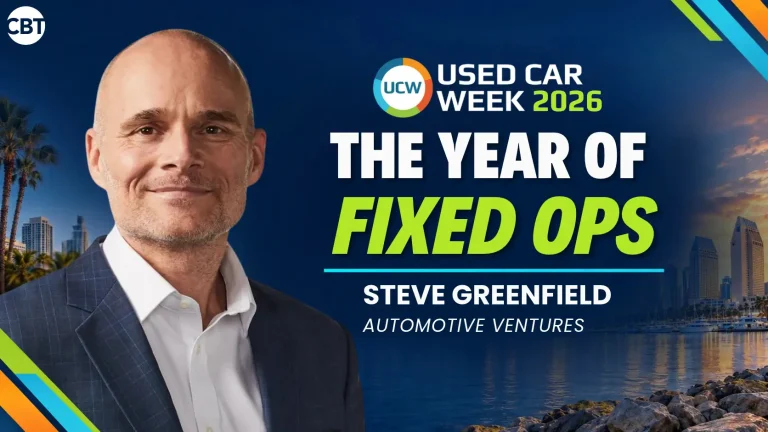
Wrapping up our coverage at this year’s Used Car Week, CBT News sat down with Steve Greenfield, General Partner at Automotive Ventures, to examine the forces shaping the retail automotive market, such as Chinese automakers, used-car profitability, fixed operations and the growing role of artificial intelligence. Greenfield also discussed the competitive pressures facing automakers and why he believes 2027 could be the year of fixed ops.
Dealer takeaways
- According to Greenfield, mounting pressure on automakers could eventually lead to thinner or even negative front-end gross margins for dealerships. So, he encourages dealers to focus on areas within their control, specifically used-car inventory and fixed operations. While dealers can directly select which used vehicles to acquire and manage their margins, they can also work to retain more vehicles in operation and bring customers back for service after factory warranties expire. As OEM profitability faces headwinds, Greenfield emphasizes that these controllable revenue streams will become increasingly critical.
- Greenfield also cautions dealers against adopting AI simply to automate existing workflows. Many large companies have invested heavily in AI without seeing expected returns, largely because they apply new technology to unoptimized processes. Instead, he recommends breaking dealership operations into essential steps, refining those procedures, and then using AI to scale the improvements. This targeted approach helps dealers avoid implementing technology that creates extra employee friction rather than driving operational efficiency.
- Finally, Greenfield advises dealers to keep a close eye on how Chinese automakers could impact the U.S. market, even with current tariffs in place. He believes established legacy automakers will face rising pressure and may explore joint ventures to integrate Chinese technology into vehicles built for American consumers. He also highlights potential opportunities for dealers if Chinese brands eventually enter the market, pointing to the long-term success of early adopters who embraced Japanese and Korean franchises when they first arrived in the U.S.