Roughly half of the people who lead others have never been trained in leadership, and many dealerships put their training dollars into sales and service instead. That leaves managers without clear standards for empowering a team, building ownership, and resolving conflict, making it harder to keep good people. One fix is to build leadership into the store’s daily operating rhythm with standard operating procedures, so ownership becomes a habit.
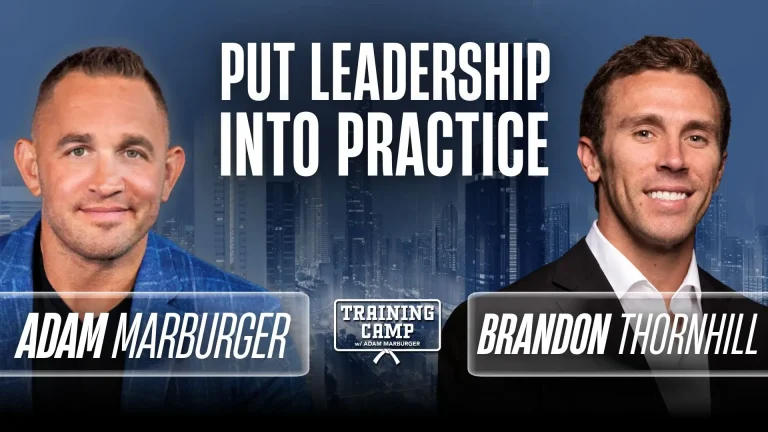
On today’s episode of Training Camp, Brandon Thornhill, Former Navy SEAL, Founder of Elite Leadership Consulting Group, and Author of The ELITE Leadership Blueprint, joins host Adam Marburger to discuss how dealerships can put that rhythm in place.
Culture, retention and standard operating procedures
Thornhill decided to become a Navy SEAL in eighth grade and joined the Navy in 2004, working as a corpsman before he got into BUD/S. He later became an instructor and helped put 15 classes through “Hell Week,” where about 40-50 of 200 students finish in summer and about 20 in winter. He moved into business in 2015, when he was an E-6 with almost $40,000 in credit card debt at 18% interest. Over eight years, his organization grew to 30,000 people in 25 countries and a few hundred million dollars in sales, with 92% retention at its peak. After the company’s founders died in a 2019 plane crash and a venture capital-style firm acquired it, he saw the weaker side of leadership and started Elite Leadership Consulting Group to help other companies avoid the same experience.
Thornhill says leaders need clear standards for how they empower their team, build ownership, and resolve conflict, and most have never been given them. He notes that while many companies focus on attracting talent and put less effort into keeping it, he starts by building a culture strong enough that people want to stay.
“You have to build a culture so great that people don’t want to leave you.”
His process centers on standard operating procedures for every ask a leader makes. A leader explains the vision and the reason for the task, makes sure the person is trained and equipped, and follows up to confirm it got done, and over time the behavior turns into ownership.
According to Thornhill, leadership has to be part of an operational rhythm and can’t be a one-time offsite or a book the team reads together. Clients tell him they spent $60,000 or $70,000 on a sales course and the team stopped using it three months later, so his programs go into management teams where everyone knows the system, uses it, and protects it.
Self-leadership
Thornhill considers self-leadership the most important form of leadership because leaders have to model the behavior they want and can’t just tell people to do it. He and his wife build their mornings and evenings around that idea, starting the day with time with God and each other before their daughters wake up.
The Elite Leadership Blueprint grew out of his frustration with leadership books that motivate readers but leave them with nothing to execute. It includes the calm framework he uses in conflict, which comes from SEAL training. Leaders control their physiology with tools like box breathing, assess the situation and lead with logic, aiming to lead the conversation and not to be right.
“You’re either growing or you’re dying. You’re either going forwards or you’re going backwards,” said Thornhill.
Thornhill works with any dealership, from single rooftops to large groups, as long as the leadership team is open-minded and wants to grow, since a store can’t outgrow the leadership lid of its managers. Dealers can find him on Instagram and LinkedIn, at BrandonThornhill.com, and in his book on Amazon.