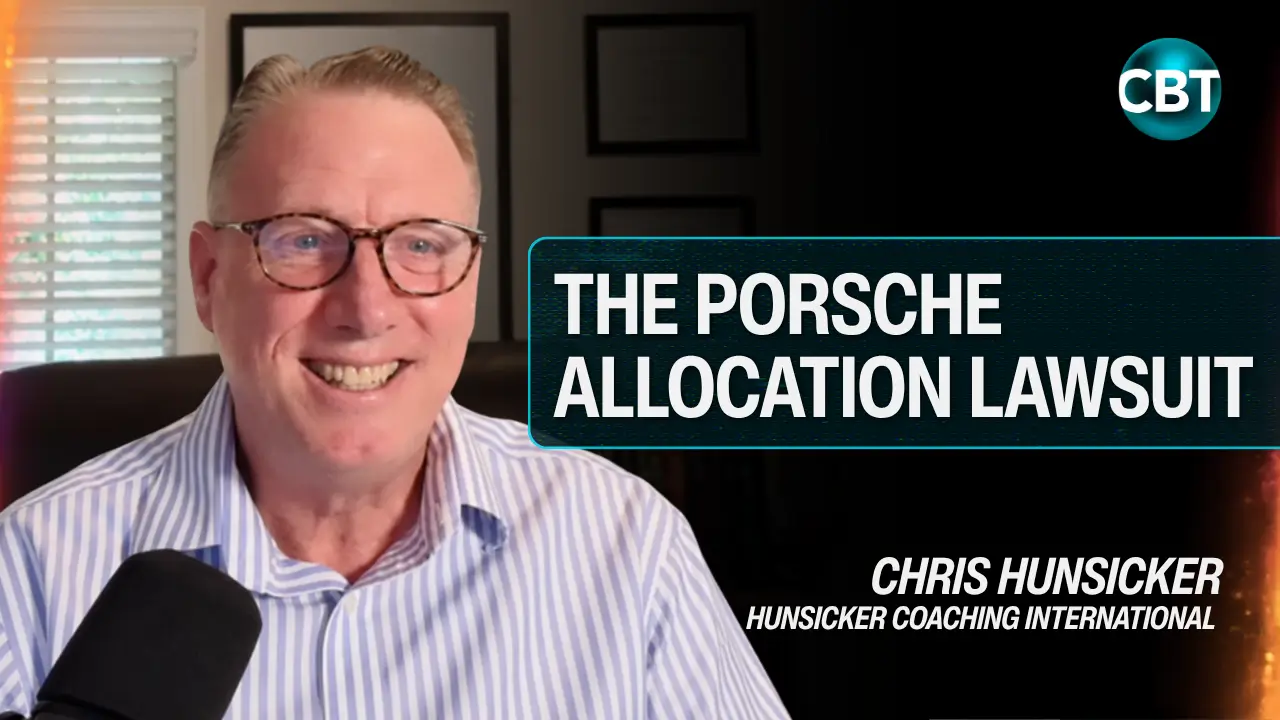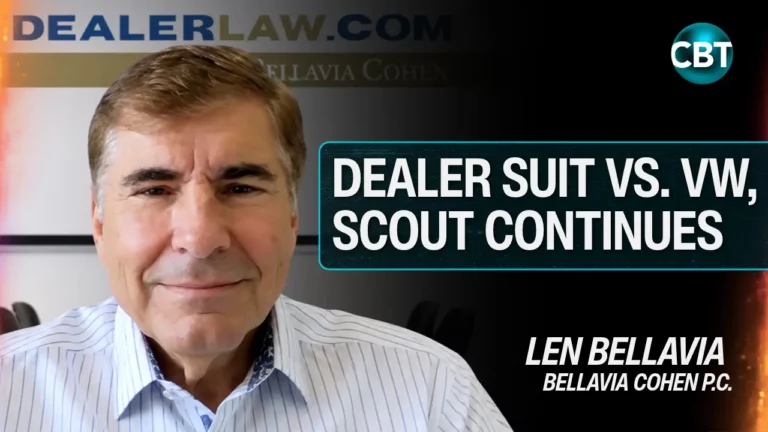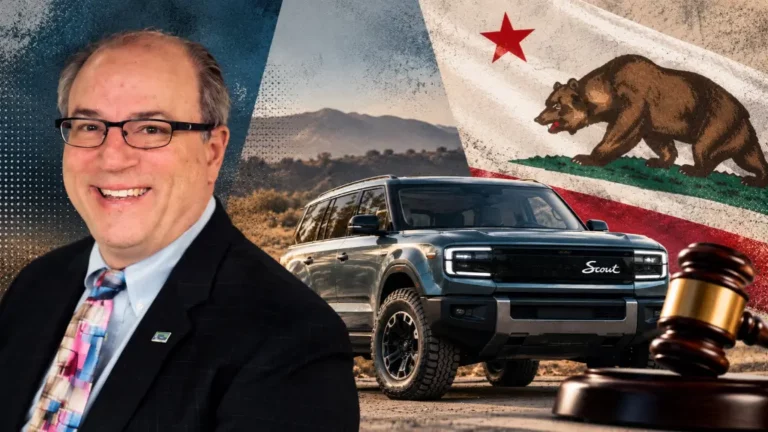
A California court has allowed the California New Car Dealers Association’s (CNCDA) lawsuit challenging Scout Motors’ direct-to-consumer sales plans to move forward, giving Volkswagen and Scout another legal hurdle to navigate. Len Bellavia, Founding Partner of Bellavia Cohen P.C joins today’s CBT Live to explain what the latest ruling means for franchise dealers and why the decision is an important development, even though it doesn’t resolve the case’s central question.
During the show, Bellavia cautioned dealers against interpreting the California ruling as a final victory. He said that although the court rejected another attempt by Volkswagen and Scout to end the association’s case, it didn’t decide whether Scout and Volkswagen are effectively connected entities or whether the new brand’s sales model was designed to circumvent franchise laws. Bellavia compared the case to the second inning of a nine-inning game, emphasizing that the central legal questions still need to be resolved. However, the court’s rejection of the latest arguments gives dealers an early indication of how the case may be received as it moves forward.
The dispute also extends beyond California, as Bellavia pointed to a separate case involving Volkswagen dealers in Florida and a potential nationwide class action filed by his office on behalf of Volkswagen dealers. Those cases remain at preliminary stages, and the legal outcomes are still unknown. For dealers, the broader issue is whether manufacturers can use a separately branded business to bypass the franchise relationships and state laws that govern their existing dealer networks. Bellavia said the similarities between Volkswagen and Scout, including their leadership and marketing, could make it difficult for Volkswagen to argue that the companies have no meaningful relationship.
Additionally, Bellavia said Volkswagen must weigh the legal risk and business consequences of continuing to invest in a direct-sales model that could ultimately be blocked. If the company loses after spending another year or two developing the strategy, it could face high costs and lose potential sales to consumers who can’t purchase vehicles directly. He said the automaker must decide whether continuing the fight is worth the investment or whether recognizing the franchise dealer model would be a more practical path.