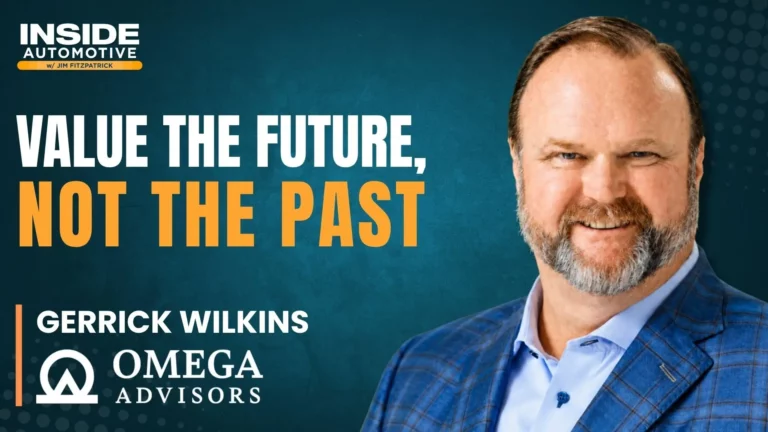
Gerrick Wilkins, Founder and CEO of Omega Advisors, believes dealers should assess transactions based on future earnings and risk rather than just last year’s numbers. With over 25 years of experience, Wilkins discusses brand valuations, strategic divestitures, artificial intelligence, and succession planning in the latest Inside Automotive episode.
He notes that Omega’s team, primarily consisting of individuals with retail backgrounds, helps them understand dealer perspectives and spot unique opportunities. For example, they recently helped a family that had owned a single dealership for over 50 years navigate the sale process.
"We've actually had owners who opted to take a little bit less money because they wanted to make sure their people were taken care of."
When dealers reach out to Omega, the firm starts by asking about their goals instead of rushing into a sale. While financial return is important, Wilkins notes that many sellers also consider factors like workforce protection and seamless OEM approval, sometimes opting for lower purchase prices to ensure these priorities are met.
Future earnings, risk and brand value
Wilkins framed valuation around future earnings and the risk tied to them, a principle he applied to the debate over Chinese vehicle imports. He said China holds a real competitive advantage through government support, access to rare earth minerals and, in some cases, stolen technology, and that advantage affects both a dealership’s expected earnings and the risk attached to that estimate. He also cautioned against treating valuation multiples as a fixed benchmark.
Additionally, brand strength still matters, but Wilkins said it doesn’t tell the whole story. While Lexus remains the store every buyer wants, he said, Porsche has grown more complicated as inventory tightens around the 911 and smaller stores lean on the Cayenne and Macan through an EV transition. He said Porsche stores remain scarce enough to command a premium when they do come up for sale. Wilkins also notes that buyers are finding opportunities in Stellantis, Nissan and Audi stores, particularly when a struggling location can be paired with an existing dealership nearby or picked up for a fraction of what a top brand like Lexus would cost. Nissan hit bottom around the end of last year and has shown a meaningful recovery since, he said, while Audi’s valuations remain depressed but are starting to turn around. Ultimately, Wilkins said, the market a dealership sits in often matters more than the badge on the building.
Meanwhile, AI could reshape dealership earnings by improving efficiency in areas such as BDC operations and service follow-up, though Wilkins cautions that dealers still need to retain key managers. He called a 25% reduction in personnel expense a plausible outcome as AI adoption grows, and said lower operating costs would likely translate into higher future earnings and, in turn, higher valuations.
Consolidation & OEM approval
The buy-sell market is not just about large public groups acquiring every store, according to Wilkins. He noted a trend of strategic divestitures where larger groups sell smaller stores to invest in larger operations, providing opportunities for smaller dealer groups to grow. He estimated that public groups sold about 24 stores for every 15 they bought this year. Consolidation often occurs within a dealer’s current geographic area to avoid management challenges from distant expansions. OEMs are prioritizing performance metrics, sometimes choosing high-performing existing dealers for new franchises over higher bids from outsiders. Wilkins emphasized that sellers value buyers’ ability to gain OEM approval and support existing employees alongside offer size. He plans to discuss succession planning and philanthropy in his upcoming book next month.