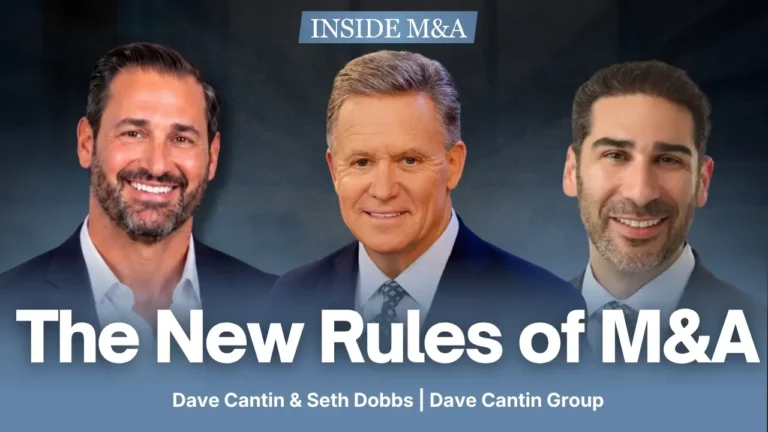
The dealership mergers and acquisitions market remains active, but getting a transaction across the finish line has become more complicated as buyers, sellers, and automakers scrutinize deals more closely. Joining us on today’s Inside M&A episode is Dave Cantin, Founder, CEO and Chairman of the Dave Cantin Group (DCG), and Seth Dobbs, Chair of the Automotive Practice at Fox Rothschild.
While dealership M&A activity remains strong, Dobbs says that the market has moved beyond the conditions dealers experienced during the pandemic. Buyers have become more sophisticated, sellers are increasingly selective and manufacturers are taking a closer look at who they allow into their franchise networks.
But activity alone does not make transactions easier. Cantin notes that buyers are looking beyond a dealership’s earnings and applying a multiple. Increasingly, they want to understand how those earnings were generated, how their own operating practices would translate to the store and what kind of return they could produce after taking ownership.
Automakers are also taking a bigger role in the approval process. Cantin addressed that even buyers with extensive dealership networks can’t automatically expect approval for an additional franchise. OEMs, he said, are now evaluating performance metrics and require prospective buyers to prove they can meet the manufacturer’s standards.
“Reputation is everything. And when someone’s considering to purchase their next car, they’re utilizing the internet, which they’ve been doing for decades.” – Dave Cantin
Dobbs agreed, noting that manufacturer approval has become less predictable. That can affect everything from how agreements are structured to how much time buyers and sellers should allow for a transaction to close.
Compliance hits the bottom line
According to Dobbs, FTC activity, state attorneys general and the plaintiffs’ bar continue to put pressure on dealership operations. As a result, questions about regulatory compliance increasingly surface during due diligence. Buyers may want to know whether a dealership has received subpoenas, faces an investigation or has practices that could create problems after closing. But for dealers, the financial consequences can extend beyond legal costs.
Cantin said sophisticated buyers are reviewing dealership advertising and marketing practices to determine whether stores have operated in accordance with regulations. Practices that create compliance or reputational concerns can ultimately affect what a buyer is willing to pay.
“The landscape shifts constantly in the standpoint that, one manufacturer that might have been a little easier to get into years past has now ramped up the metrics that they require or is purposely ramping up the metrics that they require to bring a certain buyer into the equation.”– Seth Dobbs
Dobbs added that a buyer operating under different standards may not be able to reproduce a seller’s profits if some of those earnings came from practices the buyer intends to eliminate, which makes preparation really important for dealers considering an exit.
Preparation drives value
Additionally, Cantin said dealership owners should treat their stores as major assets rather than waiting until they are ready to retire before thinking seriously about a sale. Owners who understand their performance metrics and improve areas of the business before going to market can better position themselves for a transaction, he said.
The same preparation applies to buyers. According to Cantin, prospective acquirers should have liquidity available, understand their acquisition criteria and prepare for the OEM approval process before pursuing a store. And while price remains important, both executives cautioned against assuming the highest offer automatically represents the strongest deal.
A higher bid may come with more contingencies or a harder path to closing. In some cases, a seller may decide that accepting slightly less in exchange for greater transaction certainty makes more sense. For Dobbs, that reality underscores the importance of experienced advisers who understand manufacturers, buyers and the complications that can emerge between a signed agreement and the closing table.
While Dobbs said dealers should keep prioritizing compliant operations, efficiency, and “clean profits,” Cantin encouraged dealers to clearly define whether their strategy involves acquiring, selling, or repositioning assets.