On the Dash:
- Six major automotive groups are urging the Trump administration to maintain restrictions on Chinese automakers entering the U.S. market.
- Chinese automakers currently have no U.S. market share, but domestic production could create new competition for established brands and dealers.
- Connected-vehicle restrictions and tariffs remain major barriers to Chinese vehicle imports and U.S. production.
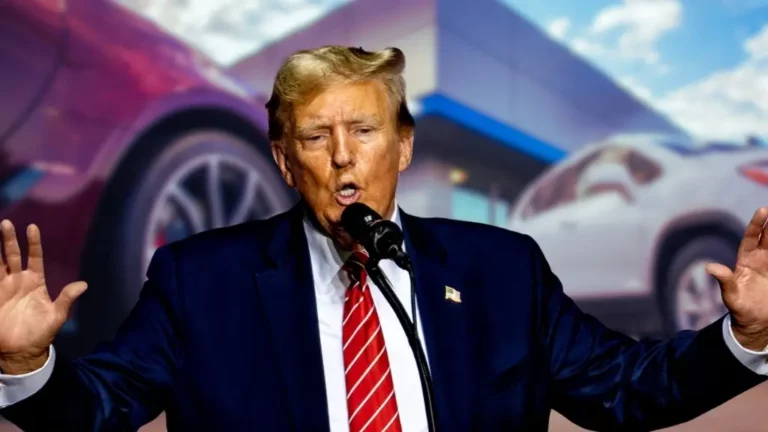
Six organizations representing automakers, suppliers and dealers sent a letter Sept. 17 urging President Donald Trump to maintain policies that restrict Chinese automakers from selling, importing or producing vehicles in the U.S. The letter arrived ahead of Trump’s scheduled meeting with Chinese President Xi Jinping on Sept. 24.
The signatories include the Alliance for Automotive Innovation, the American Automotive Policy Council, Autos Drive America, MEMA, The Vehicle Suppliers Association, the National Automobile Dealers Association and the Zero Emission Transportation Association. The groups noted that Chinese automakers currently hold no share of the U.S. market and argued that allowing them to establish production facilities here would give them a foothold at the expense of manufacturers already operating in the country.
The groups also contend that Chinese investment would not create new American jobs but would instead shift jobs away from companies that have made long-term U.S. manufacturing investments. Notably, Trump recently signaled openness to Chinese automakers producing vehicles in the U.S., telling Fox News he would be comfortable with the idea if Chinese companies hired American workers, a remark that reignited debate over whether existing restrictions might loosen.
Michigan Sen. Elissa Slotkin raised similar concerns after reports surfaced that BYD’s Chief Executive could join Xi’s delegation to Washington. Slotkin said that if the meeting takes place, it would suggest talks are underway to allow Chinese vehicle imports or U.S. production, calling the prospect a threat to Michigan’s roughly 1.2 million auto-industry-linked jobs.
Connected-vehicle rules remain a major barrier
Rules finalized by the Biden administration in January 2025 restrict Chinese and Russian software and hardware in connected vehicles, citing risks tied to cellular, Bluetooth, Wi-Fi and satellite communications that could expose sensitive driver data. The software restrictions take effect with the 2027 model year, with hardware restrictions following for the 2030 model year.
The U.S. also imposes tariffs exceeding 100% on Chinese electric vehicles, making direct imports largely impractical. Any change to tariff or connected-vehicle policy could reshape the competitive landscape for U.S. dealers, potentially opening the door to new brands, products and pricing strategies from Chinese manufacturers.