
On the Dash:
- Polestar’s U.S. exit could create significant financial and operational uncertainty for its dealer network.
- Prestige Imports alleges Polestar planned its U.S. departure before the government denied authorization for future vehicle sales.
- Dealers could face additional exposure if automakers use regulatory restrictions to terminate franchise agreements.
On Wednesday, a New Jersey-based Polestar retailer, Prestige Imports, filed a lawsuit against the automaker seeking at least $25 million, claiming that the automaker had been planning to exit the U.S. market for years, even before the U.S. Commerce Department denied authorization for the company to sell 2027-model-year vehicles and later models.
The lawsuit challenges Polestar’s use of the federal restrictions as the reason for terminating its U.S. retail operations. On June 25, the automaker announced that it had failed to obtain authorization under the Connected Vehicle Rule, effectively ending new vehicle sales in the U.S. However, the automaker stated it would sell its remaining inventory and continue servicing existing vehicles, noting that approximately 80% of its sales volume comes from Europe, which allows it to refocus its efforts on that market.
However, Prestige claims that the automaker spent two years preparing to leave the U.S. and alleges it “maneuvered the [government] into a ban” to facilitate its departure, according to Automotive News. Additionally, the lawsuit asserts that Polestar declined to pursue the same authorization that Volvo obtained and chose not to appeal the government’s decision. Further, it claimed that the automaker continued to encourage U.S. retailers to invest in their businesses even as it prepared to leave the market.
Retailer investment
Following the finalization of the Connected Vehicle Rule in early 2025, Polestar’s CEO reportedly told retailers the brand was heading for a strong year. The lawsuit also highlights plans for the Polestar 7, including a multi-year expansion in Bergen County, New Jersey, that a Polestar executive allegedly approved as recently as February 2026, tied to the planned 2028 launch of the Polestar 7.
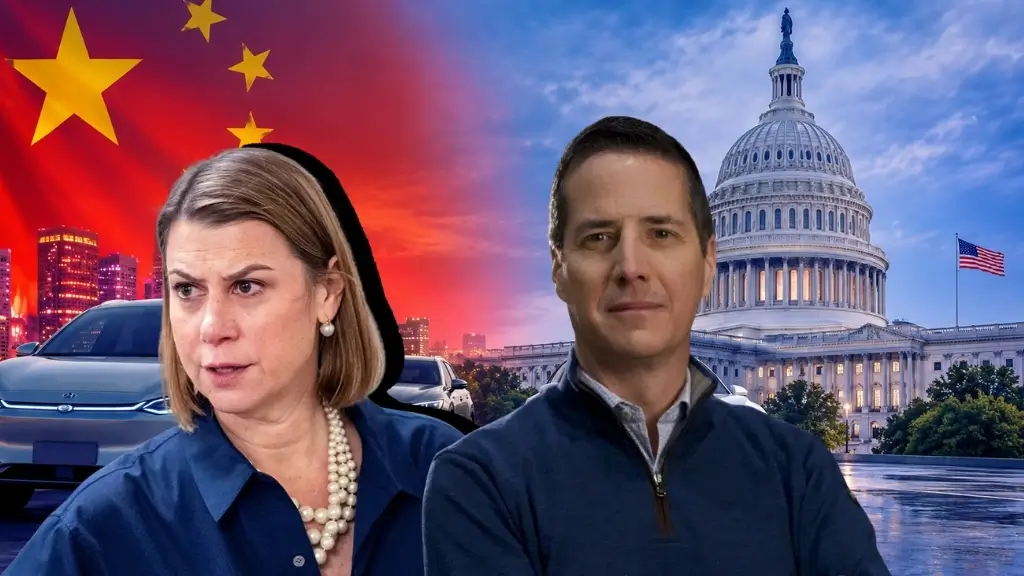
In a recent Inside Automotive episode, Senator Bernie Moreno backed the dealer’s argument, stating that the automaker was “screwed by Polestar” rather than by the U.S. government. He remarked that while Volvo met the government’s requirements, Polestar chose not to take the same approach. Moreno also claimed that the automaker was losing $30,000 to $35,000 per vehicle sold in the U.S. Notably, Moreno’s comments came during a discussion of his separately proposed Connected Vehicle Security Act, a pending Senate bill distinct from the Connected Vehicle Rule that led to Polestar’s exit.
In early July, the automaker also reportedly sent Prestige a force majeure letter, arguing that the government restriction was beyond its control. Yet, Prestige is seeking a constructive termination of its franchise, contending that Polestar failed to provide the required 60 days’ notice or establish “good cause.” The lawsuit argues that New Jersey’s franchise protections make it challenging for an automaker to simply walk away from a dealer relationship.
In addition to the $25 million, Prestige is seeking compensation for the franchise’s fair market value, including five years of parts and warranty support. If the two sides cannot reach an agreement, the court will determine whether the automaker properly ended its relationship with Prestige.