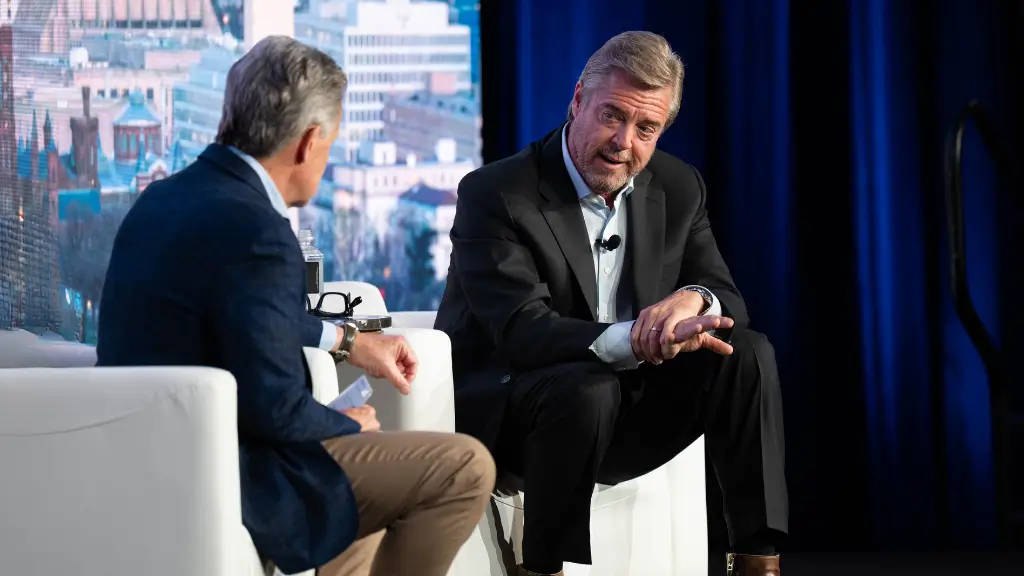
Pricing transparency was in the spotlight at the CBT News Auto Leadership Summit. The summit brought dealers, legal experts, and policy advocates to the Salamander Hotel in Washington, D.C., on June 16 for a full day on fair pricing and compliance. It follows the FTC warning letters to 97 dealership groups this spring over alleged deceptive pricing, and the industry is still working out how to respond.
One of the day’s sessions put that issue to TrueCar CEO Scott Painter. He founded the company in 2005, putting price transparency front and center. Painter stepped down as CEO ten years later, but returned after buying the company back this year. His message to dealers is that pricing transparency can be a competitive weapon.
Rebuilding the company he founded
Painter opened the session by talking about his return and what he has done to rebuild the business. He inherited a company that had lost money for years, but posted TrueCar’s first quarterly profit within ten weeks of closing. TrueCar, he said, is not a dealer or a lead generator, but a way to connect buyers and sellers in the new-vehicle space.
“We’re a digital bridge between the customer who needs to buy a car and the dealer who needs to sell one, the same way Uber is a digital bridge between a consumer who needs a ride and a driver who wants to give one,” said Painter. “We’re not a lead-gen platform. We’re an auto-buying platform. I’d much rather have a smaller network of high-quality dealers who lean into pricing and understand how to do this well.”
FTC scrutiny as an opportunity
The FTC’s enforcement push has put pricing practices under a microscope, and dealers are working out what compliance requires. Painter called the pressure a chance to clean up the market rather than a penalty on it.
"So we used the FTC action as an opportunity to go all in on clarity and make sure our dealers have the tools to be compliant. If you're using TrueCar to go to market, you are already compliant, like I am." – Scout Painter
The issue he kept returning to was consistency, since some dealers fold their fees and mandatory add-ons into the advertised price and others do not.
“One thing you have to do, for example, is include your fees and any mandatory add-ons in the advertised price. If one dealer isn’t doing that and three out of four are, that’s an unequal playing field,” said Painter. “As long as it’s apples to apples, the tide rises for everybody.”
Transparency as a strategy
Beyond the regulatory case, Painter made a business case for transparency. TrueCar’s model asks consumers to qualify before they see a discount, a contrast with sites built around advertising the lowest price.
“Consumers reward transparency because it builds trust, and trust creates velocity and increases market share. It’s a winning strategy,” said Painter.
The same structure, he said, keeps the pricing data out of reach of automated tools and sets the platform apart in a market drifting toward discount-driven listings.
“AI can’t come in, pull TrueCar’s prices, and use them as a reverse auction against dealers. We’ve become almost an antidote to the race to the bottom — giving a dealer the ability to be scientific about discounting for one customer rather than discounting for everyone,” said Painter.
Transparent pricing as a standard
Painter closed by linking TrueCar’s growth to a bet that transparency becomes standard across the industry, and he set an aggressive target for the turnaround.
“I think this company can be a billion dollars in revenue by 2029 or 2030,” said Painter. “We need to turn this around and show we can be a profitable, growing company again.”
His optimism rests on a belief that there is an empirical market price for a car and that clarity around it benefits everyone.
“I believe there will be a day, not too far off, when if you didn’t use TrueCar to go to market, you paid too much,” said Painter.