
Stellantis is now facing a financial reckoning that should send a chill through every boardroom in the global auto industry. After betting aggressively that electric vehicles would dominate the market far sooner than consumers were ready to accept, the company is paying the price with a staggering $26.3 billion net loss for 2025 and roughly $30 billion in write-downs (which is essentially a financial loss in value on their accounting books) tied largely to scaling back its electric vehicle strategy.
For a company that just a year ago was profitable, this is not a minor stumble. It is a dramatic reversal.
Stellantis, the Amsterdam-based automaker formed in 2021, oversees 14 brands including Jeep, Dodge, Ram, Chrysler, Fiat, Alfa Romeo, Maserati, Peugeot, and Citroën, and a few others. With that kind of global reach, its strategy carries enormous weight. And when it miscalculates, the consequences ripple across workers, investors, suppliers and consumers.
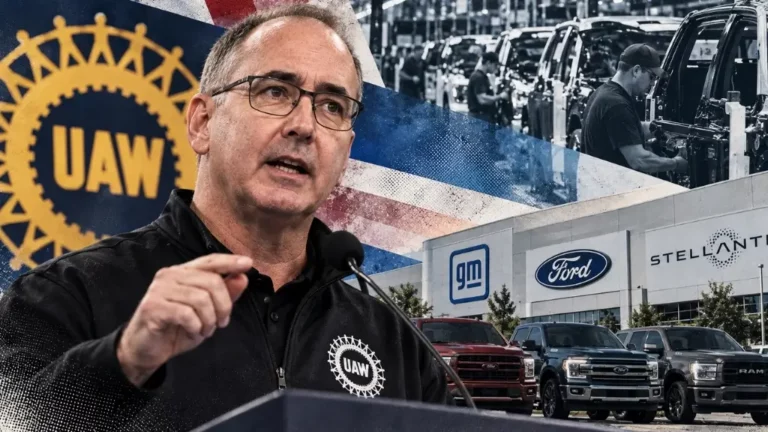
The company’s 2025 numbers tell a dramatic story. Net revenues totaled $181.1 billion, down 2% from the previous year. That may not sound catastrophic at first glance, but the bottom line is where the damage becomes undeniable. A $26.3 billion annual net loss replaced what had been a $6.5 billion profit the year before. Free cash flow turned negative by roughly $4.9 billion. Dividends were suspended. Profit-sharing checks for UAW workers vanished. As recently as 2023, some workers received nearly $14,000 in profit sharing. This year, nothing.
Chief Executive Officer Antonio Filosa acknowledged the miscalculation directly, saying the results reflect “the cost of over-estimating the pace of the energy transition.” That is an extremely candid admission from a global auto executive. It also underscores a broader reality: automakers, regulators and investors collectively assumed the transition to EVs would move faster than consumer demand, charging infrastructure, affordability and political will would allow.
How did Stellantis end up here? Here’s the roadmap. Under former CEO Carlos Tavares, the company launched its “Dare Forward 2030” strategy. The goal was bold. Stellantis aimed for 100% EV sales in Europe and 50% in the United States by 2030. Billions were invested into dedicated EV platforms, battery supply chains and factory conversions to meet those targets. This was bolstered and mandated by many governments.
But those targets are detached from market reality. Consumers have pushed back.
While EV adoption has grown, it has not accelerated at the pace forecasted during the peak of electric vehicle enthusiasm by the governments and the media. High vehicle prices, uneven charging infrastructure, concerns about resale value and evolving regulatory standards and higher insurance rates have complicated the shift. Government regulations in Europe have softened certain EV mandates, and the United States has ended the mandate completely.
Stellantis was not alone in its optimism. Across the industry, automakers have announced more than $55 billion in EV-related write-offs over the past year. According to reporting from the Financial Times, the global auto sector has absorbed roughly $65 billion in hits tied to scaling back or restructuring EV ambitions. Ford Motor Company has taken roughly $19 billion in charges related to its own EV reset. General Motors and Volkswagen have also booked significant write-downs.
Still, Stellantis’ $30 billion write-down stands out for its scale. The company announced approximately $25.9 billion in one-time charges, including nearly $20 billion tied directly to electric vehicle programs, roughly $4.8 billion in warranty-related costs, and other restructuring items. It scrapped certain fully electric models and plug-in hybrids, reworked production plans and shifted investments back toward internal combustion and hybrid offerings.
In North America, the centerpiece of this reset is the return of the 5.7-liter HEMI V8 engine. That decision is more than a product move. It is a sign that consumer demand for traditional powertrains remain strong, especially in high-margin truck and performance segments.
In Europe, Stellantis is folding diesel and mild-hybrid gasoline options back into current and upcoming models. This is a clear shift toward a more diversified powertrain strategy. Rather than betting exclusively on battery electric vehicles, the company is embracing what many consumers have been saying all along: they want choice.
Despite the massive write-downs, there are some signs of stabilization. In the second half of 2025, after Filosa took over and began unwinding elements of the prior strategy, Stellantis reported revenues of approximately $93.3 billion for the July–December period, up 10% year over year. Winning the North American Car of the Year Award for the Dodge Charger was a huge win and supported the change. Vehicle shipments rose 11% during that timeframe. While the company still posted an adjusted operating loss of roughly $1.6 billion in the second half, the improvement in volume suggests that a recalibrated approach may be gaining traction.
This crisis did not happen overnight. It was built on assumptions that EV demand curves would rise steeply and steadily, that battery costs would fall quickly enough to increase profits, and that regulatory frameworks would remain rigid. Instead, the transition has proven uneven and heavily dependent on subsidies, heavily depends on Chinese batteries, loss of incentives and sporadic infrastructure for charging. The consumer market message is clear: EV strategic overreach carries consequences.
For American workers, the impact is immediate and personal. With no profits to distribute, UAW employees at Stellantis will not receive profit-sharing payouts this year. Across the Detroit Three, the average payout is about $6,200, roughly 40% lower than prior averages of nearly $10,000. For Stellantis workers, the number is zero. That is a sharp contrast to the nearly $14,000 some received just two years ago.
The big lesson here is not that electric vehicles have no future. They do. Electric vehicles will be a part of consumers’ choices. But the idea that the internal combustion engine would be permanently discontinued now looks unlikely. Consumers ultimately decide the electric vehicle future, and they weigh price, convenience, reliability of charging and resale value far more heavily than corporate targets or political timelines.
Antonio Filosa has framed the reset around restoring “freedom to choose” across electric, hybrid and internal combustion or diesel technologies. That phrase is significant. It reflects a common sense shift to build what customers want.
The cost of that miscalculation is now measured in tens of billions of dollars. Whether this hard-earned lesson ultimately strengthens the company or simply marks the beginning of a reduced brands and models will depend on how effectively it balances innovation with realism in the years ahead.
Stellantis learned a painful lesson, they need to build what their customers want and they can’t force you to buy something you don’t want.
Check out my full commentary on this story: https://youtu.be/4F7z0Zd3W_E
Looking for more automotive news? https://www.CarCoachReports.com
Listen to The Drive Car Show – https://www.youtube.com/@thedrivecarshow