The automotive industry is evolving at a rapid pace. Technology continues to accelerate, customer expectations are rising, and dealership margins remain under pressure. In the middle of this change, one of the most important roles in the dealership is still one of the most underdeveloped: the service advisor.
Service advisors are the most consistent point of contact throughout the ownership journey. From the first maintenance visit to the final trade-in, no other position interacts with customers more frequently. As we move into 2026, that reality should reshape how dealer principals and fixed operations leaders approach training, structure, and investment.
The service advisor: Dealerships’ most overlooked revenue lever
Retail automotive is shifting away from isolated transactions and toward long-term engagement. It is no longer just about a single service visit or even a strong sales experience. Dealerships must focus on the customer’s full ownership experience.
The sale may begin the relationship, but service sustains it. Fixed ops leaders must consider whether their advisors are prepared to build long-term trust or if they are simply writing repair orders. Advisors who focus only on transactions miss the larger opportunity of retention and lifetime value.
From single transactions to lifetime customer relationships
Most dealerships train advisors on systems, warranty procedures, and software tools. While those skills are necessary, they are not enough. Advisors must also be trained in communication, objection handling, and customer psychology.
Today’s service drive is about relationship management. Customers expect transparency, clarity, and confidence. Advisors who can explain recommendations clearly and connect maintenance to long-term ownership goals are far more likely to build trust and drive retention.
Why the advisor role is more demanding than ever
The advisor’s role has become more complex, not less. Advisors must navigate EV technology, protect CSI scores, support technician productivity, sell maintenance, manage price resistance, and communicate effectively with well-informed customers.
Many customers now arrive having researched their vehicle concerns online. Some even use AI tools to question service recommendations. Advisors are no longer just coordinating repairs. They are managing expectations and protecting the dealership’s credibility. Without proper preparation and support, that pressure often leads to inconsistency, which directly impacts retention.
Training must become a system, not a one-time event
One of the biggest breakdowns in fixed operations is how training is delivered. Too often, training is treated as a one-time event. Motivation increases temporarily, but daily habits eventually return.
Sustainable improvement requires a system built on repetition, coaching, and measurement. Advisors should regularly practice communication skills, review performance metrics, and receive structured feedback. High-performing dealerships create cultures where practice happens before performance. Advisors should never be refining their communication skills for the first time in front of a customer.
Consistency in the service drive creates competitive advantage
Consumers expect predictability across industries. They want clear updates, transparent communication, and a consistent process. Yet many service departments still provide different experiences depending on which advisor a customer meets.
Without standardized meet-and-greet procedures, walk-arounds, and multipoint inspection presentations, variability increases. Variability creates confusion, and confusion weakens trust. Dealerships that thrive in 2026 will implement clearly defined service standards that every advisor follows. Process discipline builds confidence for both employees and customers.
AI will strengthen advisors — not replace them
AI adoption in fixed operations is accelerating. Automated scheduling, video multipoint inspections, and digital status updates are becoming common tools. However, AI will not replace service advisors. It will enhance those who use it effectively.
Video MPI, for example, gives customers visual confirmation of vehicle condition. But the advisor must still explain the findings clearly and confidently. Technology should reduce administrative tasks, improve communication speed, and create consistency. If processes are weak, however, technology will only magnify those weaknesses. Strong fundamentals must come first.
KPI literacy turns advisors into true professionals
Many advisors hear feedback about metrics like effective labor rate, hours per repair order, or approval rates without fully understanding how those numbers are calculated or influenced.
When advisors understand their metrics, their behavior changes. They present recommendations with greater confidence and connect maintenance to long-term value rather than short-term cost. Regular KPI reviews create clarity and accountability. Metric literacy reduces anxiety and helps advisors see themselves as professionals rather than order takers.
Service as a frontline profit and retention driver
Historically, service has been viewed as the back end of the dealership. That mindset must change. Service is the most consistent source of customer contact, retention opportunity, and long-term profitability.
Forward-thinking dealerships are positioning service as a relationship center, not just a repair center. When service is elevated internally, advisor development becomes a strategic investment rather than an afterthought.
Breaking down silos through cross-functional alignment
Siloed operations continue to limit performance in many stores. Advisors, technicians, parts, and F&I often operate independently rather than collaboratively.
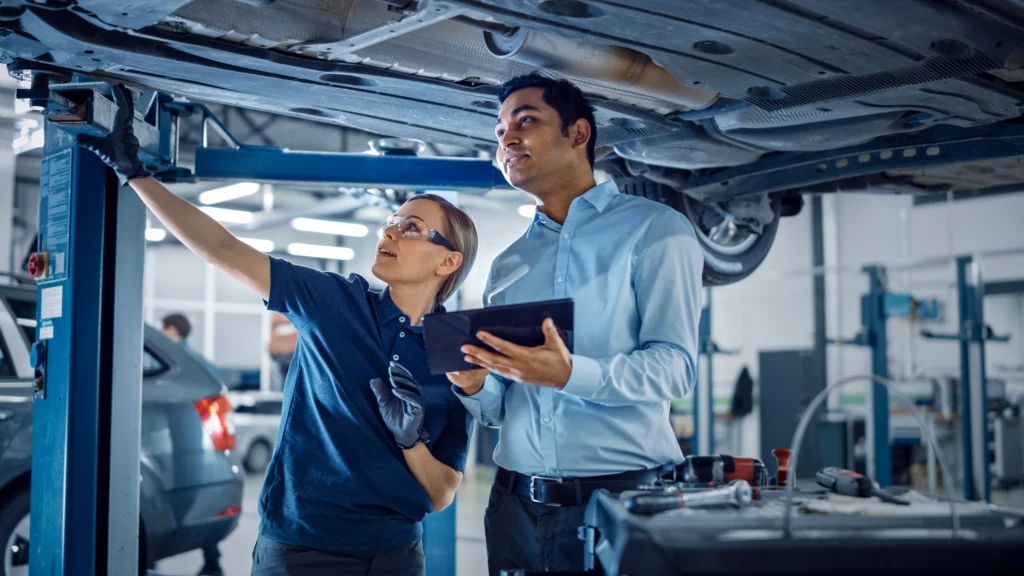
Cross-training and shared education improve understanding and teamwork. Advisors who better understand technician workflow communicate more effectively with customers. Likewise, technicians who understand advisor pressures collaborate more efficiently. Strong alignment across departments improves both productivity and the customer experience.
The bottom line: The 2026 imperative for dealership success
The dealerships that succeed in 2026 will not simply add more technology. They will invest in advisor development, standardize their service processes, reinforce expectations daily, and build cultures centered on practice and accountability.
The sale may introduce a customer to the brand, but service determines whether they stay. The service advisor is no longer just coordinating repairs. They are managing the ownership experience. And in the years ahead, that role will define which dealerships build lasting loyalty and which ones fall behind.
Boilerplate:
Since 1984, EasyCare has been helping some of the most successful dealerships in the nation drive results in their stores with a full suite of F&I products, forward-thinking training, dealership development, consultative participation programs, and a best-in-class claims experience. EasyCare has the only F&I products named a “MotorTrend Recommended Best Buy” for franchised dealers and has an A+ rating from the Better Business Bureau. EasyCare is part of the APCO Holdings, LLC. family of brands, which has protected over 24 million customers and paid over $3.7 billion in claims. For more information about EasyCare, please visit easycare.com. For more information about the APCO Holdings family of brands, please visit apcoholdings.com.