On the Dash:
- Rivian unveiled its first custom self-driving chip and a lower-cost Autonomy+ driver-assistance package.
- Autonomy+ costs $2,500 or $49.99/month, far below Tesla’s $8,000/$99 options, and supports 3.5M miles of hands-free driving.
- Rivian plans to deliver Level 4 autonomy with “eyes-off” functionality by 2026, along with LIDAR sensors and an AI assistant for next-gen models.
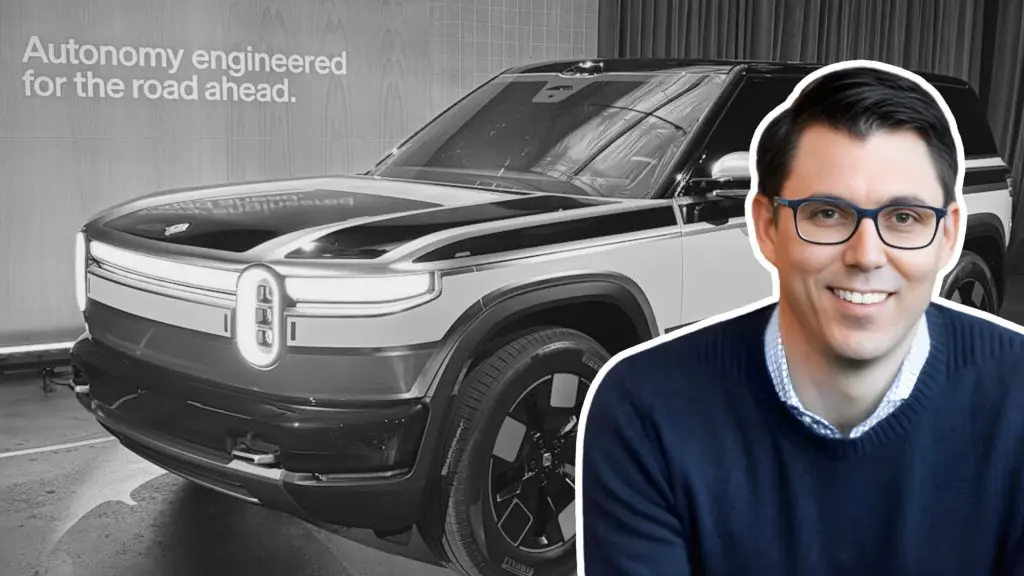
Rivian unveiled its first custom computer chip for self-driving vehicles Thursday, along with a new paid driver-assistance package called Autonomy+, priced far below Tesla’s comparable system. Shares of the pickup and SUV maker fell about 8% in afternoon trading, marking the company’s largest single-day percentage decline in nearly a year.
The announcements came at Rivian’s first Autonomy and AI Day, highlighting the company’s efforts to expand hands-free driving and long-term autonomous capabilities. The EV maker said its long-term goal is Level 4 autonomy, in which a vehicle can operate without human input in certain conditions. The new Large Driving Model, a foundational AI system trained on extensive real and simulated driving data, will underpin those efforts.
The company’s new in-house chip, the Rivian Autonomy Processor, is designed to process data from cameras, LiDAR, and other sensors critical to achieving higher levels of autonomous driving. The chip is manufactured by Taiwan Semiconductor Manufacturing Co (TSMC). Rivian’s deep vertical integration is costly at low production levels but is expected to provide a major cost advantage at scale by eliminating supplier margins and tailoring components to its specific needs.
The Autonomy+ package is priced at $2,500 as a one-time payment or $49.99 per month. It includes a Universal Hands-Free feature that functions across more than 3.5 million miles of roads in the U.S. and Canada. By comparison, Tesla’s Full Self-Driving system costs $8,000 outright or $99 per month.
Rivian also announced that its next-generation R2 models will include LIDAR sensors for 3D mapping, enhancing their ability to detect obstacles and assess road conditions. The company plans to expand hands-free driving capabilities later this month and roll out point-to-point autonomous driving next year, with “eyes-off” functionality expected in 2026.
An AI assistant will also debut, enabling vehicles to manage certain functions, sync with apps, and flag potential maintenance issues. Rivian emphasized that its combination of sensors, AI, and custom silicon will enhance vehicle performance and the overall consumer experience.
CEO RJ Scaringe noted that the company sees potential for licensing the Rivian Autonomy Processor in the future, though no details were provided. Industry experts highlight that while developing custom chips is capital-intensive, it is a strategic move designed to strengthen Rivian’s long-term competitive position, similar to Tesla’s in-house chip development.