
TSLA313.030-6.66%
GM82.6401.97%
F14.3500.2%
RIVN15.840-0.62%
CYD45.070-0.77%
HMC28.1600.17%
TM177.4200.62%
CVNA60.4600.27%
PAG217.3501.81%
LAD340.9506.93%
AN208.1803.08%
GPI330.8704.19%
ABG225.2403.1%
SAH99.8200.71%
TSLA313.030-6.66%
GM82.6401.97%
F14.3500.2%
RIVN15.840-0.62%
CYD45.070-0.77%
HMC28.1600.17%
TM177.4200.62%
CVNA60.4600.27%
PAG217.3501.81%
LAD340.9506.93%
AN208.1803.08%
GPI330.8704.19%
ABG225.2403.1%
SAH99.8200.71%
TSLA313.030-6.66%
GM82.6401.97%
F14.3500.2%
RIVN15.840-0.62%
CYD45.070-0.77%
HMC28.1600.17%
TM177.4200.62%
CVNA60.4600.27%
PAG217.3501.81%
LAD340.9506.93%
AN208.1803.08%
GPI330.8704.19%
ABG225.2403.1%
SAH99.8200.71%

Federal court blocks Trump’s tariffs, citing congressional overreach

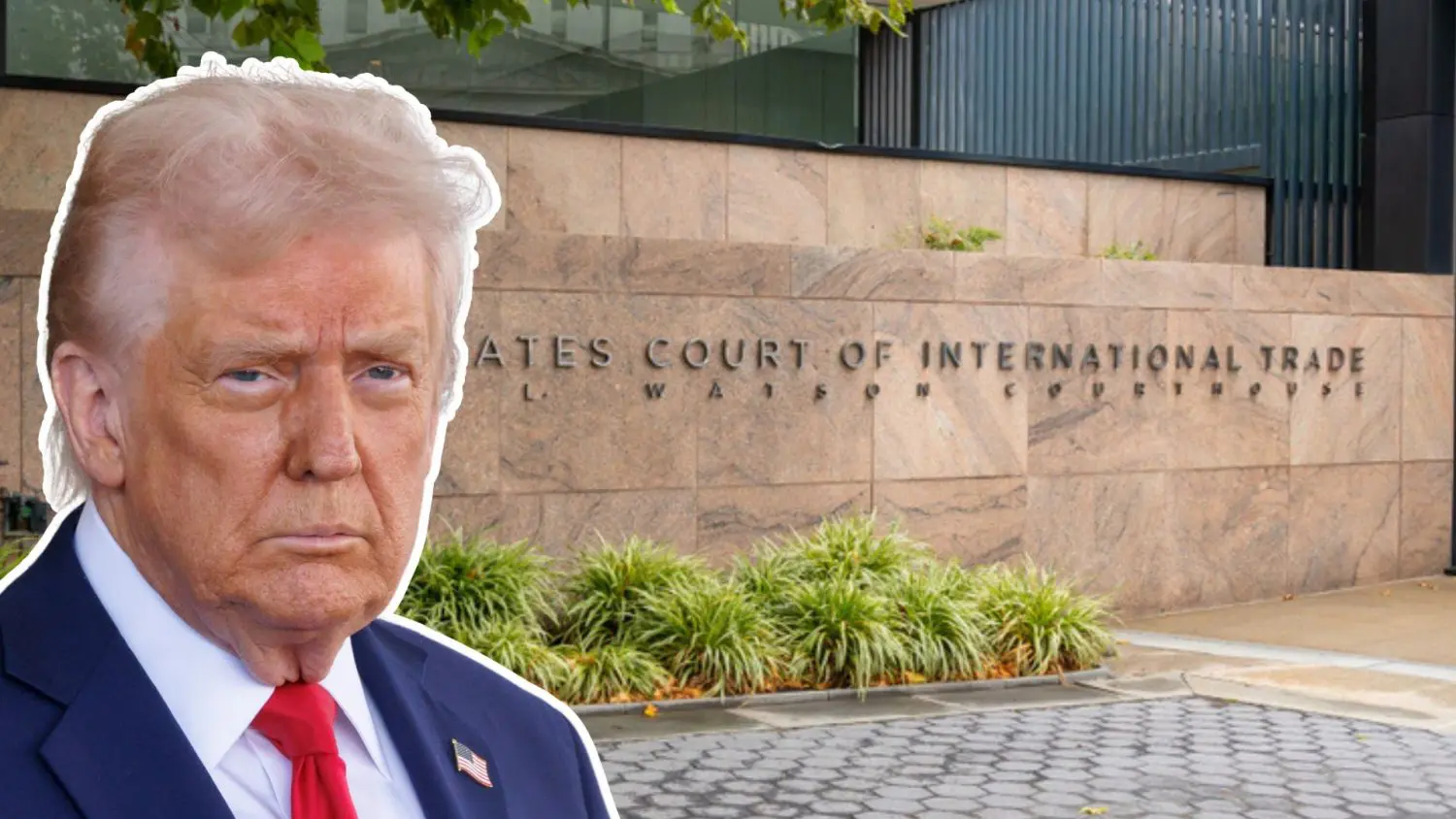
A federal trade court ruled President Trump’s use of emergency powers to impose across-the-board tariffs unconstitutional, halting all such orders issued since January.
The Court of International Trade on Wednesday struck down most of President Donald Trump's tariffs, ruling he exceeded his legal authority

In a setback for the White House, the U.S. Court of International Trade on Wednesday struck down most of President Donald Trump’s tariffs, ruling that he exceeded his legal authority by imposing sweeping duties on imports under emergency powers.

The three-judge panel issued a permanent injunction invalidating all of Trump’s across-the-board tariff orders since January, declaring they violated the Constitution, which reserves the power to regulate foreign commerce to Congress.

However, the decision does not affect industry-specific tariffs on products like steel, aluminum, and automobiles, which were enacted under a different statute. However, it halts the use of the International Emergency Economic Powers Act (IEEPA) to justify broad-based tariffs aimed at addressing the U.S. trade deficit.

Sign up for CBT News’ daily newsletter and get the latest industry stories delivered straight to your inbox.

The court directed the administration to issue revised orders within 10 days. The White House responded by filing a notice of appeal and maintaining that trade deficits constitute a national emergency with consequences for domestic industries and communities.

Additionally, the ruling came from two lawsuits: one brought by five U.S. small businesses that import goods from affected countries, and another filed by 12 states. The companies said the tariffs created challenges for their operations and supply chains. The court concluded that if the tariffs were unlawful for the plaintiffs, they were unlawful for all affected parties.

Oregon’s attorney general, whose office led the state’s lawsuit, stated that the decision confirms that trade measures must adhere to existing law. Legal challenges to the tariffs continue in at least five other pending cases.

The administration introduced a 10% tariff on all imports in April, citing trade imbalances as justification under the International Emergency Economic Powers Act (IEEPA). Higher tariffs were proposed for certain countries, although those were subsequently paused. The baseline tariff remained in place for most nations.

IEEPA is typically used for financial sanctions and asset freezes involving national security concerns. This was the first time it was used to implement tariffs broadly. Legal analysts noted that while this ruling blocks the use of IEEPA in this context, other laws may still allow the government to apply targeted or sector-specific tariffs.

The court’s decision can be appealed to the U.S. Court of Appeals for the Federal Circuit and potentially the Supreme Court, meaning the legal outcome remains subject to further review.


Read More
More from Articles
Waymo's driverless cars crash 68% less than humans, IIHS study finds

Waymo’s driverless cars crash 68% less than humans, IIHS study finds

- July 24, 2026
On the Dash: Waymo vehicles crashed 68% less often than human drivers over 50 million miles studied Single-vehicle crashes dropped 85% and injury crashes dropped 81% compared with human...
International automakers grow U.S. economic footprint 58%, new report says

International automakers grow U.S. economic footprint 58%, new report says

- July 24, 2026
On the Dash: International brands continue to drive the majority of U.S. dealership employment and retail sales. Hybrid demand remains a major growth opportunity, with international automakers controlling 91%...
Rolling surveillance: NOW school buses ARE license plate readers!

Rolling surveillance: NOW school buses ARE license plate readers!

- July 24, 2026
When communities agreed to install cameras on school buses, the purpose seemed straightforward. The cameras would identify drivers who illegally passed a stopped school bus, putting children at risk, and...

Auto Exchange Group enters franchised retail with Indiana acquisition

- July 24, 2026
Auto Exchange Group LLC has acquired Auto Exchange Chevrolet GMC in Sullivan, Indiana, from CP Automotive Sales, LLC. The transaction marks the buyer's first franchised dealership acquisition and was supported...
CBT News
Privacy Overview

This website uses cookies so that we can provide you with the best user experience possible. Cookie information is stored in your browser and performs functions such as recognising you when you return to our website and helping our team to understand which sections of the website you find most interesting and useful.