TSLA445.17011.72%
GM75.800-0.64%
F13.5851.595%
RIVN14.2700.32%
CYD51.0502.53%
HMC24.3550.245%
TM187.0205.35%
CVNA69.870-3.85%
PAG166.617-2.413%
LAD273.300-2%
AN191.090-4.27%
GPI327.580-8.56%
ABG192.800-0.88%
SAH76.130-2.45%
TSLA445.17011.72%
GM75.800-0.64%
F13.5851.595%
RIVN14.2700.32%
CYD51.0502.53%
HMC24.3550.245%
TM187.0205.35%
CVNA69.870-3.85%
PAG166.617-2.413%
LAD273.300-2%
AN191.090-4.27%
GPI327.580-8.56%
ABG192.800-0.88%
SAH76.130-2.45%
TSLA445.17011.72%
GM75.800-0.64%
F13.5851.595%
RIVN14.2700.32%
CYD51.0502.53%
HMC24.3550.245%
TM187.0205.35%
CVNA69.870-3.85%
PAG166.617-2.413%
LAD273.300-2%
AN191.090-4.27%
GPI327.580-8.56%
ABG192.800-0.88%
SAH76.130-2.45%

GOP bill aims to repeal U.S. EV tax credit, hurting production and benefiting China

The IRA also placed specific restrictions on the credits.
Republicans have proposed an IRA bill to repeal the U.S. EV tax credit. If this bill passes, it would delay the U.S.'s progress in EVs.

Republicans have proposed an Inflation Reduction Act (IRA) bill to repeal the U.S. EV tax credit. If this bill passes, it would delay the U.S.’s progress in electric vehicle production and give China an advantage.

Under the Inflation Reduction Act, the government spent hundreds of billions of dollars on climate change initiatives. A significant portion of this funding went towards extending tax incentives for EVs owned by private individuals and businesses. The EV tax credit, first introduced in 2008, was increased to encourage more people to switch to EVs.

However, the credits were limited to 200,000 vehicles per manufacturer, and some manufacturers had already reached this limit. The IRA removed this cap and made the credits available upfront at the point of sale. This means that lower-income consumers can now qualify for the credits and receive them immediately rather than waiting to pay their taxes.

The IRA also placed specific restrictions on the credits. For example, EVs must be domestically manufactured to be eligible for the credit, and the buyer’s income is capped to ensure that the credits benefit those who need them most.

A $4,000 used EV tax credit was also added, but it is only available to those in lower income brackets.

Certain limitations can be circumvented, and some restrictions have been lifted to give the industry time to catch up. Nevertheless, these constraints have spurred a rebirth in American auto production, with numerous automakers announcing major factory expansions in the US.

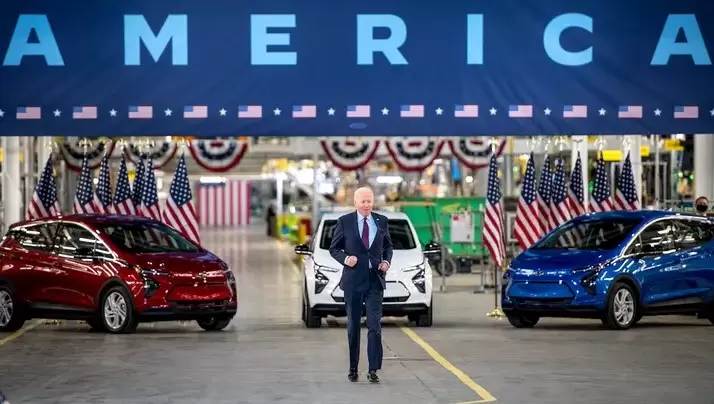
Since President Biden began his EV push, over $210 billion has been invested in new or expanded industry projects. This will create 250,000 EV jobs, with more to come. 

Tesla is leading the way, and the U.S. is already effectively producing EVs. These agreements can potentially turn the U.S. into a global leader in EV manufacturing. While the U.S. was previously the world leader in EV production, Chinese EV demand and output are increasing, and automakers are struggling to keep up. Therefore, it is crucial for the government to show its dedication to fostering this sector over the long run.

The IRA is the largest climate pledge ever made by any nation worldwide. The hundreds of billions of dollars allotted, primarily for tax credits connected to EVs but also for other climate initiatives, represent a commitment that no other nation can match.

Read More
More from Articles
The simple 'paperwork' mistake that could cost dealers $10,000

The simple ‘paperwork’ mistake that could cost dealers $10,000

- May 13, 2026
On the Dash: CDK Global says a paperwork problem cost a dealer $10,000 during a manufacturer audit. NADA calls federal record-keeping requirements among the most burdensome rules dealers face today. ...
GM-LG battery venture recalls small group of Ohio workers as EV demand slows

GM-LG battery venture recalls small group of Ohio workers as EV demand slows

- May 13, 2026
On the Dash: EV production volatility is directly affecting supply chain employment and factory output decisions. Incentive-driven demand shifts are forcing automakers to adjust production more quickly than long-term EV...
Nissan projects return to profit after seventh straight quarterly loss

Nissan projects return to profit after seventh straight quarterly loss

- May 13, 2026
On the Dash: Nissan’s projected return to profit could improve dealer confidence after multiple quarters of financial instability. Ongoing model cuts and production restructuring may impact future inventory mix and...
New-vehicle prices rose in April, but the gains fell short of the historical average, with wide variation across brands and segments, according to Kelley Blue Book.

New-vehicle prices rise in April, but the pace is cooling

- May 13, 2026
On the Dash: New-vehicle ATP rose 1.8% year over year in April, below the 3.6% long-term average. Ford and GM posted strong gains while several luxury brands saw transaction prices...
CBT News
Privacy Overview

This website uses cookies so that we can provide you with the best user experience possible. Cookie information is stored in your browser and performs functions such as recognising you when you return to our website and helping our team to understand which sections of the website you find most interesting and useful.