
TSLA376.020-2.65%
GM78.9500.99%
F12.390-0.105%
RIVN16.140-0.58%
CYD40.770-1.06%
HMC24.200-0.17%
TM192.9800.81%
CVNA406.420-0.31%
PAG161.5501.41%
LAD277.2400.38001%
AN200.970-3.03%
GPI344.7005.18%
ABG200.5600.53%
SAH72.3900.81%
TSLA376.020-2.65%
GM78.9500.99%
F12.390-0.105%
RIVN16.140-0.58%
CYD40.770-1.06%
HMC24.200-0.17%
TM192.9800.81%
CVNA406.420-0.31%
PAG161.5501.41%
LAD277.2400.38001%
AN200.970-3.03%
GPI344.7005.18%
ABG200.5600.53%
SAH72.3900.81%
TSLA376.020-2.65%
GM78.9500.99%
F12.390-0.105%
RIVN16.140-0.58%
CYD40.770-1.06%
HMC24.200-0.17%
TM192.9800.81%
CVNA406.420-0.31%
PAG161.5501.41%
LAD277.2400.38001%
AN200.970-3.03%
GPI344.7005.18%
ABG200.5600.53%
SAH72.3900.81%

Hyundai introduces “hypercasting” to rev up EV production

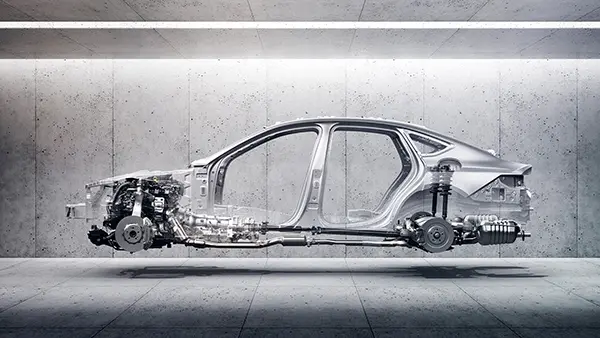
Hypercasting involves injecting molten aluminum alloy into molds to shape the vehicle's frame, a process Tesla first adopted in 2020.

Image source: Hyundai Motor Company

Hyundai is now incorporating “hypercasting” into its electric vehicle (EV) production, echoing Tesla’s Giga Casting technique. As reported by Korean newspaper Hankyung, hypercasting involves injecting molten aluminum alloy into molds to shape the vehicle’s frame, a process Tesla first adopted in 2020 in its Fremont Factory and later in its China and Germany plants.
 
Hypercasting’s distinct feature is its capacity to produce larger vehicle parts than what’s typical in the auto industry. This leads to notable benefits like saving time and resources and reducing vehicle weight. In fact, Tesla’s use of Giga Casting has reportedly reduced production costs by around 30%.
 
For context, traditional methods are labor-intensive, requiring the drilling of thousands of holes into nearly 70 steel plates that are then welded individually. Hypercasting offers evident efficiency and cost benefits in comparison.
 
Hyundai, having successfully introduced EVs like the IONIQ 5 and Kona Electric, understands the importance of evolving in a fast-paced EV market led by brands like Tesla. They’re strategically adapting their production and aim to be in the top three global EV producers by 2030. This includes planning to launch 31 EV models under Hyundai, Kia, and Genesis, as part of their commitment to an electrified future.
More from Articles
Toma, AI fixes the gaps that are costing you service customers

AI fixes the gaps that are costing you service customers

- April 28, 2026
There are multiple areas where service breaks down, but most of it traces back to communication, specifically on the phone and over text, where customers are actually deciding whether to...
Lotlinx Q1 2026 Vincensus report reveals a market in motion: Demand has not disappeared — it has moved

Lotlinx Q1 2026 Vincensus report reveals a market in motion: Demand has not disappeared — it has moved

- April 28, 2026
DETROIT (April 28, 2026) — Lotlinx,  the auto industry’s first and only VIN Performance platform built to help dealers maximize profitability, today released its Q1 2026 Vincensus Report, the most comprehensive...
Joby Brings Electric Air Taxis to New York City in Week-Long Flight Campaign

Joby brings electric air taxis to New York City in week-long flight campaign

- April 28, 2026
Joby completes New York City’s first-ever point-to-point electric vertical takeoff and landing (eVTOL) air taxi demonstration flights showcasing operational maturity and seamless integration into FAA-controlled airspace As a winning eIPP...
GM tops Q1 expectations,

GM tops Q1 expectations, raises outlook on tariff refund boost

- April 28, 2026
On the Dash: GM beat Q1 earnings expectations and raised full-year guidance by $500 million on anticipated tariff refunds North America margins improved despite lower sales, driven by pricing strength...
CBT News
Privacy Overview

This website uses cookies so that we can provide you with the best user experience possible. Cookie information is stored in your browser and performs functions such as recognising you when you return to our website and helping our team to understand which sections of the website you find most interesting and useful.