If you believe the consumer media and motoring press, electric vehicles are sweeping the nation. It’s a movement that promises to abolish the internal combustion engine forever. But, as dealers know, hope and reality are two different things. In fact, EVs account for less than 6% of new vehicle sales in the U.S.
This gap, along with some government prodding and the efforts of a few pioneering automakers, has opened a small window of opportunity for an alternative to the battery electric vehicle (BEV), the hydrogen fuel cell. To be specific, the fuel cell electric vehicle or FCEV. It’s another acronym to add to today’s automotive lexicon.
Let’s cut through all the BEV buzz to see where FCEVs are in the market. Why is this significant? Because FCEVs are already for sale in California and Hawaii, and last year’s Inflation Reduction Act is pumping billions into expanding hydrogen as a viable fuel source.
Hydrogen fuel cells: the basics
If it’s been a while since you’ve been in a physics classroom, here’s how a hydrogen fuel cell works. In simple terms, the fuel cell, via a catalyst, converts hydrogen and oxygen into electricity and water. Electricity powers a drive motor, with water being the only byproduct. Hydrogen is stored in a refillable onboard tank (like a gas tank), while excess electricity is kept in a battery for supplemental use. There is no recharging, just an as-needed stop at a hydrogen refueling station.
Hydrogen-powered cars: the modern age
The idea of using hydrogen as an energy source dates back over two centuries, with practical automotive use first appearing in General Motors’ GM Electrovan in 1966. In subsequent decades, FCEVs were developed by other automakers, including BMW, Ford, and Mercedes-Benz.
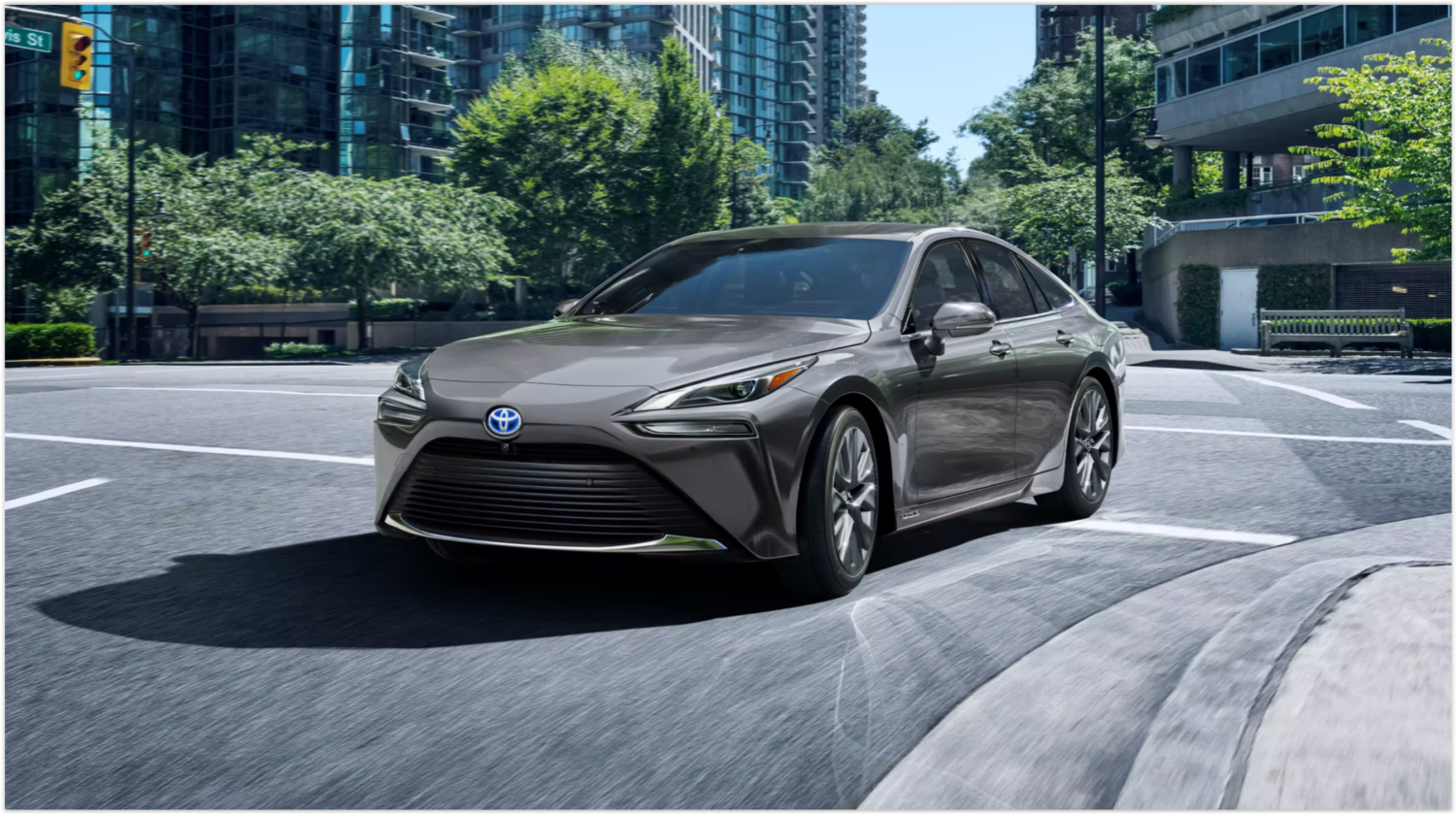
The 2016 introduction (and limited sales) of the Toyota Mirai and Honda Clarity showed that FCEVs could become mainstream. Hyundai’s Nexo crossover followed in 2018. California consumers can get a Mirai and Nexo now (the Toyota is also available in Hawaii), but everyone else is out of luck.
Advancements continue with a BMW test fleet already under construction (and coming to the U.S.) and Honda promising a hydrogen-powered CR-V in 2024.
Infrastructure is the Achilles’ heel
It makes sense for conventional automakers to hedge their bets with FCEVs. Despite government efforts, EV adoption may not take off as planned. Plus, if hydrogen use grows, these companies will one-up Tesla.
Besides a lack of FCEVs on the market, the one critical factor holding back hydrogen is a virtually non-existent refueling infrastructure. According to the U.S. Department of Energy, California has the most (60) public and private hydrogen refueling stations, and Hawaii has two. A handful of other states have private stations, but nothing that could support wide-scale use. At this point, Toyota Miria owners can’t leave California.
Federal efforts to promote FCEVs
Recognizing that FCEV use would wither and die without a broader hydrogen infrastructure, the federal government incorporated supportive funding into the Inflation Reduction Act. $10 billion is allocated for the development of hydrogen production and storage facilities, $5 billion for the expansion of hydrogen refueling stations, and $1 billion for the development of hydrogen-powered vehicles. In addition, the measure provides tax credits for the production and use of hydrogen fuel cells. It also grants tax incentives for hydrogen produced from renewable and nuclear energy.
What the future holds for FCEVs
Allocating federal money for hydrogen fuel cells should ignite efforts that were once more about showcase than showroom. This is reinforced by the upcoming FCEV plans from BMW, Honda, and others. Importantly, new Toyota CEO Koji Sato says the company will continue hydrogen efforts while expanding its EV lineup.
But no matter how many automakers jump onto the FCEV bandwagon, nothing will happen until FCEV buyers (inside and outside California) have ready access to refueling stations. It’s the exact conversion with EVs.