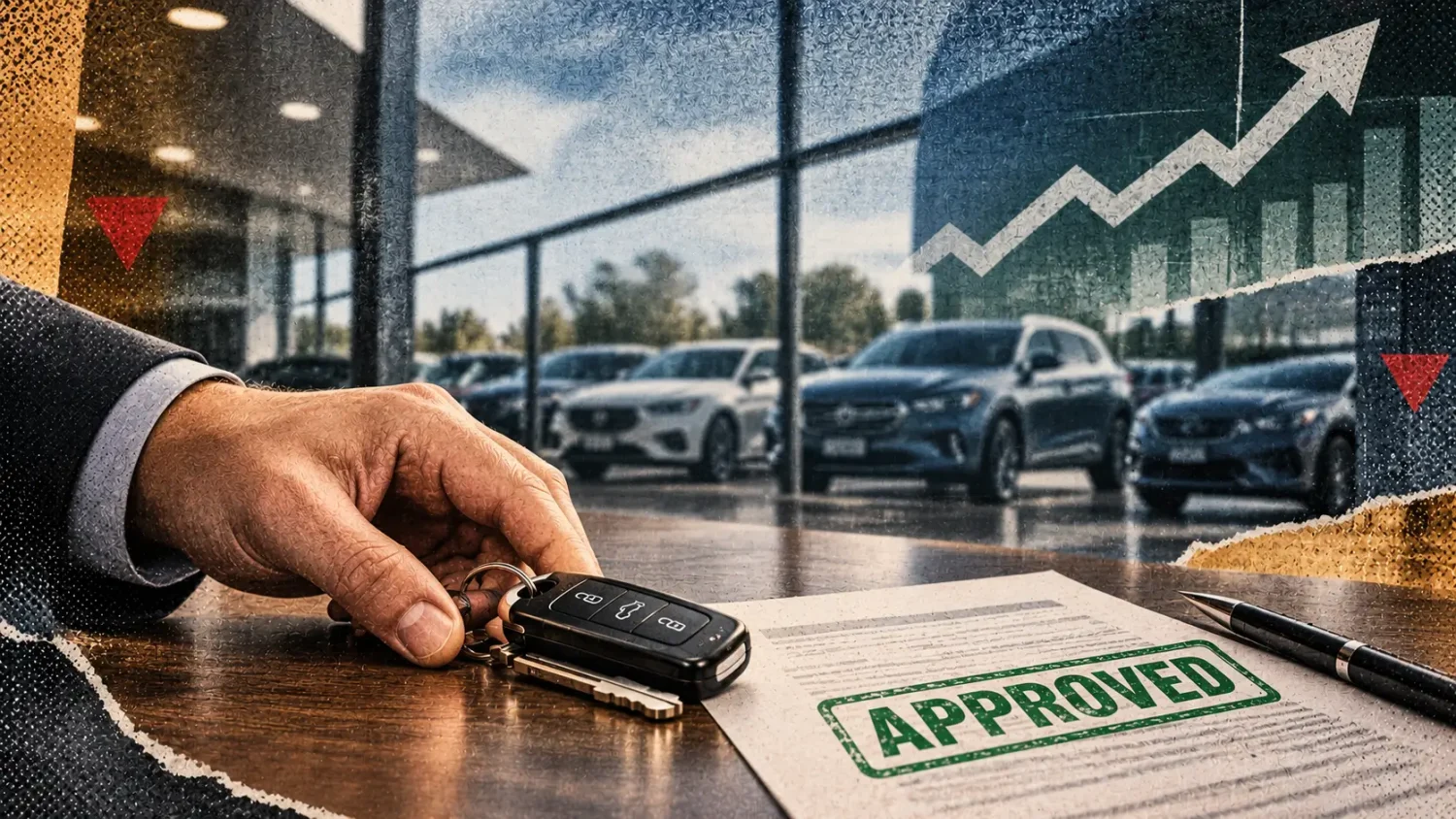
Dealerships have never had more data. Dealer management systems, CRMs, digital retailing platforms, marketing tools and F&I reporting give leaders access to a steady stream of performance metrics. With a few clicks, a dealer can see gross profit, PVR, product penetration, close rates, appointment activity, CSI scores and dozens of other measurements.
The challenge is that most of these numbers tell dealers what happened, but they do not always explain why it happened. If vehicle service contract penetration drops, for example, the report shows a decline. It may not show whether the product was presented consistently, whether customers repeatedly raised the same objection, whether an employee struggled to explain its value or whether something changed in the dealership’s process.
For years, much of that missing context has existed in one place that has been difficult to measure: the conversations taking place between dealership employees and customers. AI is beginning to change that.
Dealerships do not have a data shortage
That limitation becomes clear when dealership leaders try to understand why one employee consistently outperforms another. A report may show that one F&I manager produces higher PVR or product penetration, but the numbers alone rarely identify the behaviors creating that difference.
One employee may ask better discovery questions, present products more consistently or handle a particular objection more effectively. Another may be skipping part of the process when the showroom gets busy. Those details matter because performance metrics are often the end result of hundreds of smaller behaviors.
F&I provides a clear example, but the same principle applies anywhere dealership performance depends on employee behavior and customer interaction. The opportunity is not simply to measure the result. It is to understand the behaviors that produced it, address them closer to the moment they occur and give employees clearer opportunities to improve.
Some of the richest data is unstructured
Every customer conversation contains information. Customers tell dealerships what concerns them, what they value, what they understand and what creates hesitation. They ask questions about payments, coverage, ownership costs, vehicle technology and protection products. They also explain, directly or indirectly, why they are willing to purchase something or why they are not.
Employees add another layer of information through the way they conduct those conversations. They determine which questions to ask, which benefits to emphasize, how thoroughly to explain a product and how to respond when customers push back.
Historically, most of this information disappeared when the conversation ended. A manager might observe a transaction, review a deal afterward or occasionally listen to a phone call, but doing that consistently across hundreds or thousands of customer interactions has been difficult, particularly in larger dealerships and dealer groups.
As a result, dealerships have access to one of their richest sources of performance information without a practical way to analyze it at scale. AI and conversation intelligence are beginning to make that information measurable.
AI can add context to the numbers
AI adoption is already widespread across automotive retail. Cox Automotive’s AI in Auto Retail Tracker, which includes Q2 2026 findings, found that 82% of dealers surveyed were using AI in some form, with common applications including task automation, customer follow-up and content generation1.
One of the more valuable uses of AI may be its ability to analyze information dealerships have historically struggled to measure. Conversation intelligence can identify patterns across customer interactions, including recurring objections, commonly asked questions, inconsistent presentations and coaching opportunities. Instead of relying on only a handful of interactions, dealerships can gain visibility across a much larger sample.
The same analysis can also help surface language that deserves closer compliance review. A flagged phrase does not automatically indicate a compliance violation, but it can signal that a conversation deserves a closer look. Reviewing the context can help uncover potential concerns and reinforce better habits before questionable language becomes part of the process.
That changes the questions dealership leaders can ask. Rather than simply wondering why product penetration declined, a dealership may be able to determine whether a particular product is being presented consistently. Instead of assuming an employee has an objection-handling problem, the data may help identify the specific objections causing difficulty. Rather than waiting until month-end results reveal a performance issue, leaders may be able to spot behavioral patterns as they develop.
AI does not eliminate the need for traditional dealership KPIs. It adds another layer of context behind them.
Coaching closer to the moment
There is a tendency to frame AI primarily around automation. In many areas of dealership operations, that makes sense. Technology can reduce repetitive work, accelerate follow-up and help employees complete certain tasks more efficiently.
Coaching is most effective when insight leads to timely reflection and adjustment. When an F&I manager receives feedback while a conversation is still fresh, the context, customer response and decisions made during the interaction are easier to recall. Waiting several days to revisit the same conversation can make coaching less specific and less actionable. Technology can help shorten that gap by giving F&I managers greater visibility into their own conversations, helping them identify missed opportunities, recurring challenges and areas where a different approach may have produced a better outcome.
The sooner an employee can see what worked and what did not, the sooner they can adjust their approach for the next interaction. That creates an opportunity for self-coaching while the interaction is still relevant, allowing employees to reflect on their performance, adjust their approach and carry those lessons into the next customer conversation.
Look beyond the scoreboard
Dealership performance will always be measured through outcomes such as gross, PVR, penetration, productivity and CSI. But increasingly, leaders have an opportunity to examine the behaviors behind those outcomes.
What are top performers doing consistently? Where are customer conversations breaking down? Which objections appear more frequently? Are employees following the same process? Where could a change in behavior have the greatest impact?
These questions are not about collecting data simply for the sake of having more information. They are about turning information into something managers can use to improve execution.
Better visibility changes the game
AI will continue to become more deeply embedded in dealership technology, but simply adding more tools will not create better outcomes. The dealerships positioned to gain the most from AI are not necessarily the ones with the most tools, but the ones that are clearest about what they want to understand, which behaviors they want to improve and how they will measure the result.
The opportunity is not simply more data. It is better visibility into the decisions, conversations and behaviors that drive dealership performance, and the ability to act on those insights while they can still make a difference.