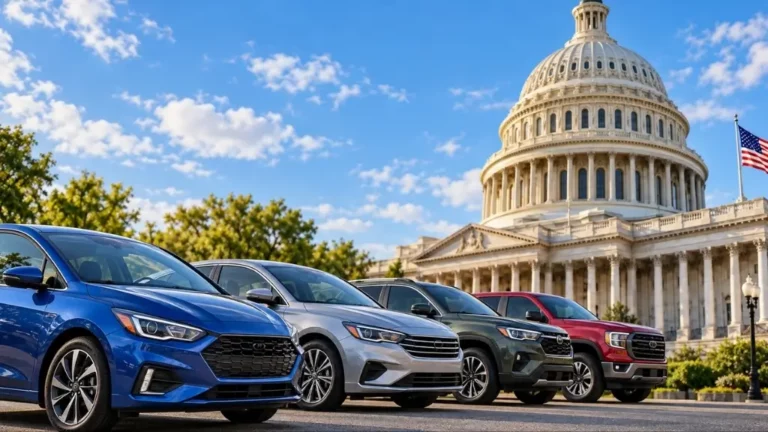
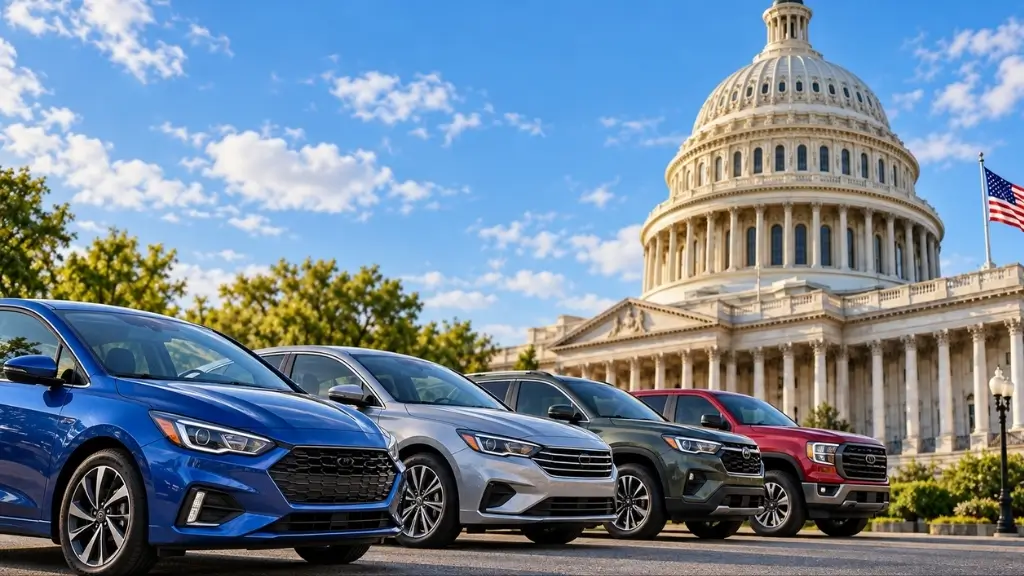
For once, there is some good news coming out of Washington for people trying to buy a car.
The federal government just finalized a major change to fuel-economy rules that could make it less expensive for automakers to build vehicles. The 2031 fleetwide target is dropping from the previous 50.4 mpg trajectory to 34.9 mpg. The Transportation Department estimates the change could reduce the average upfront cost of a new vehicle by about $1,300 and save Americans roughly $138 billion over five years.
But the number that really jumped out at me is $60.6 billion.
That’s the estimated reduction in technology costs for automakers through 2031. General Motors alone could save about $20.4 billion, with Ford, Stellantis, Toyota and Honda also seeing billions in projected savings.
That’s enough money to change what gets built, what gets sold and potentially what ends up on the showroom floor.
And that’s where this story gets interesting for consumers.
For years, increasingly aggressive fuel-economy requirements have pushed automakers toward expensive technology and complicated compliance strategies. Electric vehicles became one way to improve fleet averages, while smaller, less profitable vehicles disappeared from many lineups. The result? Americans were increasingly shopping in a market where a new vehicle can easily cost $50,000 or more.
Now the rules are changing. The administration says the new standards give manufacturers more flexibility to build vehicles based on actual customer demand. NHTSA also says changes to vehicle classifications could encourage manufacturers to offer more lower-cost cars, including smaller cars, hatchbacks and wagons.
That matters because automakers don’t build vehicles simply because somebody in Washington thinks they should exist. They build them when the economics work.
And there is another piece of this puzzle: California.
California’s Advanced Clean Cars II program attempted to push the market toward an increasingly electric future, but Congress overturned the EPA waiver that allowed California to impose those requirements. President Trump signed the resolution into law in June 2025.
That matters beyond California because automakers don’t build an entirely different fleet for every state. When one state’s rules become influential enough, they can affect what manufacturers engineer and sell across the country.
The bigger question is whether one state should effectively dictate vehicle choices for the other 49. Congress has now drawn a different line.
For consumers, that means something very simple: more room for choice. If you want an EV, buy one. If a hybrid works better for you, buy that. If you need a gasoline-powered SUV or pickup, there should be a vehicle available for you too. The technology should compete for your business instead of government regulations deciding which technology gets favored.
But I’m not giving automakers a free pass.
If manufacturers are going to save tens of billions of dollars because of these changes, I want to know what happens to that money. I’m not expecting every dollar to magically disappear from the sticker price. Automakers have factories, employees, research and development costs and shareholders.
But if we’re told these changes will make vehicles less expensive to build and give consumers more affordable choices, show us. Put it on the showroom floor.
Give buyers better prices, more equipment, more choices or vehicles that didn’t make financial sense under the old rules. Let competition determine how much of that savings reaches the customer.
There is a legitimate downside, too. NHTSA’s analysis projects that drivers could spend more on fuel over the life of vehicles built under the less aggressive standards. That’s a real consideration, particularly for people who drive long distances or own large trucks and SUVs.
And yes, gas prices are high right now. But today’s pump price isn’t necessarily tomorrow’s price. Gas markets change, production changes and global events change. We’re going to dig into where gasoline prices are headed in a future Car Coach Report because that story deserves its own investigation.
For this story, I’m watching something else. Will cheaper compliance costs actually produce cheaper cars?
That’s the test. The government changed the rules. Automakers just got billions of dollars of breathing room. Now consumers get to see what happens next.
Because if the auto industry really has more freedom to build what people want, the person walking into the dealership should eventually be able to tell the difference.
The rules changed. Now show us the cars.
Check out my full commentary on this story: https://youtu.be/JMh4_spc78E
Looking for more automotive news? https://www.CarCoachReports.com
Listen and subscribe to The Drive with Lauren and Karl – https://www.youtube.com/@thedrivecarshow