

On the Dash:
- Volkswagen will invest $186 billion through 2030, reducing its long-term spending plan.
- The automaker faces profit pressure from U.S. tariffs and intense competition in China.
- The new plan prioritizes Germany and Europe as Porsche and Audi reassess global strategies.
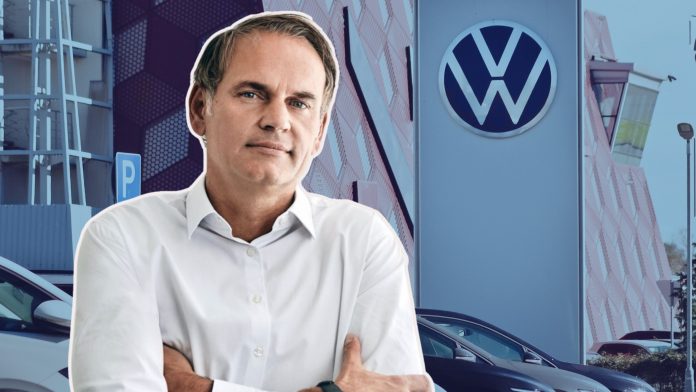
Volkswagen Group plans to invest $186 billion (160 billion euros) through 2030 as the automaker works to stabilize performance in two of its most challenged markets, China and the United States. CEO Oliver Blume outlined the updated spending plan as part of the company’s annual five-year outlook, noting that the new figure reflects tighter budgets than in prior cycles.
The revised plan marks a reduction from earlier projections. Volkswagen committed $192 billion (165 billion euros) for 2025 through 2029 and $209 billion (180 billion euros) for 2024 through 2028, with 2024 representing its highest spending year. The company has faced growing pressure from U.S. import tariffs and intensifying competition in China, its largest global market. These factors have strained earnings across key brands, especially Porsche, which relies heavily on both markets and recently scaled back portions of its electric vehicle strategy.
Blume said the latest investment blueprint centers on strengthening operations in Germany and Europe. The plan includes product development, new technologies, and infrastructure that support long-term competitiveness. Porsche is expected to continue cost-reduction efforts into 2026 as it adjusts to weaker performance in China and slower EV demand.
As Blume prepares to step down as Porsche CEO in January to focus solely on leading the Volkswagen Group, he noted that future Audi production in the United States remains contingent on significant government incentives. While Porsche is not expected to see near-term growth in China, the brand may eventually consider localized production or a model developed specifically for Chinese consumers.
The updated investment plan comes after Volkswagen extended Blume’s CEO contract to 2030, signaling continued backing from the Porsche and Piech families and the German state of Lower Saxony, the automaker’s two largest shareholders. However, the company continues to face pressure to restore value after investor losses tied to Porsche’s public listing three years ago.