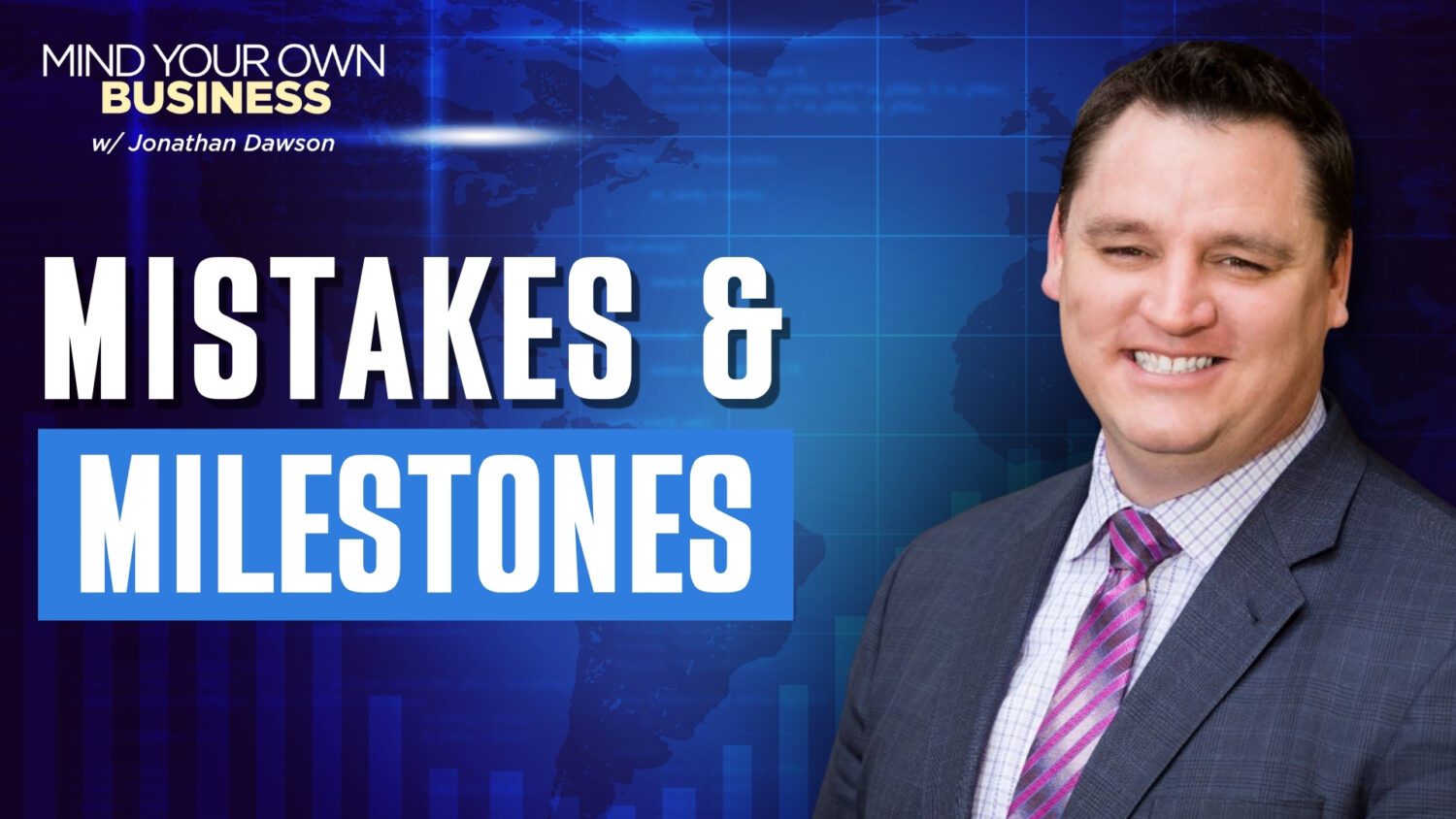
Welcome to another episode of Mind Your Own Business, hosted by Jonathan Dawson, President of Sellchology. Nearly six months after acquiring a Mitsubishi Cherokee dealership, Dawson reports that the previously unprofitable operation is now consistently profitable, with rising sales and service revenue, all achieved without traditional advertising, auction buying, or major staff changes due to tariffs.
Dawson, who previously spent two decades advising dealers across nine countries, chose to retain and develop nearly the entire existing team rather than clean house. The store had been selling between 13 and 50 units per month at acquisition, with just two salespeople. According to Dawson, the store is now pacing the 70-unit range with three salespeople, which aligns with Dawson’s “Mission 22” benchmark of 22 vehicles per salesperson per month.
Notably, the service department, previously generating roughly $30,000 in monthly parts and labor gross, has surpassed $110,000 in its strongest month.
Dawson clarifies that he prioritizes clearly defined core values, mission, and vision statements, embedding them throughout the dealership and reinforcing them through training, repetition, and internal incentives. He structures his approach in layers, such as:
- First, principals
- Second, people
- Third, processes
- Lastly, perception
Conspicuously absent from the turnaround plan was paid marketing. Dawson explained that he stopped spending on digital, traditional, and third-party advertising, arguing that adding traffic to a fundamentally broken operation would compound inefficiencies. Instead, he emphasized database follow-up, referral generation, service conversions, and internal lead management. At its peak month, 67% of total sales were self-generated through repeats, referrals, and salesperson-driven social activity, with the remainder coming primarily from drive-by and service traffic.
Dawson mentioned that perception management quickly became a top priority. The dealership was plagued by negative online reviews and unfavorable community sentiment. However, Dawson personally addressed around 100 past one-star reviews and started an outreach program by hiring a community ambassador. This ambassador worked to build relationships with local organizations, nonprofits, churches, schools, and businesses. The aim was to reshape the dealership’s image as a community-focused and relationship-oriented establishment.
“We’re trying to stay away from being transactional. We’re trying to be heavily relational.”
Facility conditions presented significant operational challenges, including code violations, mold remediation, and infrastructure repairs. While urgent safety issues were addressed immediately, Dawson later acknowledged delaying cosmetic and hospitality upgrades longer than ideal. Subsequent improvements have included updated furniture, enhanced waiting areas, children’s play spaces, upgraded beverage options, and lower-cost snack offerings to improve customer perception and experience.
The dealership also eliminated common add-ons and inflated markups, opting for a long-term loyalty strategy centered on repeat and referral business rather than transactional gains.
Looking ahead to 2026, Dawson’s focus is shifting toward compensation redesign and facility enhancement. The dealership is restructuring pay plans to reward both quantitative metrics, such as units sold and gross, and qualitative behaviors, including self-generated business and referral activity. Salespeople who generate repeat and referral traffic can earn substantially more than those who rely on walk-in traffic, Dawson asserts.