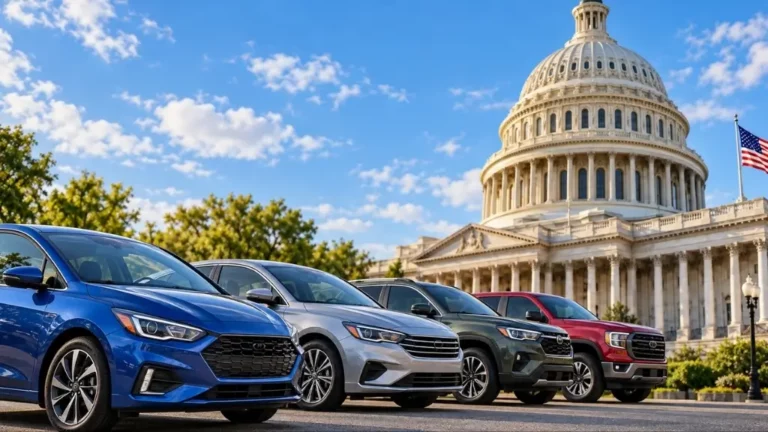

The outcome of the 2024 presidential election could significantly shape the industry’s future, influencing everything from environmental regulations to trade policies and technological advancements. Here, we explore the potential implications of each presidential candidate on the automotive sector.
Democratic Candidate Kamala Harris
Kamala Harris, now the presumptive Democratic nominee, has a strong track record of supporting environmental initiatives and advancing technology in the automotive sector. Her agenda is expected to build on the foundation laid by the Biden administration, with an even more aggressive push toward sustainability and innovation.
Harris has emphasized the importance of supporting electric vehicles (EV) production and adoption. Her administration would likely push for stricter fuel economy standards and offer substantial incentives for EV production. This includes expanding the nearly $1.1 billion in grants planned for General Motors (GM) and Stellantis to convert existing plants for EV and component production.
Moreover, Harris’s focus on infrastructure would see an increase in investments in nationwide EV charging networks. This effort aims to alleviate range anxiety and encourage more consumers to switch to electric vehicles. Tax credits and incentives for consumers purchasing EVs would likely be expanded, making them more financially accessible to the average American.
Harris’s policies also emphasize the need to support American workers in transitioning to green technologies. Initiatives to retrain workers from traditional automotive manufacturing sectors to new roles in EV production will be crucial in her plan to achieve a carbon-neutral economy by 2050. These measures would accelerate the shift towards sustainable transportation, positioning the U.S. as a global leader in the fight against climate change.
Republican Candidate Donald Trump
Former President Donald Trump is a vocal critic of stringent environmental regulations, often advocating for deregulation to boost economic growth. His first term saw significant efforts to roll back numerous ecological protections to reduce the regulatory burden on businesses and foster economic expansion. A Trump administration could roll back many of the current emission standards and fuel economy requirements. Trump has repeatedly vowed to repeal what he calls Biden’s “EV mandate,” referring to a new EPA regulation limiting tailpipe pollution.
Trump’s approach to the automotive industry emphasizes the importance of bolstering domestic manufacturing. He has advocated for tariffs and trade policies to protect U.S. automakers from foreign competition. By imposing tariffs on imported vehicles and parts, Trump aims to encourage the production of cars within the United States, thereby creating jobs and supporting the domestic economy. However, these policies could also increase production costs for automakers, as they might have to pay more for imported components or shift their supply chains domestically.
Furthermore, Trump’s trade policies could exacerbate trade tensions with key automotive markets, such as China and the European Union. These tensions might result in retaliatory tariffs, affecting the export of American-made vehicles and parts. This complex trade environment could pose challenges for U.S. automakers, who rely on global supply chains and international markets for their products.
While Trump’s policies may provide short-term economic benefits for domestic manufacturers, they could also lead to higher production costs and strained international trade relationships. The potential rollback of environmental regulations might offer temporary relief for traditional automotive sectors but could hinder long-term innovation and the global shift toward sustainable transportation.
Conclusion
The 2024 presidential election presents a critical moment for the automotive industry. Each candidate brings a distinct vision that could accelerate the transition towards sustainable transportation or favor traditional manufacturing practices. As voters decide, the automotive sector must stay adaptable and prepared for potential policy shifts.