


Welcome back to the latest episode of The Future of Automotive on CBT News, where we put recent automotive and mobility news into the context of the broader themes impacting the industry.
I’m Steve Greenfield from Automotive Ventures, and I’m glad that you could join us this week.
Back in the early days of the internet, something fascinating happened. As search engines—especially Google—grew in prominence, a brand-new industry emerged almost overnight: the business of trying to reverse-engineer Google’s algorithm.
At first, it was all about backlinks. The more you had, the higher you climbed in the rankings. Then Google got smarter—it wasn’t just about how many links you had, but where they came from. Each time Google rolled out a new update, the SEO industry scrambled to adapt… or exploit it. Too many keywords, and your site could be blacklisted. Too few, and you’d disappear into obscurity.
Fast forward to today—and while the tools have changed, the obsession hasn’t. Website owners still pour endless energy into figuring out how to generate traffic—through blogs, podcasts, YouTube, TikTok, you name it.
But now, the game itself is changing—and in a way that could rewrite the rules of the internet as we know it.
Artificial intelligence is quietly—and very quickly—reshaping how people navigate the web. Instead of typing questions into search engines, users are increasingly asking chatbots—tools like ChatGPT—to give them direct answers. Not a list of links, not a collection of sources… just the answer.
And that has huge implications.
Content publishers—everyone from news outlets to Wikipedia to sites like Tripadvisor and WebMD—are watching their traffic plummet. One study estimates that search-engine traffic has fallen about 5% in just a year. Health sites are down by more than 30%. Reference sites, by 15%. Tripadvisor has lost a quarter of its visitors. WebMD? Half.
For many of these companies, traffic isn’t just a number—it’s their lifeblood. Fewer clicks mean fewer ads, less revenue, and ultimately, less incentive to create new content.
And that’s where this gets tricky.
AI, by design, doesn’t send you to the source—it summarizes, paraphrases, and packages information drawn from those very sites. Google, which still controls about 90% of traditional search in the U.S., now adds AI-generated overviews at the top of many search results. The company even boasts that users can “let Google do the Googling for you.”
In other words, the search engine is now the destination.
That’s a remarkable shift in the basic economics of the internet. For decades, content creators welcomed Google’s web crawlers because they drove readers to their pages—where publishers could earn revenue. But the new generation of AI crawlers is different. They read, they learn, they repurpose—but they don’t send the reader back.
Since ChatGPT launched in late 2022, around 800 million people have used it. It’s now the most-downloaded app on the iPhone. And for the first time in 22 years, Apple reports that searches in its Safari browser are declining.
The result is a kind of quiet erosion of the open web—one click at a time.
We’ve heard predictions before that the web was “dying.” Social media was supposed to replace it. Then mobile apps. But AI may pose the biggest existential threat yet—because this time, the challenge isn’t about where people go online, but whether they need to go anywhere at all.
If AI continues to dominate how we access information, the very system that has sustained the internet—creators making content, users visiting that content, and advertisers funding it—may need to be reinvented from the ground up.
And that raises a sobering question: As AI makes it easier to find answers, who’s going to keep creating them?
So, with that, let’s transition to Our Companies to Watch.
Every week, we highlight an interesting company in the automotive technology space to keep an eye on. If you read my weekly Intel Report, we showcase a company to watch, and we then take the opportunity here on this segment each week to share that company with you.
Today, our new company to watch is VINCUE.
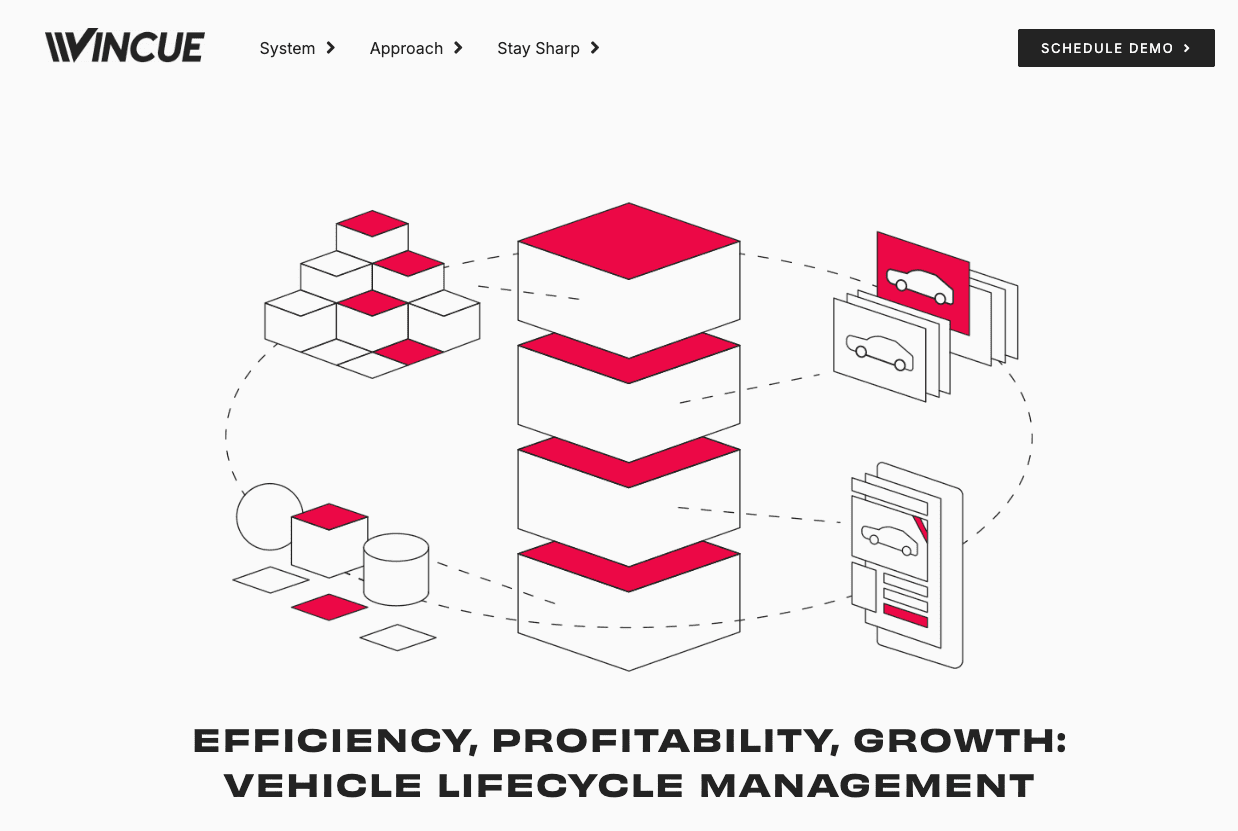
VINCUE provides a unified vehicle lifecycle management solution for retail automotive dealers, driving efficiency, profitability and growth.
VINCUE allows dealers to plan their inventory operations, source vehicles from multiple locations, manage their vehicle inventory operations, and sell the car to the right buyer.
Dealers using VINCUE experience, on average, $2m in additional gross profit and 1.4x faster turn times.
If you’d like to learn more about VINCUE, you can check them out at www.VINCUE.com
So that’s it for this week’s Future of Automotive segment.
If you’re an AutoTech entrepreneur working on a solution that helps car dealerships, we want to hear from you. We are actively investing out of our DealerFund.
Don’t forget to check out my first book, “The Future of Automotive Retail,” and my new book, “The Future of Mobility”, both of which are available on Amazon.
Thanks (as always) for your ongoing support and for tuning into CBT News for this week’s Future of Automotive segment. We’ll see you next week!