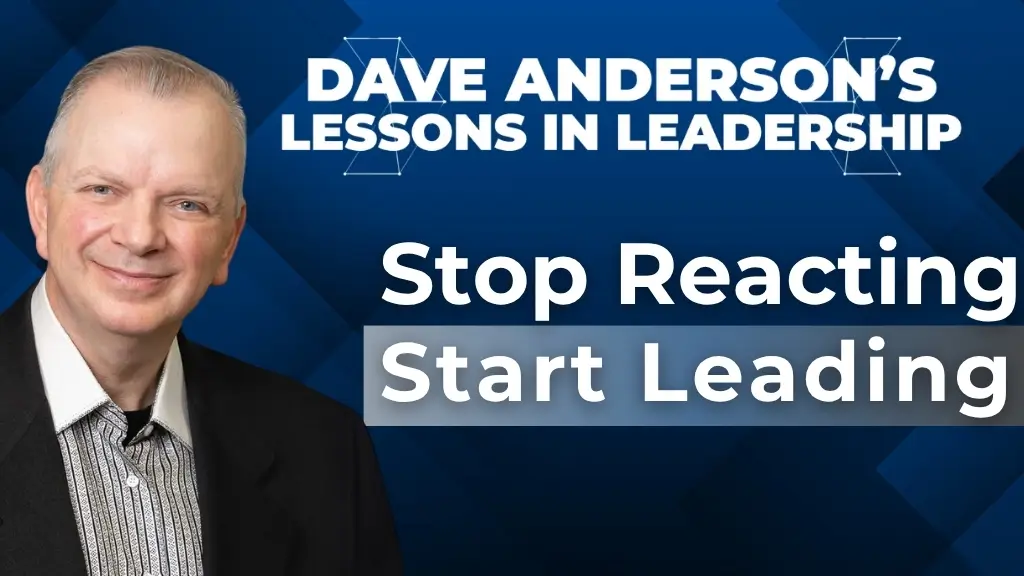
Whether it’s persistent tardiness or toxic team members, certain employee behavior issues show up repeatedly throughout a leader’s career. In this episode of Lessons in Leadership, leadership expert and President of LearnToLead, Dave Anderson, says the key to long-term success is getting exceptional at handling these few recurring problems with confidence and strategy. Drawing a parallel to how sales professionals train for common objections, Anderson urges managers to build “muscle memory” for addressing the seven or eight most frequent behavioral defects.
First, Anderson begins by comparing behavioral issues in management to objections in sales. He argues that salespeople typically prepare for the same six to eight objections that occur about 80% of the time. The repetition allows them to become fluent, confident, and effective in their responses. According to Anderson, managers should take the same approach to correcting employee behavior.
“There are probably six, seven, maybe eight [issues] over the course of a career that are going to comprise 70, 80% of the issues we have to deal with,” Anderson explains. “So why don’t we just get great at those things?”
To help managers do just that, Anderson’s workshop training includes identifying those core behavior problems and developing confident, effective ways to address them quickly. When leaders feel more prepared, he says, they’re far more likely to take action early—before small problems turn into bigger ones.
Among the most common employee behavior defects, Anderson plans to cover in upcoming segments are:
- Chronic lateness and how to have a first-time conversation that drives change
- The underperformer who isn’t meeting potential—using a method Anderson calls “X to Y by when or else”
- Skipping steps or missing deadlines, and how to correct the behavior without alienation
- Toxic employees who gossip or undermine the team after meetings, especially when they’re top performers
- Team members who don’t give their best require managers to call them up, not just out
- Introducing new expectations—especially after a management change—in a way that builds buy-in and avoids resistance
Each of these situations requires more than just confrontation, Anderson emphasizes. “The whole objective of a skillful conversation is to change the behavior,” he says, not to lecture or vent. That means preparation, clarity, and follow-through are essential.
Nevertheless, he closes by encouraging leaders to stay tuned for deeper insights on each issue, and reminds viewers that these aren’t one-off problems—they’re persistent challenges that define the job of leadership.
“Personally, I have no intention of continuing to address the same issue with the same person again and again and again, and not seeing a different result. So I really want to get good at addressing it the first time.” – Dave Anderson