Many service managers can’t explain effective labor rate (ELR) to their own teams. This number shapes profit in every service department, yet most dealerships treat it as a spreadsheet line nobody teaches.
On the latest episode of Loyalty-Based Sales Strategies, Jen Suzuki, Founder and President of eDealer Solutions, says leaders have to teach ELR in plain terms. Advisor habits, manager overrides, technician documentation and pricing consistency all move the number, she said.
A posted labor rate of $210 an hour sounds strong, but ELR is what the shop actually collects after discounts, warranty adjustments, internal work, labor reductions, advisor decisions and pricing inconsistencies. According to Suzuki, those two figures can sit far apart.
Spot what pulls effective labor rate down
While most advisors don’t realize they affect ELR every day, Suzuki says that many managers underestimate their influence. She pointed to four habits that drag the number down:
- An advisor who agrees to a discount the moment a customer asks lowers the rate on the spot
- A manager who overrides pricing every time a customer objects does the same
- A technician who documents findings poorly leaves the advisor with little to explain
- Advisors who quote different prices for similar work cost the shop customer confidence
According to Suzuki, these habits connect how ELRs reflect how a store talks to customers, how confident its people are, and how well its process runs.
Explain repairs before price
Service advisors influence thousands of dollars every day through how they communicate and what they decide.
Many have never had anyone sit them down and explain how the business works and how discounting affects it, Suzuki said. Advisors who do understand ELR tend to sound more confident and more educational. They are also less defensive and less transactional, Suzuki said.
“They’re influencing thousands and thousands of dollars daily through communication and decision-making.”
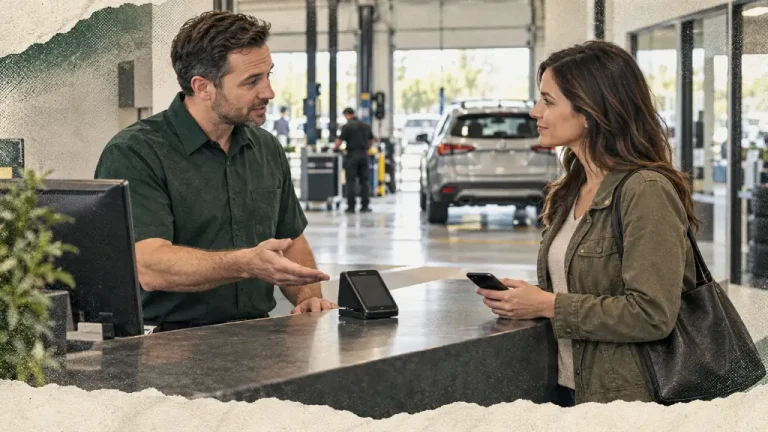
An advisor who understands the numbers walks the customer through the technician’s findings, points to uneven wear, and explains that acting now avoids rotor damage and keeps the vehicle stopping safely, according to Suzuki. Telling a customer the brakes are bad and reading off a total lands very differently. Customers respond to clarity, and they will not approve work they do not understand.
Some advisors start trimming labor lines before a customer says a word. Suzuki traces that habit to a lack of confidence, and she ties that back to leadership. Confidence comes from education, she said, and education comes from leadership.
Make teaching part of every manager’s job
Suzuki said she has sat in stores where managers demand a stronger ELR while discounting too quickly, undermining advisors and skipping coaching, call reviews and role-play. Advisors need practice, she said, because explaining value is a muscle-memory skill.
Many managers were never taught how to lead. Dealerships often promote strong advisors, salespeople and operators who handle pressure well, Suzuki said, but leadership requires a different level of understanding. She grew up in the car business and, she said, was promoted without knowing how to do the job.
“If we’re really talking loyalty-based sales strategy, loyalty is built when customers feel informed instead of sold,” Suzuki said.
Suzuki closed with a challenge for service managers and advisors, asking: Can your team explain ELR in simple terms, without corporate language? Can advisors describe how much influence they have over it? Can managers coach their teams on it? Can leadership connect it to communication and the customer experience?
She said the stores that win long term don’t hide financial understanding from the front line. Smarter teams create stronger operations and stronger outcomes.