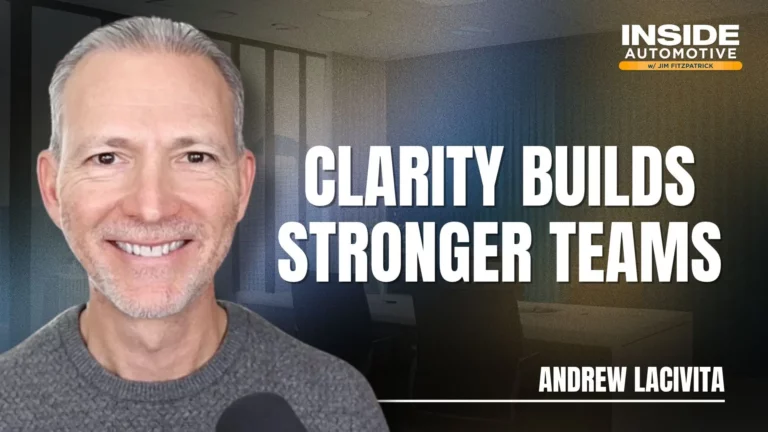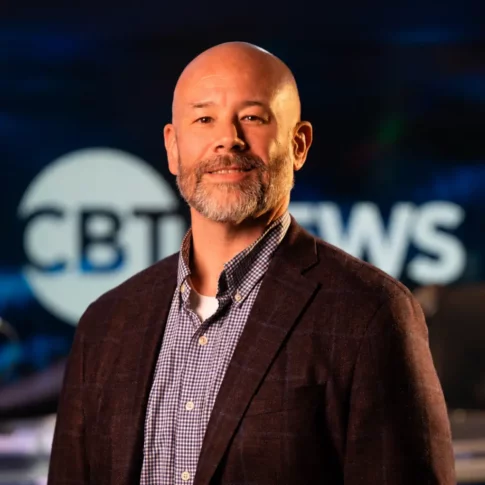
Dealers often communicate a message clearly and assume it landed, while their teams may have heard something different. Closing that distance takes preparation and a few simple habits. On today’s episode of Inside Automotive, Andrew LaCivita, Founder of milewalk Academy, and author of the book Signal Strength joins us to explain how dealers can make sure their message is the one people hear.
Start with your own state
According to LaCivita, people notice your state before they hear a word, so communication starts with internal clarity. While most dealers move from one meeting to the next without a break, rarely considering the conversation ahead, LaCivita calls the remedy “tuning in,” which is the first part of his book.
“If you want your staff to communicate more effectively, more quickly, more powerfully, give them the tools to do that.”
A short pre-communication ritual can reset a dealer’s mindset. LaCivita takes a moment to breathe and stay regulated before he speaks, then considers who will be listening. He said people tend to speak from their own vantage point and assume others share the same vocabulary and interests. Additionally, LaCivita believes putting yourself in the listener’s shoes makes you a better communicator.
Get to the point with the CAR technique
Dealers who want sharper updates from their teams have to teach people how to give them, LaCivita said. Many say team members use too many words, but they often don’t explain how to get to the point. When a dealership’s performance is in question, the first place to look is the dealer. Team members need to know their goals, what is expected and how they should interact.
LaCivita uses the CAR (context, action, result) technique for status updates.
- Context: What is happening
- Action: What the team member did
- Result: What the outcome was
When a dealer needs someone to act, “what, so what, now what” works better. It covers what is going on, why it matters and what the dealer needs.
LaCivita said team members’ biggest complaint about a difficult decision is usually that no one explained the reasoning behind it. A dealer can use the same structure for good news and bad. It starts with the shared goal, what the dealership is trying to accomplish and what it needs. Then it covers how the team benefits, what happens next and what support the dealer will give.
Dealers who share the reasoning early find that people understand, even when the news is hard, LaCivita said.
Earn honesty through consistency
Team members speak up when a dealer repeatedly shows that honesty carries no penalty, LaCivita said.
“If I’m consistent with you, I think that fosters and creates a more open and welcoming environment.”
An open door policy means little on its own. A dealer who is consistent, open and upfront shows team members they can handle hard information. That builds an environment where problems come forward.
Dealers should not be upset when people share their insight, even about the dealer’s own performance. A healthy discussion about why an idea will or will not be used also helps. Team members who feel communicated to and listened to engage more, whatever the news, LaCivita said.
Keep everyone aligned and well trained
Team members stay aligned as a dealership grows when they understand its goals and how their team contributes, LaCivita said. They also need to know why their work matters and what happens when it isn’t done. Dealers also need to provide tools beyond systems and processes. That includes inviting team members to come to them in real time and then clearing obstacles, LaCivita said.
Many professionals don’t receive the right training from their employers, LaCivita said. Employers often expect them to learn on the job. That’s where milewalk Academy comes in, offering training and coaching programs for individuals’ career needs.
Every meeting, review, or sales call needs a clear picture of success. In a review, a structured agenda shows where the team member started and where the dealer wants them to be. Dealers who go in without a blueprint waste time at the outset and miss their goals.