On the Dash:
- Toyota will offer the Hilux with diesel, hybrid, BEV and hydrogen options for different commercial customers.
- The FCEV will target 248+ miles of range and 2,500 kg of towing, with fast refueling when infrastructure is available.
- Toyota’s expanding European commercial vehicle business could create additional sales, financing, fleet and service opportunities for dealers.
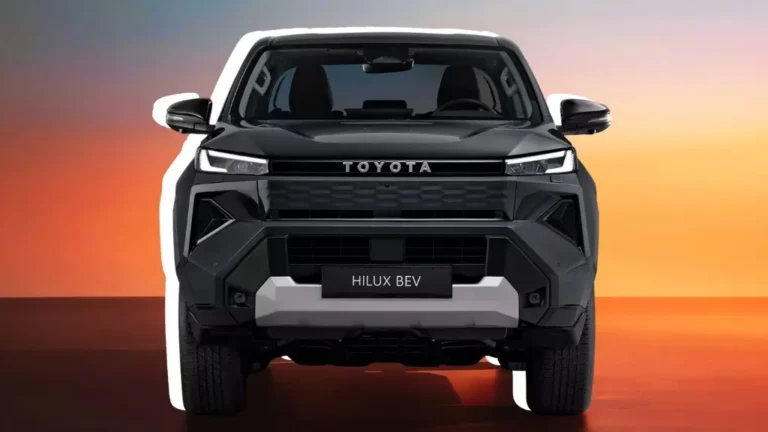
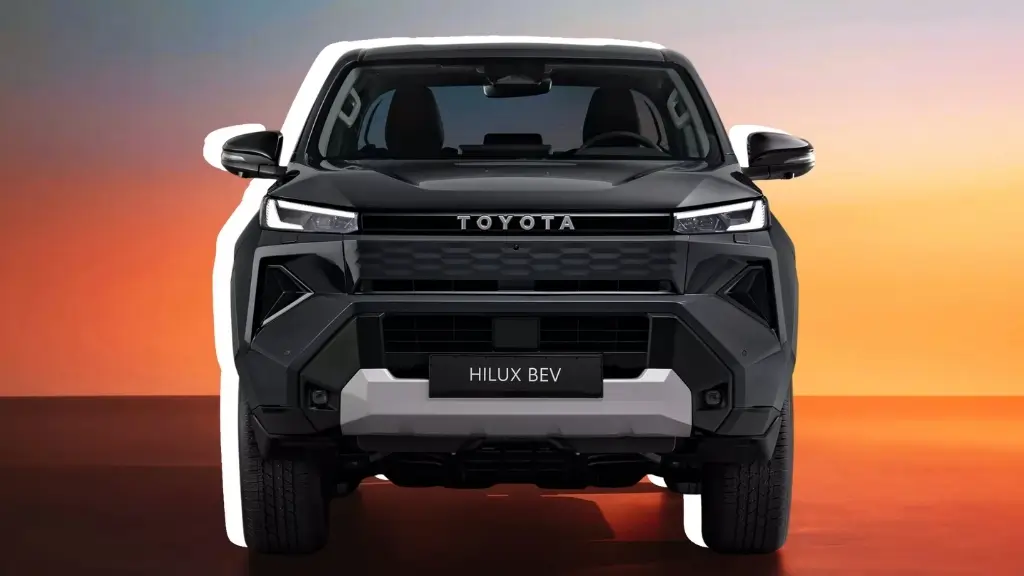
Toyota has confirmed that it will produce a version of the Hilux Fuel Cell Electric Vehicle (FCEV) as part of its multi-pathway powertrain strategy. This hydrogen fuel cell electric pickup will join the existing Hilux lineup, which includes mild-hybrid diesel and battery-electric variants
The automaker recently released a teaser image of the production-oriented truck after showcasing several development prototypes, featuring a distinctive lighting signature with segmented daytime running lights; however, Toyota has not disclosed whether the FCEV will have any additional exterior changes.
While complete specifications for the Hilux FCEV have yet to be released, Toyota is targeting a range of over 248 miles (400 kilometers) on the Worldwide Harmonized Light Vehicles Test Procedure (WLTP). The company also expects the truck to tow up to 5,512 pounds (2,500 kg). These targets would give the hydrogen-powered Hilux a longer range and higher towing capacity than the Hilux battery-electric vehicle (BEV), which has a 159-mile (257-kilometer) WLTP range and a towing capacity of 3,527 pounds, depending on configuration and regulations.
One of the advantages of hydrogen refueling is that it can take as little as five minutes when the necessary infrastructure is available. However, the European Hydrogen Observatory reports that 179 hydrogen refueling stations are currently operational across Europe and the United Kingdom. However, limited hydrogen infrastructure may restrict the truck’s appeal to customers operating within established hydrogen networks. Additionally, higher pricing could be a hurdle, as hydrogen fuel cell vehicles generally cost more than comparable internal combustion and battery-electric models.
Toyota spends years developing hydrogen-powered Hilux
Toyota first introduced its Hilux H2 prototype in 2022, utilizing fuel cell technology sourced from the Mirai sedan. In 2024, the company built 10 Hilux FCEV prototypes for field testing in the United Kingdom. These prototypes featured three hydrogen tanks integrated into the ladder-frame chassis and a lithium-ion battery located beneath the rear bed. They reportedly delivered a range of 373 miles (600 kilometers) and featured a rear-mounted electric motor producing 180 horsepower and 221 pound-feet of torque.
The Hilux FCEV adds another option to Toyota’s broader strategy of matching different powertrains to various commercial applications.